Download
1 / 6
60 likes | 179 Vues
This narrative framework discusses the dual plots in case studies: the factual sequence of events (Plot 1) and the theoretical exploration (Plot 2). It emphasizes the importance of weaving these plots together for a cohesive story, guiding the reader seamlessly between reality and theory. Techniques for structuring case narratives include using chronology and actors to build the story, creating captivating hooks to engage readers, and developing strong concluding paragraphs that summarize the study's insights.

E N D
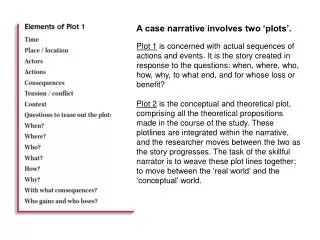
A case narrative involves two ‘plots’. Plot 1 is concerned with actual sequences of actions and events. It is the story created in response to the questions: when, where, who, how, why, to what end, and for whose loss or benefit? Plot 2 is the conceptual and theoretical plot, comprising all the theoretical propositions made in the course of the study. These plotlines are integrated within the narrative, and the researcher moves between the two as the story progresses. The task of the skillful narrator is to weave these plot lines together; to move between the ‘real world’ and the ‘conceptual’ world.
Structuring case narratives • Use chronology to build the structure • Use actors to build the structure • Develop a good ‘hook:’ a particularly captivating event/problem or situation that leads into the main story • Develop a good ‘tie:’ a paragraph that sums up your study particularly well • Use small hooks to keep the reader interested, but not too many!