Download
1 / 10
0 likes | 0 Vues
Learn how Kubernetes Operators automate complex stateful applications, simplify lifecycle management, and improve scalability, resilience, and reliability.

E N D
Operators in Kubernetes: Automating Complex Stateful Apps Simplifying Day-2 Operations with Intelligent Automation
WHY AUTOMATION MATTERS Kubernetes simplifies container orchestration but managing applications still requires ongoing operational effort. Manual handling of deployments, scaling, recovery, and updates can introduce errors. Automation ensures consistency, reliability, and faster response times. 👉 Automation transforms Kubernetes from a deployment platform into a self-managing ecosystem.
UNDERSTANDING THE FRAMEWORK Operators are software extensions that use custom resources to manage applications. They encode operational knowledge directly into Kubernetes. Built using the Operator Framework, they follow Kubernetes-native principles. 👉 Operators act like automated site reliability engineers (SREs) for your applications.
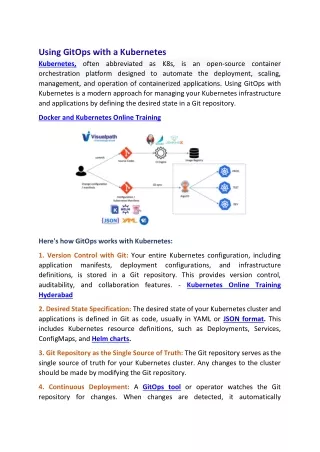
THE OPERATOR CONTROL LOOP 1. Observe 2. Reconcile 3. Act Operators continuously monitor the application state and observe the cluster environment. Define application using a Custom Resource (CR) and analyze Desired State vs Current State. Takes corrective actions automatically to ensure system stability and self-healing. Result: Self-healing infrastructure with zero manual intervention required for routine maintenance.
COMPLEXITY OF STATEFUL WORKLOADS Requirements Examples Persistent storage management Databases: PostgreSQL, MongoDB, MySQL Ordered, predictable deployments Messaging: Kafka, RabbitMQ Data consistency across clusters Streaming: Spark, Flink Automated backup and recovery 👉 Manual management increases operational risk. Controlled, data-safe scaling
TURNING COMPLEXITY INTO AUTOMATION Provisioning: Seamless database creation Schema Updates: Automated version tracking Failover: Instant high-availability handling Backups: Policy-driven scheduling Upgrades: Risk-free version migrations ✔ Reduced downtime | ✔ Fewer human errors | ✔ Predictable operations
BUSINESS AND TECHNICAL ADVANTAGES Engineering Business Scale Infrastructure consistency, faster deployments, and significantly improved system resilience. Lower operational costs, enhanced reliability, and a much faster time-to-market. Scale organizations without proportionally increasing operational or maintenance overhead.
REAL-WORLD OPERATOR EXAMPLES Database Operators: Automate replication, backups, and horizontal scaling. Fintech Use Case A fintech company automated database failover using operators, reducing recovery time from hours to minutes. Monitoring Operators: Manage full observability stacks (Prometheus/Grafana). Messaging Operators: Handle complex cluster configuration and recovery. 👉 Enable production-grade reliability.
MAXIMIZING OPERATOR SUCCESS Start with production-critical workloads first. Use tested and community-supported operators. Implement strong Role-Based Access Control (RBAC). Continuously monitor operator performance metrics. Pro Tip: Thoroughly document all operational workflows. Treat operators as part of your core platform engineering strategy.
Automate Smarter Kubernetes Operators are redefining how organizations manage complex stateful applications. By embedding operational intelligence directly into the platform, businesses achieve higher availability and reduced manual intervention. Partnering with a Trusted Kubernetes Consulting Partner ensures strategic implementation and optimized workloads for the future.