Uttarakhand PDF
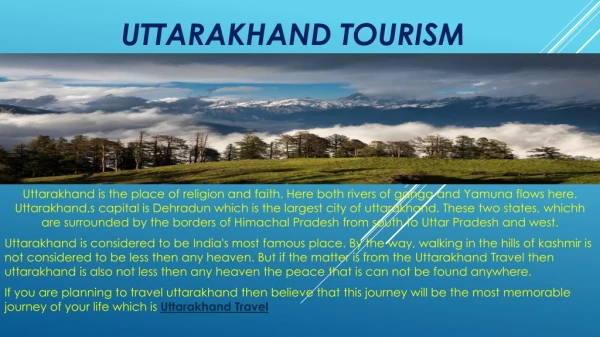
Uttarakhand, which is also known as Uttaranchal in early 90s Uttaranchal is the state in Northen India. It is also known as Devbhoomi due to his religion significance and numerous HinduTemple and famous for Uttarakhand tourism.

Uttarakhand PDF
E N D
Presentation Transcript
UTTARAKHAND TOURISM Uttarakhand, a state in northern India, is often referred to as the "Land of the Gods" due to its scenic beauty and spiritual significance. It is located in the lap of the majestic Himalayas and is blessed with a rich cultural heritage, diverse flora and fauna, and breathtaking landscapes. Uttarakhand has a long and fascinating history that dates back to ancient times. It was known as "Kedarkhand" or the abode of Lord Shiva in the ancient Hindu scriptures. The region was ruled by various dynasties, including the Katyuri and the Chand dynasty. In the medieval period, it came under the influence of the Mughals and later the Gurkhas. However, the British East India Company gained control over the region in the early 19th century. After India gained independence in 1947, Uttarakhand became a part of the state of Uttar Pradesh until it was Uttarakhand is bordered by Tibet in the north, Nepal in the east, and the Indian states of Himachal Pradesh in the west and Uttar Pradesh in the south. The state is predominantly mountainous, with the Himalayan range running through its entire length. Some of the highest peaks in the world, including Nanda Devi and Trisul, are located in Uttarakhand. The state is also known for its numerous glaciers, rivers, and lakes. The Ganges, Yamuna, and their tributaries originate from this region, making Uttarakhand the source of some of India's holiest rivers.
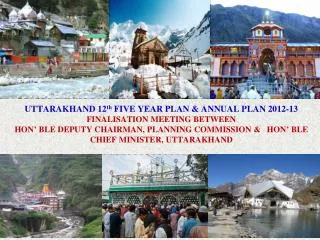
Uttarakhand's culture is deeply rooted in its religious and spiritual traditions. The state is home to several revered Hindu pilgrimage sites, such as the Char Dham (Yamunotri, Gangotri, Kedarnath, and Badrinath), Haridwar, Rishikesh, and Panch Kedar. These places attract millions of devotees and tourists from around the world who seek spiritual solace and a glimpse of the scenic beauty. The local people of Uttarakhand, known as Garhwalis and Kumaonis, have their distinct traditions, folk dances (such as Langvir Nritya and Barada Nati), music, and cuisine. The state's festivals, including Kumbh Mela, Diwali, Holi, and Makar Sankranti, are celebrated with great enthusiasm History Of Uttarakhand Uttarakhand is a state located in the northern part of India. It was carved out of the state of Uttar Pradesh on November 9, 2000, becoming the 27th state of the Indian Union. However, the history of the region goes back much further. Ancient times: The region of Uttarakhand has a rich and ancient history. It is believed to have been inhabited since prehistoric times. The area was mentioned in the ancient Hindu scriptures such as the Vedas and the Puranas. It was a part of the Kuru and the Panchal kingdoms during the Vedic period. Medieval period: During the medieval period, the region saw the rise and fall of several dynasties. The Katyuri dynasty, which originated in the 7th century, ruled over the Kumaon region of present-day Uttarakhand for several centuries. They were known for their patronage of art, culture, and architecture. Another important dynasty of the region was the Chand dynasty, which emerged in the 10th century and ruled over the Garhwal region. They established their capital at Kirtinagar and later shifted it to Chandpur Garhi. The Chand rulers played a significant role in the development of the region and promoted the arts and literature. The region was also influenced by various external powers during this period. The Delhi Sultanate, the Mughals, and later the Gurkhas from Nepal had varying degrees of control over different parts of Uttarakhand. British rule: With the arrival of the British East India Company in India, the region came under British control. Initially, it was administered as part of the Kumaon and Garhwal divisions of the British India. The British recognized the strategic importance of the area due to its proximity to the borders of Tibet and Nepal. Modern Uttarakhand: After India gained independence from British rule in 1947, Uttarakhand remained a part of Uttar Pradesh. However, the people of the region started demanding separate statehood due to issues of neglect, underdevelopment, and cultural distinctiveness.
The movement for a separate state gained momentum in the 1990s, and after years of protests and agitations, the central government of India decided to grant separate statehood to Uttarakhand. On November 9, 2000, the state of Uttarakhand was officially formed, comprising the hilly regions of Uttar Pradesh. Since its formation, Uttarakhand has made progress in various sectors such as education, infrastructure, and tourism. The state is known for its scenic beauty, pilgrimage sites like the Char Dham Yatra (comprising Yamunotri, Gangotri, Kedarnath, and Badrinath), and adventure tourism activities. In conclusion, Uttarakhand has a diverse and fascinating history that dates back to ancient times. From its Vedic roots to the rise and fall of various dynasties, the region has seen numerous influences and changes. Today, it stands as a separate state, known for its natural beauty and cultural heritage. Geography of Uttarakhand Uttarakhand, formerly known as Uttaranchal, is a state located in the northern part of India. It was carved out of the northern part of Uttar Pradesh in 2000 and is often referred to as the "Land of the Gods" due to its numerous Hindu pilgrimage sites and scenic beauty. Let's explore the geography of Uttarakhand:
1.Location and Borders: Uttarakhand is located in the Himalayan region of northern India. It is bordered by the Tibet Autonomous Region of China to the north, and by the Indian states of Himachal Pradesh to the west, Uttar Pradesh to the south, and Nepal to the east. 2.Terrain and Landforms: The state is characterized by its mountainous terrain and is known for the presence of several peaks, including Nanda Devi, Trisul, Kamet, and Badrinath. The Shivalik Hills form the southern foothills of the state, while the Greater Himalayas dominate the northern part. Uttarakhand is also home to several glaciers, including Gangotri, Yamunotri, and Pindari, which are the sources of the major rivers in the region. 3.Rivers and Lakes: Uttarakhand is known as the "Land of Rivers" as it is the origin of several major rivers in India. The Ganges (Ganga) is the most prominent river and flows through the state, with Haridwar and Rishikesh being important pilgrimage sites situated on its banks. Other significant rivers include the Yamuna, Alaknanda, Bhagirathi, and Ramganga. The state is also dotted with beautiful lakes, such as Nainital Lake, Bhimtal Lake, and Roopkund Lake. 4.National Parks and Wildlife: Uttarakhand is home to several national parks and wildlife sanctuaries, which are known for their rich biodiversity and scenic beauty. Jim Corbett National Park, the oldest national park in India, is located in Uttarakhand and is famous for its population of Bengal tigers. Other notable national parks include Gangotri National Park, Nanda Devi National Park, and Rajaji National Park.
The state is also known for its diverse flora and fauna, with species like snow leopards, musk deer, Himalayan tahr, and a variety of birds being found in the region. 5.Hill Stations and Tourist Destinations: Uttarakhand is a popular tourist destination, known for its picturesque hill stations and scenic beauty. Some of the well-known hill stations in the state include Mussoorie, Nainital, Almora, Ranikhet, and Auli. These hill stations offer stunning views of the Himalayas, pleasant weather, and opportunities for adventure activities like trekking, skiing, and mountaineering. The geography of Uttarakhand with its mountains, rivers, lakes, and diverse wildlife makes it a captivating destination for nature lovers, pilgrims, and adventure enthusiasts. Places to visit in Uttarakhand Uttarakhand is a state in India known for its natural beauty, pilgrimage sites, and adventure activities. Here are some of the popular places to visit in Uttarakhand: 1.Dehradun: The capital city of Uttarakhand, Dehradun is located in the Doon Valley and offers a pleasant climate and beautiful landscapes. It is known for attractions like Robber's Cave, Sahastradhara, Mindrolling Monastery, and Forest Research Institute. 2.Mussoorie: Often referred to as the "Queen of Hill Stations," Mussoorie is a charming hill station known for its panoramic views of the Himalayas. The Mall Road, Kempty Falls, Gun Hill, Lal Tibba, and Jharipani Falls are some of the popular attractions here.
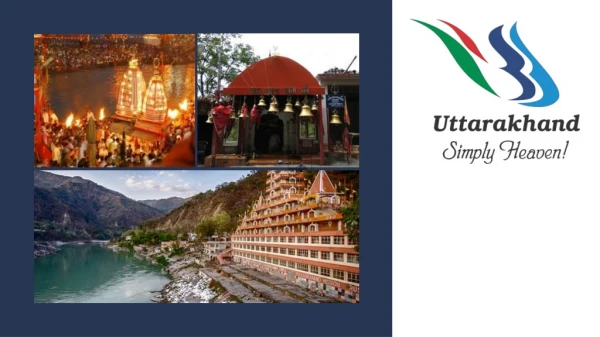
3.Nainital: Nestled around the serene Naini Lake, Nainital is a popular hill station and a major tourist destination. It offers a pleasant climate and attractions like Naini Lake, Naini Peak, Tiffin Top, Naina Devi Temple, and Snow View Point. 4.Rishikesh: Situated on the banks of the holy River Ganges, Rishikesh is a renowned pilgrimage site and a hub for yoga and spirituality. It is famous for its ashrams, the iconic Laxman Jhula and Ram Jhula suspension bridges, Triveni Ghat, and the Beatles Ashram. 5.Haridwar: Considered one of the holiest cities in India, Haridwar attracts a large number of pilgrims. It is famous for its ghats, where the Ganges Aarti (a religious ceremony) takes place, as well as Har Ki Pauri, Chandi Devi Temple, Mansa Devi Temple, and the Kumbh Mela (held every 12 years). 6.Jim Corbett National Park: Located in the foothills of the Himalayas, Jim Corbett National Park is India's oldest national park and a popular wildlife destination. It is known for its population of Bengal tigers, as well as elephants, deer, leopards, and various bird species.
7.Badrinath: Situated in the Chamoli district, Badrinath is one of the most important pilgrimage sites for Hindus. It is home to the famous Badrinath Temple, dedicated to Lord Vishnu, and surrounded by stunning mountain vistas. 8.Kedarnath: Another significant pilgrimage site, Kedarnath is located in the Garhwal Himalayas. It is known for the Kedarnath Temple, one of the twelve Jyotirlingas (holy shrines) of Lord Shiva, as well as its scenic beauty and trekking opportunities. 9.Auli: Auli is a popular skiing destination in Uttarakhand, offering breathtaking views of the Himalayas. It is known for its pristine slopes, cable car ride, and opportunities for adventure sports like snowboarding and trekking. 10.Valley of Flowers National Park: Located in the Chamoli district, the Valley of Flowers is a UNESCO World Heritage Site known for its meadows adorned with vibrant alpine flowers. It is a paradise for nature lovers and trekkers. These are just a few of the many attractions Uttarakhand has to offer. The state is blessed with a diverse range of destinations that cater to different interests, be it nature, spirituality, wildlife, or adventure. For more visit the link: Uttarakhand Tourism