Download
1 / 6
0 likes | 8 Vues
Understanding the import process and documentation is essential for smooth and compliant international trade. Professional import documentation services for businesses help manage paperwork such as invoices, packing lists, permits, and customs forms accurately and on time. These services reduce delays, minimize compliance risks, and ensure goods clear customs efficiently. Ideal for importers of all sizes, expert documentation support streamlines operations, saves time, and helps businesses focus on growth while meeting regulatory requirements.<br><br>

E N D
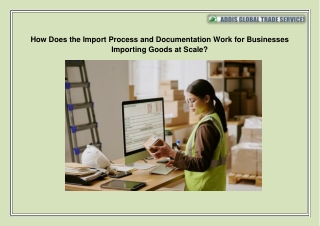
How Does the Import Process and Documentation Work for Businesses Importing Goods at Scale?
Importing goods helps your business grow and reach new customers. But bigger shipments mean more rules and more paperwork. One small mistake can slow everything down fast. Understanding each step keeps your goods moving and your costs under control. This guide walks you through the whole process. You'll learn what matters most and how to stay compliant without the headaches. What Does the Import Process Really Mean? The import process covers everything from placing your order to getting products delivered. Each step needs the right information. When you're bringing in large shipments regularly, errors get expensive quickly. Your import work actually starts before anything leaves your supplier. You need to confirm what you're buying, how much it costs, and where it comes from. U.S. Customs and Border Protection checks all this when your shipment arrives. Having a clear system for the import process and documentation keeps your team organized. Standard steps mean less confusion and faster shipments. Step One: Get Your Tariff Codes Right Every product you import needs a tariff code. The U.S. uses something called the Harmonized Tariff Schedule, or HTS for short. This code tells customs what duty rate applies and what rules to follow. Wrong codes cause delays and fines. Customs might inspect your shipment or change your duties. Always double-check codes before you ship. Getting classification right saves money and prevents problems at the port. Step Two: Declare the Correct Value Customs uses your declared value to calculate duties. This value includes your product price plus certain other costs. It doesn't include shipping charges inside the U.S.
If your value seems too low, customs will notice. If it's too high, you pay more than you should. Keep your invoices clean and accurate. Good records help customs clear your shipment faster. Step Three: Know Your Country of Origin Where your product comes from affects duty rates and trade programs. Some countries get lower tariffs. Others face extra charges. Origin depends on where the product was actually made. Just assembling parts somewhere might not change the origin. Check with your suppliers early to get this right. Wrong origin claims can stop your shipment completely. Documents You Need to Import Successfully Documents prove you're following the rules. Customs reviews them before releasing your goods. Missing paperwork means delays. You'll typically need these documents: ● A commercial invoice showing seller, buyer, value, and product details ● A packing list with weight and package counts ● Bill of lading or air waybill for proof of transport ● Importer Security Filing for ocean shipments ● Customs entry summary filed online Make sure the import process and documentation match up. Why Accuracy Matters Even More at Scale? Large shipments multiply small problems. One error can hold up multiple containers. Storage fees and port charges add up fast.
Using standard templates keeps your team consistent. Digital records make audits much easier. Accuracy builds trust with customs and speeds up future shipments. Filing Entries With Customs You or a licensed broker files entries through the ACE system. Customs reviews everything for potential risks. Sometimes they ask for inspections or extra documents. Clean filings move through faster. If you import often, track your error rates and filing history. Strong records help you clear customs smoothly over time. Understanding Duties and Extra Reviews Customs collects duties and fees when goods enter the country. Rates depend on what you're importing and where it's from. Some products need extra checks from agencies like the FDA or USDA. These reviews protect public safety. Planning helps you avoid delays during inspections. How do Import Documentation Services Help? Managing paperwork yourself takes serious time and focus. Trade rules change constantly. Mistakes cost money. Import documentation services for businesses help you manage these risks. These services prepare and file your customs entries. They watch for rule changes and deadlines. They also help with audits and corrections when needed. You get reliable support and fewer surprises. Benefits of Professional Support
Trade experts understand customs systems inside and out. They work with carriers and authorities daily. They catch issues before your shipments arrive. Clear support protects your operations long term. Common Import Mistakes to Avoid Watch out for these frequent problems: ● Shipping before reviewing documents ● Using outdated tariff codes ● Ignoring origin rules ● Filing entries late ● Avoiding these mistakes saves both time and money. Planning for Growth As you grow, customs pay closer attention. Clean records build your credibility. They monitor frequent importers more carefully. Plan your shipments months ahead when possible. Good coordination with suppliers improves accuracy. Professional reviews add extra protection. Smart planning supports steady growth. Importing at scale takes care and clear systems. Each step depends on correct information and timely filing. Following the rules protects your profits and supply chain. Strong systems and expert help reduce your risk. You gain confidence doing business across borders. Investing in solid import practices keeps everything running smoothly. Using import documentation services for businesses reduces your internal workload. Your team can focus on sourcing products and making sales.