Download

1 / 3
0 likes | 2 Vues
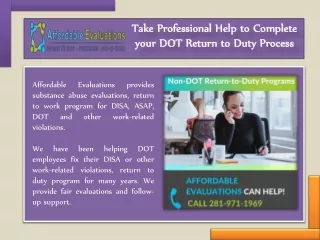
Trust returns through clear steps, steady habits, and honest records. The DISA Return to Duty Process gives everyoneu2014workers and managersu2014a fair, structured path to move past a violation and get back to safe performance. It blends evaluation, education, and documented follow-ups so progress can be seen, not guessed. Done well, it reduces risk, supports dignity, and protects teams on the ground.

E N D
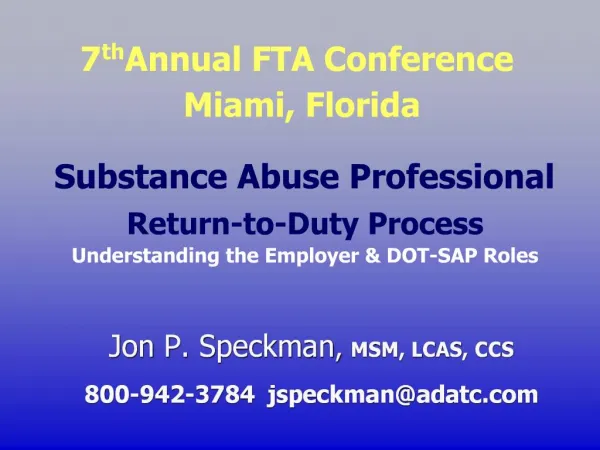
Mastering the DISA Return to Duty Process: What Employers and Employees Should Know Trust returns through clear steps, steady habits, and honest records. The DISA Return to Duty Process gives everyone—workers and managers—a fair, structured path to move past a violation and get back to safe performance. It blends evaluation, education, and documented follow-ups so progress can be seen, not guessed. Done well, it reduces risk, supports dignity, and protects teams on the ground. It also reminds organizations that prevention and rehabilitation go together. In this article, we’ll discuss how the process works, who does what, and how to finish it cleanly with fewer delays and stronger outcomes. Understanding Why the Process Matters Safety depends on trust you can verify. Within the DISA Return to Duty, employees who failed a test or policy check must show readiness through measured actions—not promises. That means qualified evaluation, practical recommendations, and records that stand up under review. For employers, this lowers liability and confusion; for employees, it creates a fair chance to rebuild credibility. Clear milestones prevent guesswork and set a common language for progress. When
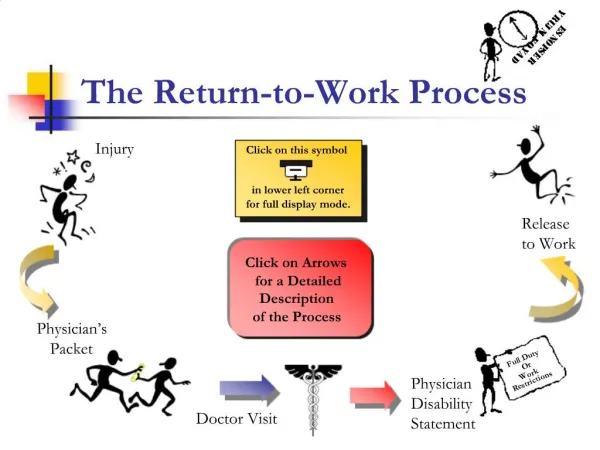
expectations are written and followed, morale improves, misunderstandings shrink, and the whole team sees that accountability and respect can live in the same room. How the Process Works Step by Step (Pointer-Based) A structured path keeps momentum high and errors low. The SAP Return to Duty Process typically moves through five predictable phases: Evaluation: a qualified professional reviews history, risk, and context. Recommendations: education, counseling, or treatment tailored to need. Completion checks: each requirement verified and logged. Testing & monitoring: random/scheduled tests confirm stability. Reinstatement: return approved once all standards are met. This sequence turns a stressful moment into measured progress—everyone knows the next step, the proof required, and the finish line. Employer Responsibilities in Plain Terms Leaders set tone and tempo. During the DISA Return to Duty Process, employers document the violation accurately, coordinate with evaluators, and protect confidentiality. They also keep communication clear: timelines, roles, and acceptable duties while the employee completes requirements. A good policy pairs consistency with empathy—treating the process as rehabilitation, not retaliation. That approach reduces resistance and speeds completion. It also strengthens workplace safety culture by showing that standards are enforced fairly. When supervision, HR, and safety teams act in sync, the return is smoother, the records are cleaner, and future incidents are less likely. What Employees Can Control (and Improve) Progress favors preparation. In the DISA Return to Duty, employees can own the basics: show up early, keep a single folder for certificates, confirm appointments, and ask questions when unclear. Small routines create reliable momentum—fifteen minutes a day for forms, logs, and follow-ups beats last-minute scrambles. Counseling isn’t a box to tick; it is a chance to learn triggers and build better boundaries. Each verified step rebuilds trust because it replaces talk with evidence. Over weeks, those receipts, reminders, and results add up to something sturdy: a reputation for doing what you said you would do. Turning Compliance into Long-Term Stability Finishing is the start, not the end. After the DISA Return to Duty Process, the habits that helped you pass—planning, documentation, honest updates—is the same habits that keep you safe. Keep a light testing of your own routines: sleep, stress, and shifts that raise risk. Use short check-ins with a mentor or supervisor to stay ahead of problems. When teams see consistent behavior, they relax; when managers see clean records, they plan with confidence. The best
outcome isn’t just reinstatement—it’s fewer close calls, steadier performance, and a workplace that trusts your word because the data agrees. Conclusion A well-run process makes accountability practical. The DISA Return to Duty Process turns hard moments into measurable steps—clear evaluations, verified completions, and calm communication. For employers, it’s a safeguard; for employees, it’s a roadmap back to reliable work. Most of all, it replaces doubt with proof, protecting people and reputations while keeping operations moving. Professionals often point to Affordable Evaluations for discreet scheduling, precise documentation, and steady guidance that keep timelines realistic. With organized coaching and clean records, participants finish the DISA Return to Duty efficiently and return to the job with stronger habits, clearer plans, and renewed trust. FAQs 1. How long does the return process take? Timelines vary by evaluation findings and required steps, but many cases resolve within several weeks to a few months. 2. Can someone work while completing requirements? Often, yes—in non-safety-sensitive roles, depending on policy and evaluator guidance, until full reinstatement is approved. 3. What reduces delays the most? Early scheduling, complete paperwork, and prompt proof of each finished step keep reviews smooth and decisions on track. Contact details: Affordable Evaluations Address: 1120 NASA Parkway, Ste. 300A, Houston, TX, 77058, USA Email: ts@aodresource.com URL: https://www.affordable-evaluations.com/