Download
1 / 9
0 likes | 2 Vues
White-label real estate tokenization platforms use secure blockchain architecture to enable compliant, scalable, and transparent digital property ownership and global investment access. <br><br>https://www.blockchainx.tech/white-label-real-estate-tokenization-platform-development/

E N D
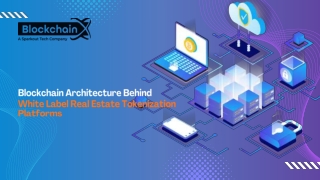
Blockchain Architecture Behind White Label Real Estate Tokenization Platforms
Introduction Real estate tokenization is rapidly transforming the global real estate market by enabling property owners to digitize real estate and offer shared ownership to investors worldwide. As adoption grows the companies are turning towhite label real estate tokenization platform development because they offer a ready-made to customizable and scalable solution without having to build blockchain infrastructure from scratch. At the heart of these platforms is a robust blockchain architecture that ensures security, transparency and scalability and regulatory compliance. Understanding this architecture is critical for businesses to asset managers and developers aiming to launch trusted tokenized real estate solutions.
Understanding White-Label Real Estate Tokenization Platforms White-label real estate tokenization platforms are ready-made solutions that enable businesses to digitize property assets, onboard investors, automate compliance, and launch branded digital marketplaces. They reduce development time and cost while offering a scalable, secure blockchain infrastructure without the need for deep technical expertise.
Core Blockchain Layers Powering Tokenization Layer 1 (Base Blockchain): Provides core security and smart contract functionality using blockchains like Ethereum, Polygon, Avalanche, and Solana, ensuring immutable and trusted ownership records. Layer 2 Scaling Solutions: Enhance speed and reduce transaction costs through Optimistic Rollups, ZK-Rollups, and sidechains, enabling smooth participation for large investor groups. Cross-Chain & Multi-Chain Support: Allows property tokens to move across multiple blockchains, improving liquidity, flexibility, and global investor access.
Smart Contract Architecture for Real Estate Tokenization • Token Minting Contracts: Create asset-backed tokens representing fractional real estate ownership with transparency. • Compliance & KYC/AML Contracts: Automate investor verification, accreditation, and trading restrictions. • Income Distribution Contracts: Automatically distribute rental income to token holders at set intervals. • Token Lifecycle Management Contracts: Control issuance, transfers, lock-ups, redemption, and token burning to ensure compliance.
Benefits of Blockchain Architecture Blockchain architecture ensures secure, transparent, and scalable real estate tokenization. Smart contracts automate compliance, reduce legal risk, and maintain tamper-proof ownership records while enabling global liquidity and fractional investment.
Future Outlook Emerging technologies like AI analytics, Zero-Knowledge Proofs, and multi-chain interoperability will enhance valuation accuracy, privacy, and liquidity, making tokenized real estate more efficient, secure, and globally accessible.
Conclusion White-label real estate tokenization platforms leverage advanced blockchain architecture to deliver secure, transparent, and scalable digital property investments. With smart contracts, automated compliance, and multi-chain support, these platforms enable efficient global access to real estate assets. As technologies like AI analytics and privacy-focused blockchain solutions evolve, early adopters will be well positioned to lead the future of digital real estate.
ContactUs BlockchainX offers secure, scalable data tokenization services powered by blockchain, enabling privacy, compliance, and seamless data sharing across platforms and industries. www.linkedin.com/company/blockchainxtech/ www.blockchainx.tech/ contact@blockchainx.tech