True Copy Attestation: Simplifying the Verification Process
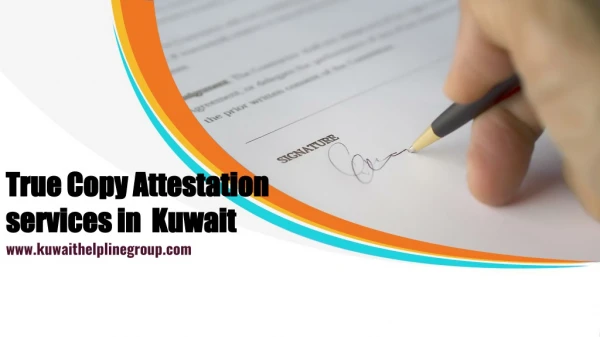
True copy attestation is a method of confirming legality of a document or record. It is also applied throughout diverse fields of life including business dealings, lawsuits, and even true copy attestation Dubai or true copy attestation UAE. But the process of true copy attestation is most times cumbersome and lengthy, therefore the document is inaccessible or difficult to be processed by most people, whether in portability or otherwise.


True Copy Attestation: Simplifying the Verification Process
E N D
Presentation Transcript
True Copy Attestation: Simplifying the Verification Process True copy attestation is a method of confirming legality of a document or record. It is also applied throughout diverse fields of life including business dealings, lawsuits, and even true copy attestation Dubai or true copy attestation UAE. But the process of true copy attestation is most times cumbersome and lengthy, therefore the document is inaccessible or difficult to be processed by most people, whether in portability or otherwise. The following are ways through which true copy attestation process can be made more efficient. These targets have the purpose of increasing the ease and speed of the process while maintaining procedure. With these mentioned techniques of simplification, peoples and companies can easily go through certificate attestation in UAE or certificate attestation in Dubai process and be sure that their documents are legitimate. 1. Online Platforms: This approach shows that it is possible to tame some of the requirements of true copy attestation if one embraces the use of the online platform. Through the portal, the actual documentation and the verification processes are achieved in a more convenient and secure way than submitting the wet-ink documents personally. Another advantage of using online platforms is that dropping a digital signature, status of documents can be checked in real-time and there is communication with the attestation authorities in real-time. 2. Standardized Forms: There is a need to create forms of standard for true copy attestation to ease the operations between individuals and authorities. These forms can indeed document all the required details as would be needed for the attestation process thus saving a lot of time and minimizing on error. It also makes it easier to compare one document with other related forms to conduct proper verification. 3. Automation: Simply, the integration of these automation technologies can help reduce the time taken for true copy attestation process. Using such advanced systems, authorities can easily automate real time
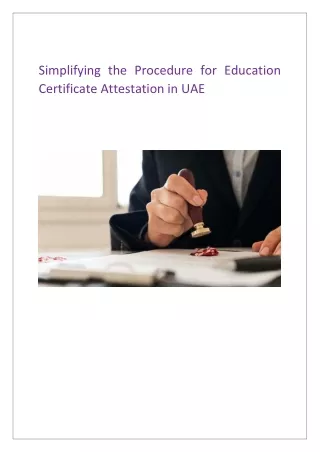
document verification, draw out components of possible inconsistency and even draw out probable signs of fraudulent activities. It also allows giving notification and updates to people, which would have otherwise taken a long time thus making the entire process clear. 4. Mobile Applications: Creating dedicated applications for the mobile platform for the true copy attestation procedure can be a valuable addition to increase utility. These apps can help user in getting the live status of their attestation request so that they can know the status of their documents. Furthermore, mobile applications can complete several functions like digital signature capturing and storage of certificates. 5. Collaboration: It is therefore effective to call for cooperation between concerned agencies to ease the process of true copy attestation. This way feedback is provided, abilities are built upon, and technologies shared and merged to create a better means for determining work accuracy and formulating formal standards. Engagement can also create a platform for outlining and sharing the best practices that enhance the improvement of the attestation process. True Copy Attestation works as follows: Document Submission: You take a photocopy of the document to a notary public or any other authorized officer for certification. Verification: The authenticity affirms the copy with the original document and assures that the copy to is original. This step assures that there is a word-by-word replication, completion by completion, detail by detail match between the identified content, format and details. Certification Stamp and Signature: The authenticated person or the organization who has authenticated the actual document signs, stamps or seals the photocopy and attachment of a stamp saying, “True Copy.” The signature of the official may also be put as another way of signing authenticity.
Document Collection: After the certification and attestation, the copy can then be used in all legal, academic or professional activities as need be. If these simplification techniques are applied in the true copy attestation, the complexity, way and ease of using the processes could be improved significantly. It also serves the interest of individuals or entities undertaking attestation services and increases the credibility of the verification process. Through leveraging of technology, and improvement of the processes to some standard, and encouraging an interdisciplinary approach to attestation, it is possible to reduce the complexities in the true copy attestation process and thus extend the access to as many people as possible.