Hysteroscopy Systems Market
0 likes | 3 Vues
The hysteroscopy systems market involves medical devices used to diagnose and treat uterine conditions through a minimally invasive procedure called hysteroscopy.


Hysteroscopy Systems Market
E N D
Presentation Transcript
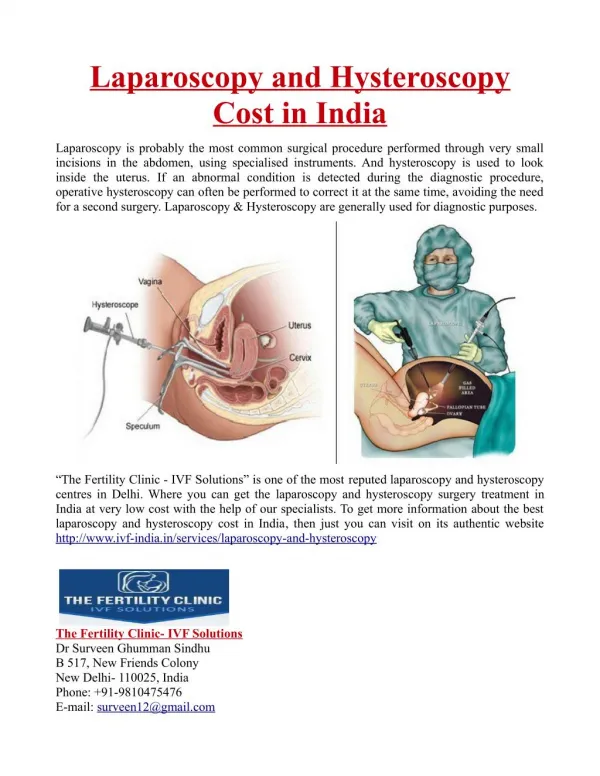
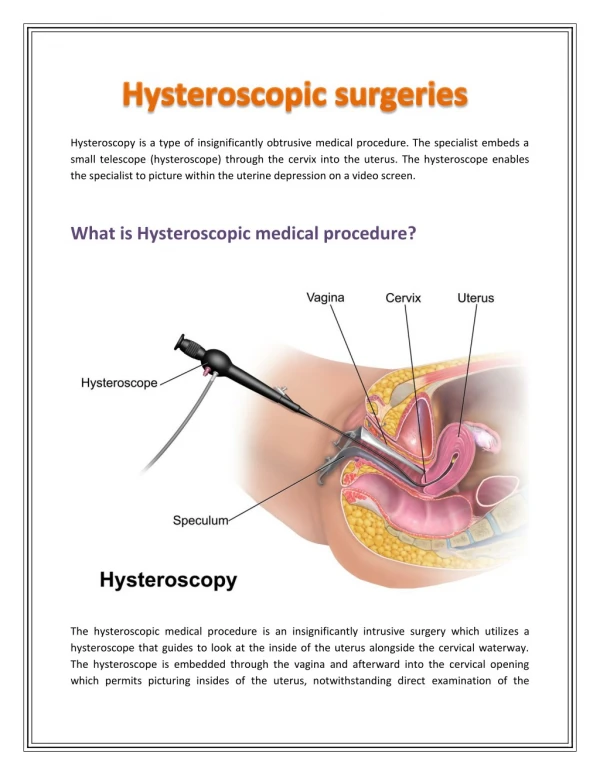
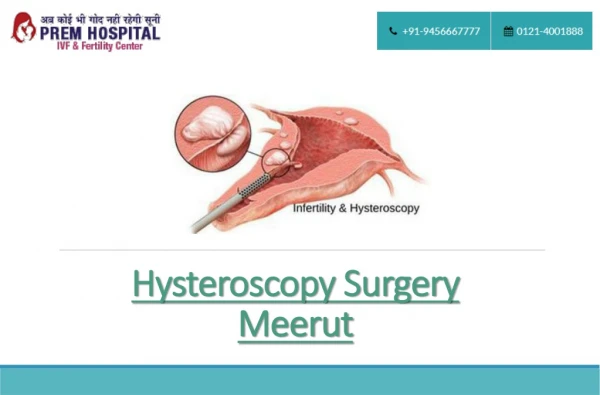
+1 217 636 3356 +44 20 3289 9440 sales@mobilityforesights.com Your Cart 0 Company Market Reports Consumer Research Advisory Services Exports - Imports Careers Contact Us Blog Your cart is empty Your Name Return to Shop Business Email Global Hysteroscopy Systems Market 2024-2030 Country Phone Number +1 Company Name Single User License : $ 3,500 Your message Corporate User License : $ 6,000 By submitting this form, you are agreeing to the Request Sample Terms of Use and Privacy Policy. I'm not a robot reCAPTCHA Privacy - Terms BUY NOW DOWNLOAD SAMPLE DESCRIPTION TABLE OF CONTENTS HYSTEROSCOPY SYSTEMS MARKET KEY FINDINGS The key market drivers for hysteroscopes in developing countries are the large pool of patients with gynecological problems. The growth of infertility cases, economic development, and increasing aging population also contribute to the growth of the global market. The number of hysteroscopes installed in hospitals and ambulatory surgery centers (ASCs) will continue to steadily grow in the future influenced by the increasing number of global surgical procedures. Risk of pelvic inflammatory diseases and damage to the cervix are possible complications, restraining growth. North America and Europe are anticipated to, collectively, capture around half of the hysteroscopy systems market share. In the US, according to the American Cancer Society 2021 statistics, approximately 66,750 new cases of uterine/endometrial cancer are expected to be diagnosed in the same year. Flexible non-video (fiber) hysteroscopes segment is expected to hold the second largest share owing to their ability to provide better optical visualization. Emergence of novel hysteroscopy systems for usage in office-based set-ups is likely to boost the growth in this market. As per the World Health Organization (WHO) 2021 data, Endometriosis, a disease where tissue similar to the lining of the uterus grows outside the uterus affects roughly 10% (190 million) of reproductive age women and girls globally. Medicare in North America is encouraging office-based hysteroscopy by increasing its reimbursement amount and at the same time declining physician reimbursement for in-hospital and outpatient surgery center cases. This is expected to provide lucrative opportunities for manufacturers of office-based hysteroscopy systems. The integration of artificial intelligence, enhanced imaging technologies, and robotics is poised to elevate the capabilities of hysteroscopy systems. HYSTEROSCOPY SYSTEMS MARKET OVERVIEW We use cookies to understand site usage and improve content and offerings on our site. To learn more, refer to our Privacy Policy. By continuing to use this site, or closing this box, Peering into the future of the Hysteroscopy Systems Market unveils a landscape marked by innovation and technological advancements.As the global healthcare industry embraces digital transformation, the future holds the promise of more 0 sophisticated, patient-centric hysteroscopy solutions. The market is anticipated to witness a surge in adoption rates as healthcare providers increasingly recognize the benefits of these cutting-edge technologies. Learn more you consent to our use of cookies. Got it! Factors such as the rising incidence of gynecological disorders, increasing awareness among patients, and advancements in Send message Continue Shopping diagnostic techniques contribute to the market’s growth. Additionally, the growing trend towards minimally invasive procedures, driven by the desire for quicker recovery times and reduced healthcare costs, is a significant dynamic shaping the market landscape. Growing awareness about women’s health and the availability of advanced medical technologies are encouraging women to seek medical attention for their gynecological concerns, leading to higher adoption of hysteroscopy procedures. Increased healthcare spending in both developed and developing countries is expanding access to advanced medical procedures, including hysteroscopy. The rise of ambulatory surgical centers, which offer outpatient procedures, has created new opportunities for the adoption of hysteroscopy systems. Competitive dynamics among key players in the medical device industry have driven product innovations, such as the introduction of disposable hysteroscopes, which can contribute to reducing the risk of infections. Reimbursement policies and healthcare financing structures influence the adoption of hysteroscopy systems. Favorable reimbursement policies can encourage healthcare providers to invest in these technologies. INTRODUCTION TO HYSTEROSCOPY SYSTEMS MARKET Hysteroscopes are utilized for a variety of diagnostic and operative procedures to examine the cervix and inside of the uterus. Diagnostic hysteroscopy is acknowledged as the gold standard investigation of diseases involving the uterine cavity. It allows direct visualization of the uterine cavity, which explains its superior diagnostic accuracy. It can be carried out as an outpatient procedure, taking only a few minutes, and at success rates of up to 98% when lidocaine spray is used on a routine basis. Hysteroscopes are slender telescopic devices, which can be inserted into the vagina to reach the uterus, where it uses cameras and sensors to display a clear image onto a screen. Hysteroscopy systems comprise other instruments as well for the treatment. These tools are primarily used to find solutions to issues such as adhesions from surgery, a need for sterilization procedures, repeated miscarriages, or locating and studying an intrauterine device. The global hysteroscopy systems market is expected to witness a healthy rate of growth in the near future. A hysteroscopy can be used to: investigate symptoms or problems – such as heavy periods, unusual vaginal bleeding, postmenopausal bleeding, pelvic pain, repeated miscarriages or difficulty getting pregnant. diagnose conditions – such as fibroids and polyps (non-cancerous growths in the womb) . The uterus or cervix can be punctured by the hysteroscope, bleeding may occur, or excess fluid may build up in your system. In very rare cases, hysteroscopy can cause life-threatening problems. HYSTEROSCOPY SYSTEMS MARKET SIZE AND FORECAST
Global HYSTEROSCOPY SYSTEMS MARKET accounted for $XX Billion in 2023 and is anticipated to reach $XX Billion by 2030, registering a CAGR of XX% from 2024 to 2030. HYSTEROSCOPY SYSTEM MARKET TRENDS Technological Advancements Improved Visualization: Advancements in optics and image processing technology are leading to the development of hysteroscopes with better image quality and resolution, allowing for more accurate diagnosis and treatment. This includes 3D hysteroscopy, which provides a more realistic view of the uterine cavity. Miniaturization: Smaller and more flexible hysteroscopes are being developed, making the procedure less invasive and more comfortable for patients. Automated Procedures: Robotic-assisted hysteroscopy systems are being introduced, which offer improved precision and control during the procedure. Artificial Intelligence (AI): AI is being integrated into hysteroscopy systems to assist surgeons with diagnosis, decision-making, and procedural guidance. Growth of Minimally Invasive Procedures Patients are increasingly opting for minimally invasive procedures due to their shorter recovery times and fewer complications compared to traditional open surgery. This trend is driving the demand for hysteroscopes, which are used in several minimally invasive uterine procedures. Rise in Ambulatory Surgical Centers (ASCs) The growth of ambulatory surgical centers offering outpatient procedures, contributing to increased access to hysteroscopy for patients. Expanding Applications Broader applications of hysteroscopy, including diagnostic and operative procedures for various gynecological conditions such as abnormal bleeding, fibroids, polyps, and fertility issues. Disposable Hysteroscopes The development and adoption of disposable hysteroscopes, aimed at reducing the risk of infections and offering a cost- effective alternative for certain procedures. HYSTEROSCOPY SYSTEMS MARKET NEW PRODUCT LAUNCH Medtronic – MyoSure Reach Ablation System: This system offers a minimally invasive approach to hysterectomy, allowing for shorter hospital stays and faster recovery times. Ethicon – ENSEAL G2 Tissue Sealer: This tissue sealer provides rapid and reliable hemostasis, reducing the risk of bleeding during hysteroscopy procedures. Becton, Dickinson and Company – Bard Veress Needle: This needle features a unique safety design that minimizes the risk of needle stick injuries during the procedure. Boston Scientific – InSure Transcervical Uterine Reduction System (ITUR): This system offers a minimally invasive alternative to hysterectomy for the treatment of fibroids. KARL STORZ – Hysteroscopy 3D Vision System: This system offers a high-resolution 3D image with a wider field of view, allowing for improved visualization and surgical precision. Richard Wolf – versaScope+ Hysteroscope: This hysteroscope offers a unique double-balloon design that provides excellent stability and visualization during the procedure. HYSTEROSCOPY SYSTEMS MARKET SEGMENTATION Hysteroscopy Systems Market By Type Bench-top systems Handheld systems Others Hysteroscopy Systems Market By Modality Diagnostic hysteroscopy Operative hysteroscopy Hysteroscopy Systems Market By End User Hospitals Ambulatory surgical centers Others Hysteroscopy Systems Market By Region North America Europe Asia Pacific South and Central America HYSTEROSCOPY SYSTEMS MARKET COMPANY PROFILE Olympus Corporation KARL STORZ SE & Co. KG Richard Wolf GmbH Stryker Corporation Medtronic plc THIS HYSTEROSCOPY SYSTEMS MARKET REPORT WILL ANSWER FOLLOWING QUESTIONS 1. What is the current size of the global hysteroscopy systems market in 2023? 2. What is the expected CAGR of the market over the next five years (2024-2030)? 3. What are the key factors driving the growth of the market? 4. How is the market segmented by type (bench-top vs. handheld)? 5. Which segment is expected to grow faster? 6. How is the market segmented by application (diagnostic vs. operative)? 7. How is the market segmented by end user (hospitals vs. ambulatory surgical centers)? 8. What are the key trends in each segment? 9. Who are the major players in the global hysteroscopy systems market? 10. What is the market share of the leading players? 11. What are the key competitive strategies adopted by the players? 12. Are there any recent mergers and acquisitions in the market? 13. What are the recent technological advancements in hysteroscopy systems? 14. How are these advancements impacting the market? 15. What are the future trends in technology development? 16. What are the regulatory requirements for hysteroscopy systems in different countries? 17. What are the reimbursement policies for hysteroscopy procedures in different countries? 18. How are these regulations and policies impacting the market? 19. What is the future outlook for the global hysteroscopy systems market? 20. What are the key opportunities and challenges for the market in the coming years? RELATED REPORTS
MARKET REPORTS CONSUMER RESEARCH INFORMATION ADVISORY SERVICES CONTACT INFORMATION 172/1, 2nd Floor, 5th Main, 9th Cross Rd, Opposite to Kairalee Nikethan Education Trust, Indira Nagar 1st Stage, Bengaluru, Karnataka 560038, INDIA +1 217 636 3356, +44 20 3289 9440 sales@mobilityforesights.com Working Hours: Mon - Fri (9 AM - 9 PM IST) Connect with us © Copyright 2017-2023. Mobility Foresights. All Rights Reserved.