Maximizing Productivity Through Effective Office Fitouts
0 likes | 4 Vues
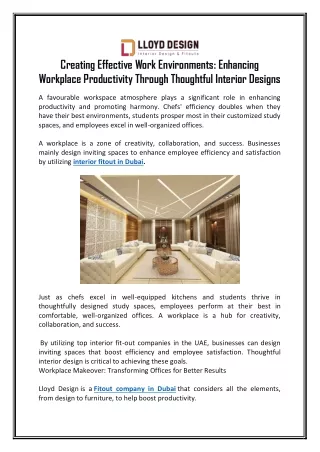
When it comes to workplace success, productivity is often the key measure of effectiveness. One of the most influential factors in boosting productivity is the environment in which employees work. An effective office fitoutu2014one that is thoughtfully designed and tailored to your businessu2019s needsu2014can significantly enhance employee performance, creativity, and overall satisfaction.


Maximizing Productivity Through Effective Office Fitouts
E N D
Presentation Transcript
Maximizing Productivity Through Effective Office Fitouts When it comes to workplace success, productivity is often the key measure of effectiveness. One of the most influential factors in boosting productivity is the environment in which employees work. An effective office fitout—one that is thoughtfully designed and tailored to your business’s needs—can significantly enhance employee performance, creativity, and overall satisfaction. Here’s how you can maximize productivity through a well-designed office fitout: 1. Optimizing Layout for Efficiency The layout of your office plays a crucial role in determining how efficiently employees can work. A well-planned layout can reduce distractions, streamline workflows, and create a more organized space. Open Spaces vs. Private Areas: A balance between open-plan areas and private spaces can improve both collaboration and focused work. Open spaces promote teamwork and communication, while private rooms allow employees to concentrate without interruptions. Task-Based Zones: Designating areas for specific tasks—like brainstorming zones, quiet workstations, and meeting rooms—can help employees move fluidly between tasks without unnecessary distractions or confusion. 2. Ergonomic Furniture and Comfort When employees are physically comfortable, they can focus better and work longer hours without discomfort. Ergonomic furniture—such as adjustable chairs, sit-stand desks, and well-positioned screens—reduces strain and improves posture, which can lower fatigue and prevent workplace injuries. Investing in quality ergonomic chairs helps with back support, which is essential for reducing discomfort during long working hours. Adjustable desks allow employees to switch between sitting and standing, which can help improve energy levels and reduce physical strain. Proper lighting reduces eye strain and headaches, enhancing focus and productivity throughout the day. 3. Creating Collaborative Spaces Collaboration is essential for innovation, problem-solving, and team development. Incorporating areas designed for teamwork—like meeting rooms, lounge spaces, or break-out zones—can foster creativity and open communication. Tech-Integrated Meeting Rooms: Providing tools like video conferencing setups, whiteboards, and presentation screens encourages dynamic meetings and keeps teams aligned, whether they are in the office or working remotely. Relaxed Collaboration Zones: Offering spaces where employees can casually brainstorm or work together in a more informal setting often leads to more creative solutions and a sense of community. 4. Natural Light and Biophilic Design
Exposure to natural light has been proven to boost mood, enhance focus, and improve employee well-being. Incorporating natural elements—such as plants or windows with plenty of sunlight—into your office fitout can have a significant positive impact on productivity. Windows and Light: Maximizing natural light through large windows or light wells can help regulate circadian rhythms, which in turn improves energy levels and focus. Biophilic Design: Integrating plants into the workspace can reduce stress and increase concentration. The natural beauty of plants adds to the aesthetic appeal while also enhancing the air quality. 5. Noise Control for Focused Work In an open-plan office, noise can be a major productivity killer. To create an environment conducive to focus, consider incorporating noise control strategies. Acoustic Panels: Installing soundproofing materials or acoustic panels can absorb noise and prevent distractions in noisy areas. Quiet Zones: Designate specific areas where employees can retreat for focused work or take calls in private without disturbing others. 6. Technology Integration Technology is at the heart of modern productivity. An office fitout should not only accommodate the tech needs of your team but enhance its usage to streamline operations. Wireless Charging Stations: These allow employees to keep their devices powered up without being tethered to a desk or charging cable. Smart Office Systems: Incorporating systems like automatic lighting, temperature control, and security systems ensures that the office environment is comfortable and efficient, giving employees one less thing to worry about. Connectivity: Providing fast, reliable internet access and necessary digital tools makes collaboration and communication seamless, no matter where your team is. 7. Encouraging Personalization Allowing employees to personalize their workspace creates a sense of ownership and boosts morale. Giving individuals the flexibility to add personal touches—whether it’s photos, artwork, or small plants—can make them feel more connected to their workspace, leading to increased satisfaction and productivity. Personalized Desks: Providing space for employees to personalize their workstations encourages a sense of pride in their work environment and fosters a positive attitude. Flexible Storage Options: Offering employees storage solutions where they can keep personal and work items organized helps maintain a clutter-free workspace, reducing distractions. 8. Wellness and Breakout Areas Regular breaks are essential for maintaining focus and avoiding burnout. Creating wellness spaces or breakout zones allows employees to take rejuvenating breaks and recharge throughout the day.
Relaxation Rooms: Designating areas where employees can unwind, meditate, or take a nap can reduce stress and boost overall productivity when they return to their work. Fully Equipped Kitchen Areas: Providing snacks, refreshments, or a place for employees to socialize over lunch can help increase morale and foster a positive office culture. 9. Flexibility to Adapt to Changing Needs As businesses grow, so do their needs. An office fitout that can easily adapt to changes in team size, office culture, and technology will help maintain productivity in the long term. Modular Furniture: Choose furniture and layouts that are flexible and can be easily rearranged as your team’s needs evolve. Scalable Design: Design with the future in mind. Consider how your office can grow or change with minimal disruption to your productivity. Conclusion Effective office fitouts are more than just a design choice; it’s an investment in the productivity and well-being of your team. By optimizing space, comfort, technology, and collaboration, you create an environment that supports efficient work habits, boosts morale, and fosters creativity. In turn, these factors lead to better performance and business success. When designing your office fitout, consider the unique needs of your business and team. The right design will not only improve your current operations but also help your organization thrive in the long term.