Solving Industry Challenges with Innovative Logistics App Development Solutions
0 likes | 3 Vues
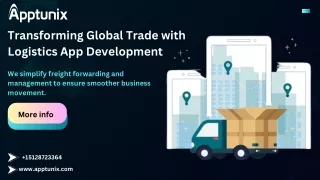
In the modern world, where technology is the key driver to the market, supply chain solutions require more innovative logistics app development solutions. On-demand logistics app development service can help you build a cutting-edge app that meets the needs of modern businesses and sets your business apart from the competition.


Solving Industry Challenges with Innovative Logistics App Development Solutions
E N D
Presentation Transcript
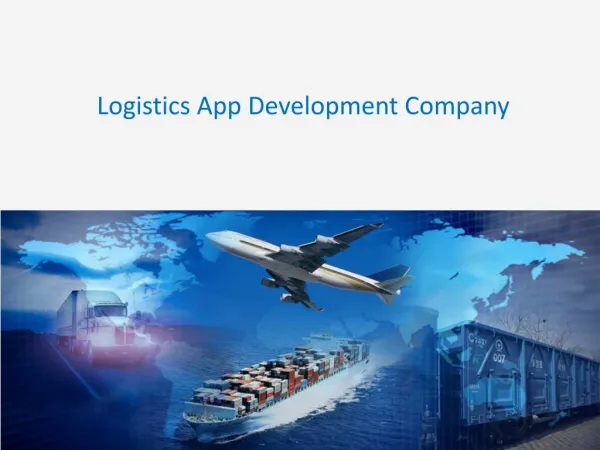
Solving Industry Challenges with Innovative Logistics App Development Solutions The Logistics industry can be best described as the wheel that has the responsibility of driving the wheel of commerce in the current globalized and highly integrated world economy. But it is not without risks like some complexities characterize the sector as being inefficient, costly to operate, and having clients whose expected requirements evolve very quickly. In the modern world where technology is the key driver to the market, supply chain solutions require more innovative logistics app development solutions. On-demand logistics app development service can help you build a cutting-edge app that meets the needs of modern businesses and sets your business apart from the competition. In this blog, we examine how new logistics apps are solving tough problems, improving operations, and transforming the supply chain.
Technological Development – The Changing Chapter of Logistics 1. Rising Customer Expectations The expectations from today’s customers can be defined as increasing their expectations of faster, more transparent deliveries at a lower cost. Whether it is the ability to track shipments in real-time or the availability of same-day deliveries these expectations have become crucial to logistics stakeholders. 2. Supply Chain Complexity Hence global supply chain is more challenging and complex as a result of globalization, differences in regulation, and multi-modal transportation. Such complexities cannot be effectively managed without solid technology solutions. 3. Operational Inefficiencies Challenges like routing, non-automated procedures, and the invisibility of inventory lead to high costs and wastage. 4. Sustainability Concerns Logistics companies are experiencing a shift to achieve environmental sustainability and minimize their impact on the environment. How Logistics Apps Eradicate Industry Problems 1. Visibility and Tracking. Such apps enable full tracking of shipments by the customer and the business, in every single phase of delivery. ● Benefits: ○ Improved transparency. ○ Enhanced customer satisfaction. ○ Reduced chances of lost or delayed shipments. 2. Route Optimization Solutions in the form of apps with the help of AI and ML algorithms, search for the best delivery routes. ● Key Features: ○ Analysis of traffic patterns.
○ Real-time weather updates. ○ Integration with GPS systems. ● Impact: ○ Lower fuel consumption. ○ Faster deliveries. ○ Reduced operational costs. 3. Inventory Management Logistics apps synchronize with WMS to enhance inventory levels and enhance circulation procedures. ● Capabilities: ○ Real-time inventory updates. ○ Demand forecasting. ○ Automated reordering processes. ● Advantages: ○ Minimized stockouts and overstocking. ○ Improved warehouse efficiency. 4. Automated Operations From order processing to last-mile delivery, automation enhances efficiency and accuracy. ● Examples of Automation: ○ Barcode scanning for inventory tracking. ○ Chatbots for customer support. ○ Autonomous vehicles for deliveries. ● Results: ○ Faster processing times. ○ Reduced human errors. 5. Enhanced Data Analytics In logistics apps, BI helps businesses make sound decisions, by using data insights gathered through big data collection. ● Applications: ○ Demand forecasting and planning to forecast customer values. ○ Determining the issues of inefficiency in the supply chain. ○ Auditing of the company’s key performance indicators (KPIs). 6. Sustainability Solutions Modern logistics apps incorporate eco-friendly features to promote sustainable practices. ● Innovative Approaches:
○ Optimizing delivery schedules to reduce emissions. ○ Incorporating electric or hybrid vehicles. ○ Enabling paperless transactions. Benefits of Innovative Logistics Apps 1. Cost Reduction ● Automated processes minimize labor costs. ● Route optimization and fuel management lower transportation expenses. 2. Improved Customer Experience ● Real-time tracking and personalized notifications enhance customer trust. ● Faster deliveries and transparent communication boost satisfaction. 3. Increased Efficiency ● Automation reduces bottlenecks in operations. ● Real-time data ensures quick decision-making. 4. Scalability ● Apps can easily adapt to growing business demands. ● Cloud-based solutions enable seamless integration and scalability. 5. Data-Driven Decision Making ● Applications give a measure of efficiency and an idea of the quality and designs to be expected. ● Predictive models help anticipate future challenges. Examples of Industry-Specific Solutions 1. E-Commerce Logistics ● Challenges: ○ High order volumes. ○ Same-day or next-day delivery expectations. ● App Features: ○ Automated order processing.
○ Real-time delivery tracking. ○ Seamless integration with e-commerce platforms. 2. Healthcare Logistics ● Challenges: ○ Taking and transporting temperature-sensitive products; such as vaccines. ○ Making sure that consignments where conveying medicare products arrive on time. ● App Features: ○ Real-time temperature monitoring. ○ Alerts for delays or disruptions. ○ Compliance with healthcare regulations. 3. Freight and Cargo Management ● Challenges: ○ Managing multi-modal transportation. ○ Tracking international shipments. ● App Features: ○ Integrated dashboards for shipment tracking. ○ AI-powered route and schedule optimization. ○ Customizable reporting tools. Challenges in Logistics App Development 1. High Development Costs ● Building robust logistics apps with advanced features requires significant investment. 2. Integration Complexities ● Subsequently, integrating it with existing ones can be quite a task especially when considering the parameters of compatibility. 3. Data Security Concerns ● Protecting sensitive customer and business data is critical. 4. User Adoption ● Training employees to use new technology effectively requires time and effort.
5. Regulatory Compliance One of the means of differentiating the application developed for different regions is the ability to meet various legal frameworks. Failure to do this may lead to legal implications that could be so costly and in some extreme cases lead to business shutdowns. Evolutions of Logistics App over the next Five Year 1. AI and Machine Learning ● Demand forecasting as a form of predictive analytics. ● Self-driven cars for the last mile logistics and delivery. 2. Blockchain Technology ● Enhancing supply chain transparency and security. ● Streamlining documentation and transactions. 3. Internet of Things (IoT) ● Real-time tracking of movables. ● Monitoring vehicle performance and conditions. 4. Augmented Reality (AR) ● Optimizing the Picking Process in Warehouse through the Support of Augmented Reality. ● Training employees using immersive simulations. 5. 5G Connectivity The increase in the number of logistics apps will be attributed to the use of enhanced 5G networks. Higher bandwidth and lower latency will result in timely updates and LI consumption in devices, improving functional Output. Conclusion Innovative solutions in logistics app development are changing the world and its problems to deliver the prospects. Real-time location management and route planning, optimization using accurate predictions, and incorporation of sustainability in these apps help businesses improve efficiency, cut costs, and deliver more value for money services to customers.
Over time there will be better solutions delivered by technology to improve the functionality of logistics in the supply chain. Those corporations that focus on funding the creation of exciting new applications today will be able to benefit most from the changes taking place in the environment tomorrow. These technologies therefore, when adopted into logistics businesses, do not only provide solutions to existing problems but can also offer direction towards a better connected, efficient, and environmentally friendly world.