Transform Your Vision with a Trusted Architectural Model Making Company
0 likes | 1 Vues
A professional architectural model making company does more than create scaled-down versions of buildings. It combines art, engineering, and technology to deliver visually compelling and structurally accurate models.


Transform Your Vision with a Trusted Architectural Model Making Company
E N D
Presentation Transcript
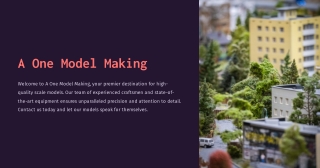
Bringing Ideas to Life: The Role of an Architectural Model Making Company in Modern Design In the world of architecture, engineering, and real estate, visualization plays a vital role in transforming ideas into tangible realities. Before a structure is built, clients and designers alike want to see what the finished project will look like. This is where an architectural model making company becomes indispensable. Combining creativity, precision, and technology, these companies craft miniature representations that communicate design intent with remarkable clarity. The Importance of Architectural Models Architectural models have been an integral part of design communication for centuries. From ancient civilizations to contemporary architecture firms, scale models help visualize concepts, evaluate proportions, and showcase spatial relationships. An experienced architectural model making company bridges the gap between imagination and physical reality, allowing clients to experience their projects in three dimensions. Whether it’s a residential complex, commercial building, or urban development plan, architectural models make it easier to understand design features, lighting, and textures. They
help investors, city planners, and clients grasp details that 2D blueprints or digital renders often fail to convey. What Makes a Professional Architectural Model Making Company Stand Out A professional architectural model making company does more than create scaled-down versions of buildings. It combines art, engineering, and technology to deliver visually compelling and structurally accurate models. Here’s what sets the best companies apart: 1. Precision and Detail Every architectural model requires exact proportions and attention to detail. Professional model makers use advanced tools such as laser cutters, 3D printers, and CNC machines to ensure accuracy. 2. Material Expertise The choice of materials—wood, acrylic, foam, or resin—affects both the look and longevity of a model. Skilled craftsmen select materials that best represent the textures and finishes of the actual structure. 3. Customization Each project is unique, and a top-tier architectural model making company customizes designs based on client requirements, whether for presentations, exhibitions, or investor meetings. 4. Integration of Lighting and Motion Modern architectural models often include LED lighting and interactive elements. This innovation brings models to life, highlighting interiors, pathways, and landscapes dynamically. 5. Commitment to Deadlines Timely delivery is crucial in project development. Experienced model makers understand client schedules and maintain strict timelines without compromising on quality. The Role of Industrial Model Makers in Design and Development While architectural model makers focus primarily on buildings and urban spaces, industrial model makers specialize in creating models for factories, power plants, machinery layouts, and infrastructure projects. Their work serves industries such as energy, oil and gas, manufacturing, and transport.
Industrial models play a key role in showcasing complex technical processes in a simplified and visually engaging manner. For example, a scale model of a manufacturing plant can demonstrate workflow efficiency, safety mechanisms, and machinery placement to clients or investors. An architectural model making company often collaborates with industrial model makers when projects combine architectural and industrial elements—such as large industrial parks, renewable energy facilities, or mixed-use infrastructure. Together, they provide a complete visual narrative of the project, from the building’s aesthetics to its technical operations. How Architectural Model Makers Combine Art and Technology Model making is no longer limited to handcrafting miniatures. The rise of technology has revolutionized this industry. Today, an architectural model making company uses cutting-edge digital tools to design, fabricate, and assemble models with precision. ● 3D Printing: Allows intricate detailing and rapid prototyping. ● Laser Cutting: Ensures clean, accurate edges for materials like acrylic and MDF. ● CNC Machining: Used for creating complex geometries and repetitive parts. ● Augmented Reality (AR) Integration: Some firms enhance physical models with AR to showcase multiple design iterations interactively. These innovations not only enhance accuracy but also reduce production time and cost—making professional model making accessible to a wider range of clients. Benefits of Hiring a Professional Architectural Model Making Company Engaging a professional architectural model making company offers numerous advantages: 1. Enhanced Communication: Models help bridge the gap between designers and non-technical stakeholders. 2. Improved Marketing: Real estate developers and architects use models as powerful marketing tools in exhibitions and investor meetings. 3. Better Decision-Making: Clients can make informed design choices after reviewing a 3D representation of the project. 4. Increased Credibility: A well-crafted model reflects professionalism and attention to detail—key factors in gaining investor trust.
5. Educational Value: Models serve as learning tools for students and professionals in architecture, engineering, and design. The Collaboration Between Architects and Model Makers The best outcomes are achieved when architects and model makers work in harmony. Architects provide the design vision, blueprints, and technical details, while model makers interpret and translate these into physical form. This partnership allows for accurate representations and can even inspire new design ideas through tactile exploration. Whether for a high-rise complex, a transport terminal, or an industrial zone, collaboration between an architectural model making company and industrial model makers ensures that every detail—from the façade to the factory floor—is represented precisely. The Future of Model Making As design continues to evolve, model making is also moving toward digital hybridization. Combining traditional craftsmanship with 3D printing and virtual reality, future architectural model making companies will create even more immersive and interactive experiences. Sustainable materials and eco-friendly production methods are also gaining importance, reflecting global awareness toward environmental responsibility. Conclusion In today’s fast-paced and visually driven world, an architectural model making company plays a crucial role in turning abstract ideas into tangible realities. Their expertise not only enhances communication and marketing but also adds emotional depth to design presentations. When paired with experienced industrial model makers, these professionals bring both architectural beauty and technical functionality to life—helping clients visualize, understand, and believe in their projects before construction even begins. So, whether you’re an architect, developer, or industrial designer, partnering with a skilled model making team is the key to transforming your vision into an impressive, physical masterpiece.