Installation and Setup Guide for Split type Air Conditioners
Discover hassle-free split-type air conditioner installation with our guide, perfect for reliable air con rentals in London's summer heat.


Installation and Setup Guide for Split type Air Conditioners
E N D
Presentation Transcript
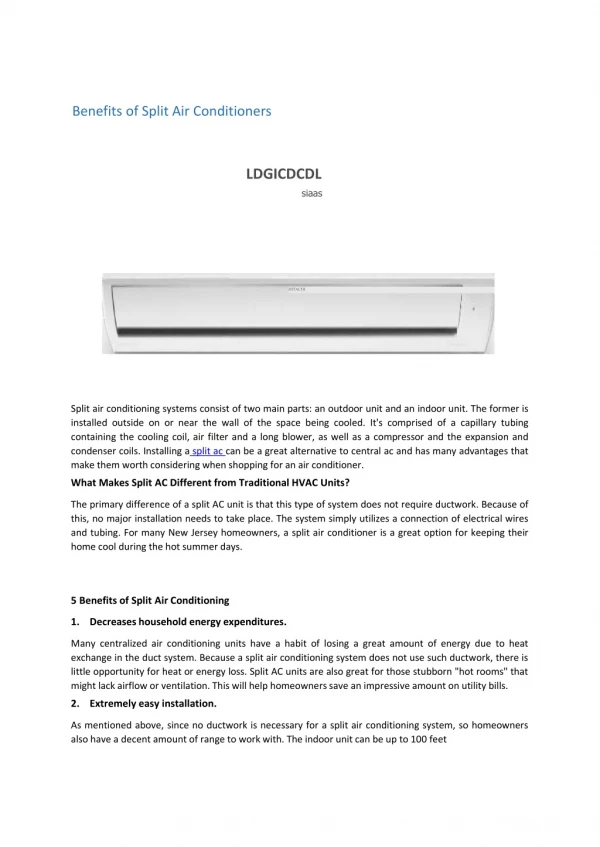
Installation and Setup Guide for Split-type Air Conditioners Installation and Setup Guide for Split-type Air Conditioners When the sweltering heat of summer hits London, having a reliable air conditioning system becomes not just a luxury, but a necessity. Among the various cooling solutions available, split-type air conditioners emerge as a popular choice for both residential and commercial spaces. This article provides a detailed installation and setup guide for split-type air conditioners, ensuring that you can enjoy the benefits of air con rentals in London without hassle. Understanding Split-Type Air Conditioners Split-type air conditioners consist of two main components: an indoor unit and an outdoor unit. The indoor unit is responsible for cooling the air within a space, while the outdoor unit expels the heat outside. This 1/4
separation allows for a quieter operation indoors and offers flexibility in installation. These units come in various capacities, typically ranging from 4kW to 17kW, making them suitable for diverse environments such as offices, server rooms, and homes. In London, where the climate can be unpredictable, having the right air conditioning solution is crucial. Split-type air conditioners are particularly advantageous as they provide efficient cooling while being energy-efficient, which is a significant consideration for both the environment and the wallet. Preparation for Installation Before embarking on the installation of a split-type air conditioner, there are several key factors to consider. First, it is essential to assess the space where the indoor unit will be installed. An ideal location is typically on an interior wall, away from direct sunlight and obstructions that could hinder airflow. Next, ensure that the chosen location for the outdoor unit has adequate space for ventilation and maintenance access. It's advisable to keep the outdoor unit elevated from the ground to prevent water accumulation and potential damage. Another important consideration is the electrical supply. Split-type air conditioners require a dedicated power source, so it may be necessary to consult with a qualified electrician to ensure that the electrical setup complies with local regulations and standards. Steps for Installation 1. Mounting the Indoor Unit The first step in installing a split-type air conditioner is to mount the indoor unit. Here’s how: 1. Find the Right Height: The indoor unit should be mounted at least 7 feet above the floor for optimal airflow. It should also be positioned towards the centre of the room for even distribution of cool air. 2. Mark the Wall: Use a level to draw a horizontal line on the wall where the unit will be installed. Then, mark the positions for the mounting brackets. 3. Drill Holes: Using a drill, create holes in the wall for the mounting brackets. Ensure that the holes are deep enough to accommodate the plugs that will hold the brackets securely. 4. Install the Brackets: Screw the mounting brackets into the wall, ensuring they are level and securely fastened. 2. Drilling the Hole for Piping Once the indoor unit is securely mounted, the next step is to create a hole for the refrigerant lines and drainage pipe. This step is crucial in ensuring that the indoor and outdoor units are connected properly. 1. Select the Location: Identify the best spot on the wall to drill the hole, which should align with the mounting brackets. 2/4
2. Drill at an Angle: Use a core drill to make a hole that is approximately 70mm in diameter. It is essential to angle the hole slightly downward towards the outside to facilitate drainage. 3. Protect the Edges: Use a protective sleeve to prevent the edges of the hole from damaging the pipes. 3. Connecting the Indoor and Outdoor Units Now that the indoor unit is installed and the hole is drilled, it’s time to connect the two units. 1. Run the Refrigerant Lines: Carefully feed the refrigerant lines, along with the electrical wiring and drainage hose, through the hole. 2. Secure the Connections: Connect the refrigerant lines to the indoor unit, ensuring that the connections are tight and leak-proof. This may require a spanner or wrench. 3. Connect the Drainage Pipe: Attach the drainage pipe to the indoor unit, ensuring it leads towards the exterior for proper condensation disposal. 4. Installing the Outdoor Unit The final step in the installation process is to set up the outdoor unit. 1. Choose a Level Surface: Place the outdoor unit on a flat, stable surface, ensuring it is adequately elevated to prevent water accumulation. 2. Secure the Unit: Use bolts to secure the outdoor unit to the ground or a mounting bracket to prevent movement during high winds. 3. Connect the Refrigerant Lines: Similar to the indoor unit, connect the refrigerant lines to the outdoor unit, ensuring all connections are secure. 4. Power Supply: Finally, connect the outdoor unit to the electrical supply, following the manufacturer's guidelines. Post-Installation Considerations After installation, it is vital to conduct a thorough check to ensure everything is functioning correctly. Turn on the system and observe whether the indoor unit is cooling efficiently. Check for any refrigerant leaks and ensure that the drainage is functioning properly. Regular maintenance is crucial for optimal performance. It is advisable to schedule periodic checks and clean the filters regularly to maintain air quality and improve efficiency. Benefits of Air Con Rentals in London Opting for air con rentals in London offers numerous advantages, particularly for those who may not want to commit to a permanent installation. Here are some of the benefits: 3/4
1. Flexibility: Renting air conditioning allows businesses and homeowners to choose units based on seasonal needs or temporary events. 2. Cost-Effective: With rental options starting at competitive rates, it is a budget-friendly solution that eliminates the high upfront costs associated with purchasing new units. 3. Expert Support: Companies like Andrews Sykes provide not only rentals but also installation support, ensuring that customers have a seamless experience from start to finish. 4. Emergency Solutions: In case of unexpected heat waves or equipment failures, air con rentals offer quick and immediate solutions, allowing you to maintain comfort in any situation. Conclusion Installing a split-type air conditioner might seem daunting, but with careful planning and execution, it can be accomplished smoothly. By following the steps outlined in this guide, individuals and businesses can enjoy the comfort and efficiency that split-type air conditioners provide. For those considering air con rentals in London, Andrews Sykes offers a comprehensive range of units tailored to meet any cooling need, along with expert installation services. By opting for rentals, customers can enjoy flexibility, cost-effectiveness, and peace of mind, knowing they have a reliable cooling solution at their fingertips. For further assistance and to explore the various air conditioning options available, it is encouraged to contact Andrews Sykes today and discover how their services can enhance your comfort during the warmer months. 4/4