YouTube Live vs Twitch
Live streaming in 2026 is dominated by two major platforms, YouTube Live and Twitch. Insights from YouTube Live Streaming Statistics show how YouTube continues to expand its live ecosystem beyond gaming, while Twitch remains heavily gaming-focused. This comparison based on Live Streaming Statistics reveals differences in audience reach, engagement style, monetization options, and content diversity.

YouTube Live vs Twitch
E N D
Presentation Transcript
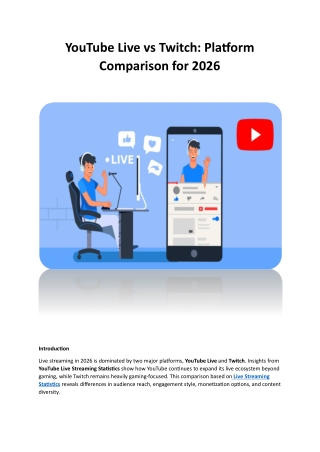
YouTube Live vs Twitch: Platform Comparison for 2026 Introduction Live streaming in 2026 is dominated by two major platforms, YouTube Live and Twitch. Insights from YouTube Live Streaming Statistics show how YouTube continues to expand its live ecosystem beyond gaming, while Twitch remains heavily gaming-focused. This comparison based on Live Streaming Statistics reveals differences in audience reach, engagement style, monetization options, and content diversity.
Creators and brands looking to choose the right platform rely heavily on YouTube Statistics and cross-platform data to understand where their live content performs best. Audience Reach and Platform Scale One of the most significant differences lies in audience size. According to YouTube Global Usage Statistics, YouTube reaches billions of monthly users, offering an unmatched discovery advantage for live streams. Twitch, while highly popular, operates within a comparatively smaller user base primarily centered around gamers and esports fans. This scale difference means live streams on YouTube have a higher chance of organic reach, directly impacting YouTube Watch Time Statistics. Content Diversity Beyond Gaming Twitch is widely known for gaming dominance, supported by strong Gaming Live Streaming Statistics. However, YouTube hosts a wide range of live categories including education, podcasts, news, religious sessions, brand launches, and entertainment shows. Insights from YouTube Content Statistics show that non-gaming live streams are one of the fastest-growing segments on the platform. This diversity is a major reason reflected in rising Live Streaming Statistics on YouTube. Engagement Features and Interaction Style Both platforms offer live chat, but YouTube integrates features such as Super Chats, memberships, polls, and seamless replay access. According to YouTube Interaction Statistics, these tools increase viewer participation and retention during live sessions. Twitch emphasizes community chat culture, while YouTube balances chat with structured monetization tools that boost YouTube Engagement Statistics. Monetization Opportunities for Creators Insights from YouTube Monetization Statistics show that creators can earn through ads, Super Chats, memberships, and brand integrations during live streams. Twitch primarily relies on subscriptions and donations. YouTube’s advertising ecosystem gives it an advantage in consistent revenue opportunities. These earnings patterns are visible in YouTube Analytics Statistics for live creators. Device Accessibility and Viewing Experience Data from Mobile Video Statistics reveals that YouTube Live is widely watched on smartphones, desktops, and smart TVs. Twitch usage is still largely concentrated on desktops and gaming setups. Watching live streams on larger screens contributes to longer session durations seen in Video Streaming Statistics. Algorithm and Discoverability YouTube’s recommendation algorithm plays a significant role in pushing live streams to relevant audiences. This feature strongly influences patterns in YouTube Data Statistics, where live sessions often get promoted alongside regular videos. Twitch relies more on follower notifications and browsing categories.
Conclusion The comparison within YouTube Live Streaming Statistics clearly shows that while Twitch dominates gaming culture, YouTube leads in scale, diversity, and monetization flexibility. For creators seeking broader reach and varied content opportunities, YouTube Live offers stronger long-term advantages in 2026. Understanding this platform difference through YouTube Statistics helps creators make informed live streaming decisions.