1. Introduction to Embedded Systems
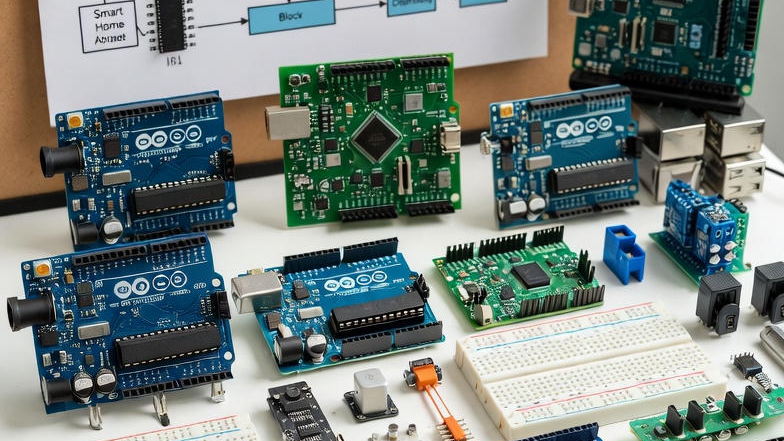
An embedded system is a special kind computing system designed to perform a specific function in large or semi-large system. Embedded system is not general-purpose computers, embedded systems are application-oriented and optimized for reliability, efficiency, and real-time operation in a small application area. They are mainly integrated into everyday small and large devices and operate mostly in the background , no direct user interaction is required.
Common Examples of Embedded Systems
- Washing Machine
- Microwave Oven
- Digital Camera
- Traffic Light Control System
- Anti-Lock Braking System (ABS)
- Medical Patient Monitoring System
- Smart Television
- ATM Machine
- Home Security System 10. Mobile Phone
2. Need for Embedded Systems
Embedded systems are essential because modern devices require automation, accuracy, and real-time control. These systems allow machines to respond instantly (hard real time) to environmental inputs so that system human intervention, improve safety, and enhance performance. Their low power consumption, compact size, and cost-effectiveness , more reliable than human , perfection make them ideal for mass-produced products.
3. Definition of an Embedded System
An embedded system is a combination of both computer hardware and software systems , embedded into a device, to perform a specific function only. The software is typically stored in non-volatile memory such as ROM or flash, allowing the system to operate without secondary storage devices .Than reduce time to load software from main memory to cache like traditional operating system.
4. Applications of Embedded Systems
Embedded systems are used across a wide range of domains:
- Consumer electronics such as washing machines, televisions, and cameras and other traditional home appliance.
- Automotive systems including anti-lock braking and engine control units both for domestic and industrial purpose
- Medical equipment like patient monitoring and diagnostic devices Industrial automation systems for process control and modern robotics surgery
- Communication systems such as routers, modems, and mobile phones Their widespread adoption demonstrates their importance in modern technology.
5. Characteristics of Embedded Systems
Embedded systems exhibit several unique characteristics:
- Real-time response to external inputs
- Application-specific functionality
- Low power and heat consumption , suitable for many hazardous environment
- High reliability and stability
- Compact size and lightweight design
- Sometimes full Embedded systems compacted in a single chip.
6)Cost sensitivity for large-scale production
Basic Components of an Embedded System
- Processor (microcontroller, microprocessor, or DSP)
- Memory (RAM, ROM, Flash)
- Input devices such as sensors
- Output devices like actuators or displays
- Timers, interrupts, and communication interfaces Some systems also include a Real-Time Operating System (RTOS) to manage task scheduling and timing constraints.
7. Processing
Units Used in Embedded Systems The processor is the core of any embedded system. Common processing units include:
- Microprocessors, which require external memory and peripherals
- Microcontrollers, which integrate CPU, memory, and I/O on a single chip
- Digital Signal Processors (DSPs) for fast signal processing
- Embedded processors like ARM cores for high-performance applications The choice of processor depends on performance, cost, and power requirements.
Some Processor
- ARM 7 – industrial control and automation systems.
- Intel i960 – real-time embedded control applications.
- AMD 29050 – high-performance embedded systems.
- PowerPC – automotive and aerospace systems.
- MIPS Processor – routers and network devices.
- PIC Microcontroller – consumer electronics and control systems.
- 8051 Microcontroller – educational projects.
- TMS320 DSP – audio, video
8. Embedded System Architectures
Two major architectures are used:
1)Traditional Von Neumann Architecture, where data and instructions share the same memory , this Architecture little bit slow.
2)Harvard Architecture, which uses separate memories for data and instructions Harvard architecture provides better performance, while Von Neumann architecture is simpler and more economical.
9. Classification of Embedded Systems
Based on functionality and performance, embedded systems are classified as:
- Standalone systems that work independently
- Real-time systems, which must meet strict timing deadlines
- Networked embedded systems, connected through LAN or internet
- Mobile embedded systems, used in portable devices Each category serves specific operational requirements.
10. Real-Time Embedded Systems
Real-time systems are designed to produce outputs within a defined time limit. 1)Hard real-time systems cannot tolerate missed deadlines (e.g., flight control systems) 2)Soft real-time systems allow minor delays without catastrophic failure (e.g., set-top boxes) Timing accuracy is critical in such systems.
11. Hardware–Software Co-Design
Hardware–software co-design is a development approach where hardware and software are designed simultaneously. This method improves performance, reduces development time, and ensures optimal resource utilization. It is widely used in modern embedded products such as smartphones and AI-based devices.
12. Embedded System Development Life Cycle
The development process typically includes:
- Requirement analysis
- Conceptual design
- System analysis
- Detailed design
- Development and testing
- Deployment
- Maintenance and upgrades
- Product retirement Following a structured life cycle ensures reliability and quality.
13. Design Issues in Embedded Systems
Key challenges include:
- Cost optimization
- Power management
- Software reliability and safety
- Interface compatibility
- Scalability for future enhancements Balancing these factors is crucial for successful system design.
14. Role of RTOS in Embedded Systems
An RTOS manages time-critical tasks by providing deterministic scheduling, interrupt handling, and resource management. It is essential for systems that require predictable response times, such as telecom and medical applications.
15. Conclusion
Embedded systems form the backbone of modern technological advancements. Their ability to deliver reliable, efficient, and real-time performance makes them indispensable in almost every industry. As technology evolves, embedded systems will continue to grow in complexity, intelligence, and connectivity, shaping the future of automation and smart devices.