What is Halal certification?
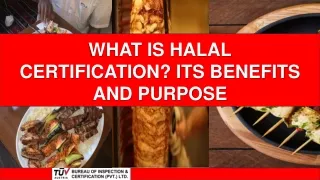
A Halal certificate is a method that confirms whether the product, service, or system is in compliance with Islamic food laws as well as ethical standards. The term "Halal" is derived from Arabic meaning "permissible" or "allowed" in the context of Islamic law. Halal certification guarantees that the product is free of any elements or practices of which it is "Haram" (forbidden), thus making it safe for consumption or consumption by Muslims. This is particularly important for the world's Muslim population that is more than 1.9 billion.


What is Halal certification?
E N D
Presentation Transcript
What is Halal Certification? A Halal certificate is a method that confirms whether the product, service, or system is in compliance with Islamic food laws as well as ethical standards. The term "Halal" is derived from Arabic meaning "permissible" or "allowed" in the context of Islamic law. Halal certification guarantees that the product is free of any elements or practices of which it is "Haram" (forbidden), thus making it safe for consumption or consumption by Muslims. This is particularly important for the world's Muslim population that is more than 1.9 billion. Importance of Halal Certification Halal certification is crucial for both business and consumer. In the case of Muslim customers, this offers security that products and services they purchase conform to their beliefs. For companies, it provides access to the huge and growing market of halal that includes food cosmetics, pharmaceuticals and other products as well as non-consumable items and services, such as finance and logistics. It also helps build trust between consumers and producers. It shows a company's dedication to transparency and inclusion and ensures that Muslim customers are able to make informed purchases. Furthermore, many non-Muslims are choosing to purchase Halal-certified products because of their superior quality standards, ethical source and hygiene guidelines. Halal Certification Criteria To be certified as halal items and products must conform to strict standards that are based upon Islamic principles. The criteria may differ slightly dependent on the authority that certifies but typically contain the following elements: 1. Permissible Ingredients The ingredients that are used in a product must be Halal. This means they should not contain any prohibited substances like alcohol, pork or slaughtered animals that are not properly. Examples: ● Meat should come from animals killed in accordance with Islamic rules (Zabiha). ● Ingredients such as gelatin or enzymes, as well as emulsifiers need to come from halal sources. 2. Hygiene and Sanitation Cleanliness is a crucial aspect of Halal certification. The process of production must ensure that the facility and its surroundings are not contaminated from haram-related substances. For example, a factory producing non-halal as well as
halal products needs to be equipped with separate equipment or follow rigorous cleaning procedures to avoid cross-contamination. 3. Ethical Practices The ethical treatment of animals as well as ethical labor standards are the primary elements of Halal certification. Animals shouldn't be treated with unnecessary cruelty and the entire process of production must respect human dignity as well as the environment. 4. Packaging and Labeling Halal-certified products should be clearly marked to ensure the transparency of consumers. Packaging should also be designed to prevent contamination during transport and storage. Types of Products and Services That Require Halal Certification Halal certification does not only apply to food or beverages. It covers a wide range of products and services which include: 1. Food and Beverages This includes dairy, meat food products, snacks, drinks and condiments. Processed food items are often subject to careful examination due to the complex nature of the ingredients they contain. 2. Pharmaceuticals Medicines, vaccines and supplements must not be contaminated with harmful ingredients such as alcohol or porcine-derived ingredients. Halal-certified medicines are becoming more essential in countries with a Muslim majority. 3. Cosmetics and Personal Care Products A lot of personal care and cosmetic items, including makeup, skincare and toothpaste, need halal certification to make sure they don't contain haram-related ingredients such as alcohol or animal-derived chemicals. 4. Logistics and Supply Chain Logistics companies are adopting halal standards, which ensures that products halal are not contaminated in storage and transport. 5. Finance and Banking Halal certification is used to Islamic financing to assure that the financial institution is in compliance to Sharia law. This means avoiding interest-based transactions or investing in ethical companies.
The Halal Certification Process The process of getting Halal certification involves a series of steps: 1. Application Submission Businesses need to apply for a Halal certification from an accredited organization. The application usually includes information about the product, the ingredients and manufacturing procedure. 2. Documentation Review The authority that certifies the documents to ensure that they are in compliance to halal standards. This includes reviewing the ingredient checklists, suppliers' certifications and manufacturing methods. 3. Inspection and Audit Inspections are conducted at the site of production to check the cleanliness, equipment and processes. They ensure there's no contamination from harmful substances. 4. Testing The product can be examined in a lab to confirm that they satisfy the requirements of halal. For instance tests are conducted on meat items to verify they are from animals killed in accordance with Islamic guidelines. 5. Certification Issuance If the product passes the tests and inspections the halal certification authority issues the certificate. The certificate usually lasts for a specified period and is valid until renewal. Key Global Halal Certification Bodies A variety of organizations throughout the world offer halal certification. This includes: ● Jakim (Malaysia) Malaysia's Department of Islamic Development is famous for its strict standards. ● MUI (Indonesia): The Indonesian Ulema Council certifies products for the world's biggest Muslim population. ● HFA (UK): The Halal Food Authority is a important certification body in Europe. ● IFANCA (USA) It is the Islamic Food and Nutrition Council of America is widely known throughout North America. Challenges in Halal Certification US
Although halal certification UScan provide many advantages, companies may face issues when undergoing the process. This includes: 1. Cost and Complexity It can be expensive and time-consuming, particularly for small companies. Businesses must invest in testing, audits, as well as staff training. 2. Variation in Standards Different countries and certification organizations may have slightly different standards for halal that can create confusion for businesses that operate internationally. 3. Consumer Awareness The process of educating consumers on Halal's importance certification is an obstacle, especially in areas where awareness of halal is not high. The Global Halal Market The market for halal is one of the fastest-growing industries worldwide because of the rising purchasing capability of Muslim consumers and the increasing demand for goods that are ethically manufactured. The key trends are: ● Halal Tourism Offering Halal-friendly travel experiences that include prayers, halal-friendly food as well as alcohol-free lodging. ● Halal E-Commerce The online platforms that sell Halal-certified products are becoming more popular. ● Sustainability Halal products are becoming more aligned with sustainable and environmentally responsible practices. Benefits of Halal Certification for Businesses For companies, getting Halal certification has several benefits: ● market access Halal certification allows businesses to gain access to this profitable Muslim consumers market. ● consumer trust Certification increases trust and loyalty to Muslim customers. ● Competitive advantage It helps to set a company apart from the competition because it demonstrates a dedication to the highest standards. ● Worldwide Recognition Halal certification is usually acknowledged internationally, allowing businesses to expand into new markets. Conclusion
Halal certification is not simply a requirement for religious reasons It is also a sign of ethics, quality and honesty. In order to ensure the observance of Islamic standards, businesses are able to fulfill the requirements of Muslim customers while also encouraging trust and inclusion. As the market for halal in the world is growing, getting the halal certificate is becoming an essential requirement for businesses looking to remain relevant and socially responsible in an ever-changing world.