Download
1 / 9
0 likes | 4 Vues
Spider bites and mosquito bites may look similar, but their symptoms and risks are very different. Mosquito bites usually cause small, itchy red bumps that appear in clusters and heal quickly. Spider bites are often single, painful, and may worsen over time. Understanding these differences helps you choose the right treatment and know when to seek help from Guardian Mosquito & Pest Control. For more, visit here: www.guardianmosquitoandpestcontrol.com

E N D
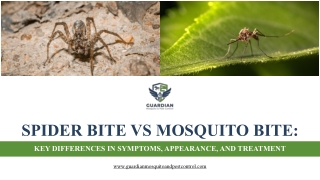
SPIDER BITE VS MOSQUITO BITE: KEY DIFFERENCES IN SYMPTOMS, APPEARANCE, AND TREATMENT www.guardianmosquitoandpestcontrol.com
INTRODUCTION A red bump on your skin sounds harmless until it starts swelling, itching nonstop, or hurting more than expected. At that point, most people ask the same question: Is this a spider bite or a mosquito bite? The confusion is understandable. Both can leave marks, both can itch, and both are commonly misidentified. But the truth is, both reactions are very different in how they look, feel, and behave over time. Knowing the difference helps you treat the bite correctly and recognize when something is wrong. This guide breaks it down clearly, so keep on reading.
WHY CORRECTLY IDENTIFYING A SPIDER BITE VS MOSQUITO BITE MATTERS • Most insect bites are minor and self-limiting, but the management changes depending on the cause. Mosquito bites are typically an allergic skin reaction and carry an infection risk if scratched. Spider bites can range from harmless to medically significant, depending on the species and individual reaction. • Taking the right first steps, such as wound care, infection prevention, and knowing when to seek medical attention, can help reduce complications and unnecessary anxiety.
WHAT MOSQUITO BITES LOOK LIKE: COMMON SYMPTOMS AND BITE MARK PATTERNS • Mosquito bites almost always show the same pattern: a small, raised, round bump that appears soon after being bitten. The bump is often red and becomes intensely itchy over the next few minutes to hours. Multiple bites clustered on exposed skin are common because mosquitoes target open areas and often return to the same host. In most people, the reaction is limited to a small wheal (raised area) with surrounding redness. In some people, bites can enlarge, form hives, or cause a larger local reaction. • Common features: • Small, raised papule or wheal. • Starts to itch quickly, peaking in the first 24-48 hours. • Frequently multiple and clustered. • Usually resolves within a few days unless scratched and infected.
WHAT SPIDER BITES LOOK LIKE AND WHEN THEY BECOME DANGEROUS • Most spider bites are benign and may look similar to other insect bites with localized redness, mild swelling, and sometimes a little pain. But some bites from species like brown recluse or black widow in regions where they exist can cause more serious local tissue damage or systemic symptoms. Dangerous spider bites are comparatively rare, but their signs (spreading skin discoloration, blistering, severe pain, muscle cramps, or systemic symptoms) warrant immediate medical attention. Typical spider-bite features: • Often, a single lesion (not multiple little bumps). • May show localized pain at the outset (mosquito bites are usually painless when they occur). • In some cases, you may see two tiny puncture marks close together, which could be evidence of the spider’s two fangs, but those marks are not always visible. • Severe bites can develop blisters, necrotic-appearing tissue, or systemic signs (nausea, muscle cramps, fever) depending on the species.
WHY DO MOSQUITO BITES ITCH? • When a female mosquito pierces your skin, she inserts saliva that prevents blood clotting and helps her feed. Your immune system recognizes foreign proteins in that saliva and mounts a localized allergic-type response. Mast cells release histamine and other inflammatory mediators. Histamine makes blood vessels leaky, recruits immune cells, and triggers the itch sensation by activating nerve endings in the skin. That biochemical cascade is why the bite becomes red, swollen, and intensely itchy.
BITE MARK IDENTIFICATION: HOW TO TELL A SPIDER BITE FROM A MOSQUITO BITE • Here’s how professionals think about a bite mark: • Size and Shape: Mosquito bites are typically small and round. Spider bites can be small, too, but dangerous ones may evolve into larger ulcers or necrotic areas. • Number and Distribution: Multiple similar bumps on exposed skin point to mosquitoes. A single suspicious lesion should raise the possibility of other causes, like a spider, an infected insect bite, or a bacterial skin infection. • Color Changes Over Time: Rapid spread, purplish/black discoloration, or a white center surrounded by discolored skin are red flags for tissue damage or infection rather than a simple mosquito bite. • Presence of Puncture Marks: Two closely spaced punctures suggest a spider, but the absence of such marks does not rule it out. • If you want to photograph a bite mark for a clinician, include a ruler or coin for scale, take a clear photo in daylight, and note the time of onset and any systemic symptoms.
FINAL WORDS • Mistaking a spider bite for a mosquito bite or vice versa can lead to improper treatment and unnecessary worry. Understanding the spider bite vs mosquito bite differences helps you respond calmly, treat effectively, and recognize when professional help is needed. Most bites are harmless. Some are not. Knowing the difference is smart self-care.
THANK YOU www.guardianmosquitoandpestcontrol.com