HOW CHAMPAGNE IS PRODUCED
How Champagne is produced.<br>Buy liquor online Sydney

HOW CHAMPAGNE IS PRODUCED
E N D
Presentation Transcript
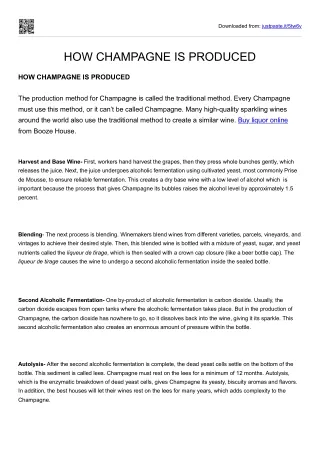
Downloaded from: justpaste.it/5tw6y HOW CHAMPAGNE IS PRODUCED HOW CHAMPAGNE IS PRODUCED The production method for Champagne is called the traditional method. Every Champagne must use this method, or it can’t be called Champagne. Many high-quality sparkling wines around the world also use the traditional method to create a similar wine. Buy liquor online from Booze House. Harvest and Base Wine- First, workers hand harvest the grapes, then they press whole bunches gently, which releases the juice. Next, the juice undergoes alcoholic fermentation using cultivated yeast, most commonly Prise de Mousse, to ensure reliable fermentation. This creates a dry base wine with a low level of alcohol which is important because the process that gives Champagne its bubbles raises the alcohol level by approximately 1.5 percent. Blending- The next process is blending. Winemakers blend wines from different varieties, parcels, vineyards, and vintages to achieve their desired style. Then, this blended wine is bottled with a mixture of yeast, sugar, and yeast nutrients called the liqueur de tirage, which is then sealed with a crown cap closure (like a beer bottle cap). The liqueur de tirage causes the wine to undergo a second alcoholic fermentation inside the sealed bottle. Second Alcoholic Fermentation- One by-product of alcoholic fermentation is carbon dioxide. Usually, the carbon dioxide escapes from open tanks where the alcoholic fermentation takes place. But in the production of Champagne, the carbon dioxide has nowhere to go, so it dissolves back into the wine, giving it its sparkle. This second alcoholic fermentation also creates an enormous amount of pressure within the bottle. Autolysis- After the second alcoholic fermentation is complete, the dead yeast cells settle on the bottom of the bottle. This sediment is called lees. Champagne must rest on the lees for a minimum of 12 months. Autolysis, which is the enzymatic breakdown of dead yeast cells, gives Champagne its yeasty, biscuity aromas and flavors. In addition, the best houses will let their wines rest on the lees for many years, which adds complexity to the Champagne.
Riddling- Once the Champagne has aged, producers use a process called riddling to position the lees in the neck of the bottle. In the traditional method, they place the bottles in A-frames and rotate them a quarter turn every day while slowly raising the bottles from a horizontal position to a vertical position. This method gently slides the lees deposit into the neck of the bottle over a few weeks. Disgorgement- The process of removing the lees deposit is disgorgement. The necks of the bottles are submerged into an icy brine, which freezes the wine and the deposit in the neck of the bottle. The bottles are removed and placed upright. Next, a machine removes the crown cap removed and the pressure inside the bottle forces the frozen lees/sediment out from the neck. The machine tops up the Champagne inside the bottle with liqueur d’expedition, which contains the dosage, which is a mixture of wine and sugar that determines the final level of sweetness of the wine. Final Steps- The bottle is then sealed with the mushroom-shaped cork with which we are so familiar, and a wire cage is secured around it to prevent the cork from popping out due to the pressure inside of the bottle. Finally, the bottle’s foil and labels are added, and the Champagne typically undergoes additional aging in the bottle in order for the dosage to incorporate into the wine.
Booze House is an Australian-owned and operated liquor company that prides itself in delivering quality spirits and wine to homes across the country. Buy alcohol online sydney. It is now Australia's leading online liquor marketplace, with over 2000 beers, wines, and spirits ready to deliver to your doorstep. Whether you're looking for something new and exciting, or you're a loyal customer of a certain brand, Booze House has you covered.