Food Additives and Preservatives Testing
0 likes | 10 Vues
These reports include detailed information on the additive's safety, effectiveness, and compliance with regulatory standards. The approval process can be lengthy and rigorous, but it is essential for ensuring that only safe and effective additives reach the market.


Food Additives and Preservatives Testing
E N D
Presentation Transcript
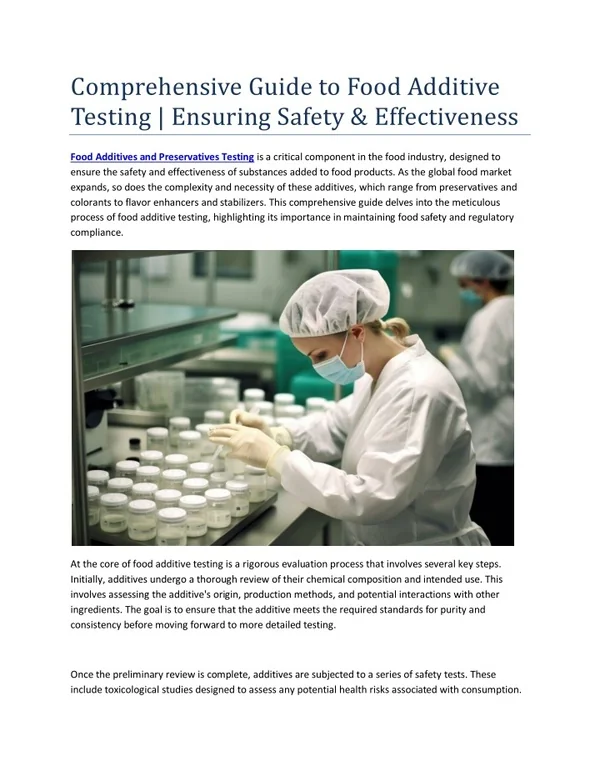
Comprehensive Guide to Food Additive Testing | Ensuring Safety & Effectiveness Food Additives and Preservatives Testing is a critical component in the food industry, designed to ensure the safety and effectiveness of substances added to food products. As the global food market expands, so does the complexity and necessity of these additives, which range from preservatives and colorants to flavor enhancers and stabilizers. This comprehensive guide delves into the meticulous process of food additive testing, highlighting its importance in maintaining food safety and regulatory compliance. At the core of food additive testing is a rigorous evaluation process that involves several key steps. Initially, additives undergo a thorough review of their chemical composition and intended use. This involves assessing the additive's origin, production methods, and potential interactions with other ingredients. The goal is to ensure that the additive meets the required standards for purity and consistency before moving forward to more detailed testing. Once the preliminary review is complete, additives are subjected to a series of safety tests. These include toxicological studies designed to assess any potential health risks associated with consumption.
Toxicological testing involves evaluating the additive's potential to cause adverse effects in humans, such as allergic reactions, carcinogenicity, or reproductive toxicity. These studies are conducted using both animal models and in vitro methods to provide a comprehensive assessment of the additive's safety profile. In addition to safety testing, the effectiveness of food additives is also critically evaluated. This involves assessing how well the additive performs its intended function within the food product. For instance, preservatives must be effective in inhibiting microbial growth, while colorants should provide the desired hue without compromising food quality. Effectiveness testing ensures that the additive performs as expected, contributing to the overall quality and stability of the food product. The testing process also includes a review of regulatory standards and guidelines. Food additives are subject to stringent regulations set by food safety authorities, such as the FDA in the United States or EFSA in Europe. These regulations outline acceptable levels for each additive and specify the conditions under which they can be used. Compliance with these regulations is essential for gaining approval and ensuring that the additive can be safely used in food products. Once testing is complete, the data is compiled into comprehensive reports that are submitted to regulatory agencies for approval. These reports include detailed information on the additive's safety, effectiveness, and compliance with regulatory standards. The approval process can be lengthy and rigorous, but it is essential for ensuring that only safe and effective additives reach the market. In conclusion, food additive testing is a vital process that ensures the safety and effectiveness of substances used in food products. Through rigorous testing and adherence to regulatory standards, the food industry can maintain high levels of quality and safety for consumers. As new additives and technologies emerge, the testing process continues to evolve, adapting to new challenges and ensuring that food products remain safe and reliable. This comprehensive approach to food additive testing helps protect public health and supports the integrity of the global food supply chain.