Does a Water Filter Need a Bypass
A water filter bypass allows water to flow around the system during maintenance, preventing downtime and ensuring continuous supply. Itu2019s especially useful for large or commercial setups, improving flexibility, system protection, and overall operational efficiency.<br>Visit: https://bypassfeeder.com/

Does a Water Filter Need a Bypass
E N D
Presentation Transcript
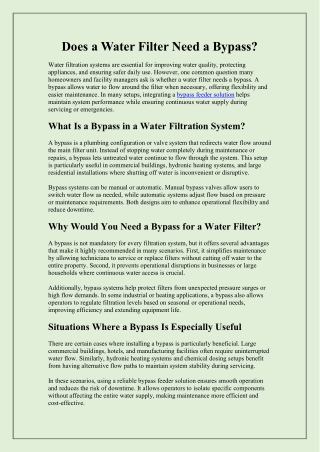
Does a Water Filter Need a Bypass? Water filtration systems are essential for improving water quality, protecting appliances, and ensuring safer daily use. However, one common question many homeowners and facility managers ask is whether a water filter needs a bypass. A bypass allows water to flow around the filter when necessary, offering flexibility and easier maintenance. In many setups, integrating a bypass feeder solution helps maintain system performance while ensuring continuous water supply during servicing or emergencies. What Is a Bypass in a Water Filtration System? A bypass is a plumbing configuration or valve system that redirects water flow around the main filter unit. Instead of stopping water completely during maintenance or repairs, a bypass lets untreated water continue to flow through the system. This setup is particularly useful in commercial buildings, hydronic heating systems, and large residential installations where shutting off water is inconvenient or disruptive. Bypass systems can be manual or automatic. Manual bypass valves allow users to switch water flow as needed, while automatic systems adjust flow based on pressure or maintenance requirements. Both designs aim to enhance operational flexibility and reduce downtime. Why Would You Need a Bypass for a Water Filter? A bypass is not mandatory for every filtration system, but it offers several advantages that make it highly recommended in many scenarios. First, it simplifies maintenance by allowing technicians to service or replace filters without cutting off water to the entire property. Second, it prevents operational disruptions in businesses or large households where continuous water access is crucial. Additionally, bypass systems help protect filters from unexpected pressure surges or high flow demands. In some industrial or heating applications, a bypass also allows operators to regulate filtration levels based on seasonal or operational needs, improving efficiency and extending equipment life. Situations Where a Bypass Is Especially Useful There are certain cases where installing a bypass is particularly beneficial. Large commercial buildings, hotels, and manufacturing facilities often require uninterrupted water flow. Similarly, hydronic heating systems and chemical dosing setups benefit from having alternative flow paths to maintain system stability during servicing. In these scenarios, using a reliable bypass feeder solution ensures smooth operation and reduces the risk of downtime. It allows operators to isolate specific components without affecting the entire water supply, making maintenance more efficient and cost-effective.
Are There Situations Where a Bypass May Not Be Necessary? For small point-of-use filters, such as under-sink units or basic countertop systems, a bypass may not be essential. These systems typically serve limited areas, and shutting off water temporarily for maintenance is manageable. In such cases, adding a bypass may increase installation complexity without providing significant benefits. However, even smaller systems can benefit from a bypass if users frequently replace filters or need uninterrupted access to water. Ultimately, the decision depends on usage patterns, water demand, and the importance of continuous flow. Key Advantages of Installing a Bypass Installing a bypass offers several practical advantages beyond maintenance convenience. It improves system flexibility, allowing users to control filtration levels or temporarily suspend filtration when necessary. It also reduces the risk of pressure- related damage to filters and other components. Another major benefit is long-term cost savings. By reducing downtime and simplifying maintenance, bypass systems help extend equipment lifespan and minimize operational disruptions. For businesses and large facilities, this added efficiency can translate into significant savings over time. Final Thoughts: Is a Bypass Worth It? So, does a water filter need a bypass? The answer depends on your system size, usage needs, and maintenance requirements. While small residential systems may function without one, larger installations and commercial setups often benefit greatly from having a bypass in place. It enhances convenience, protects equipment, and ensures consistent water access even during repairs or filter replacements. Choosing a dependable bypass feeder solution can provide the flexibility and reliability needed to keep your filtration system running smoothly for years to come.