In today’s digital-first business environment, organizations need powerful software systems to manage operations, improve productivity, and scale efficiently. This is where enterprise applications play a crucial role.
An enterprise application is a large-scale software solution designed to support and automate core business processes across an organization. These applications help companies streamline workflows, manage data, improve collaboration, and make better strategic decisions.
What Is an Enterprise Application?
An enterprise application is a business-oriented software system used by organizations rather than individual users. It integrates multiple departments such as sales, finance, HR, operations, and customer support into a unified digital platform.
Unlike standard applications, enterprise applications are built to handle: High volumes of data Multiple users across departments Complex business logic Advanced security and scalability
They act as the backbone of modern enterprises.
Types of Enterprise Applications
Different businesses use different enterprise systems based on their goals and industry.
Some of the most common types include:
1. Enterprise Resource Planning (ERP)
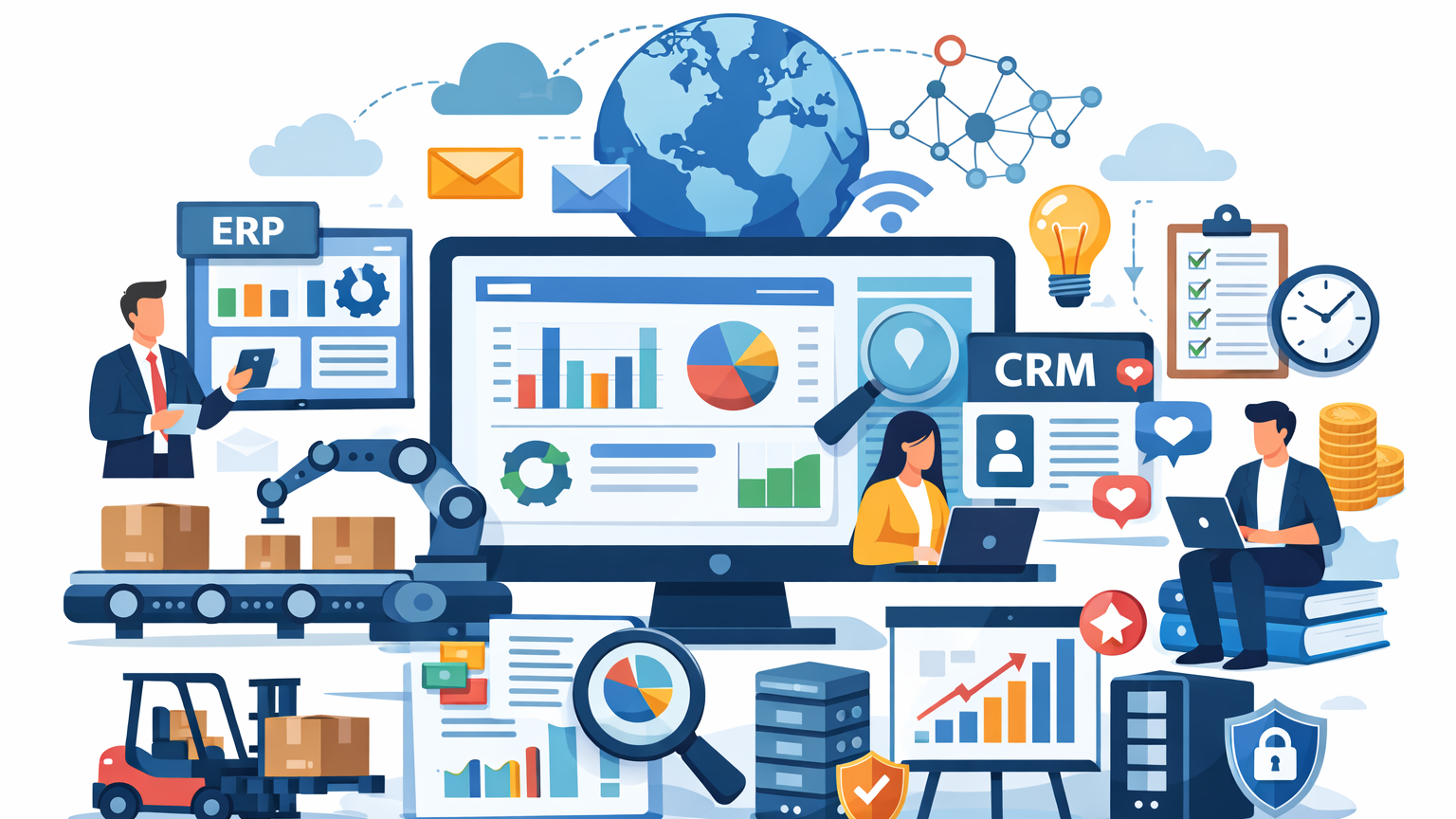
ERP systems manage core business functions like accounting, procurement, inventory, and operations from a single platform.
2. Customer Relationship Management (CRM)
CRM software helps manage customer interactions, sales pipelines, marketing campaigns, and customer support.
3. Human Resource Management Systems (HRMS)
HRMS platforms handle employee data, payroll, attendance, recruitment, and performance tracking.
4. Supply Chain Management (SCM)
SCM systems optimize logistics, vendor management, inventory control, and product distribution.
5. Business Intelligence (BI)
BI tools analyze data and generate insights through dashboards, reports, and analytics.
Key Features of Enterprise Applications:
Enterprise software is designed with advanced capabilities to meet complex business needs.
1. Scalability
Supports business growth without performance issues.
2. Integration
Easily connects with existing systems, APIs, and third-party tools.
3. Security
Includes role-based access, encryption, data protection, and compliance standards.
4. Customization
Tailored to match unique business workflows and processes.
5. Automation
Reduces manual work through automated tasks and workflows.
6. Real-Time Data Access
Provides instant insights for better decision-making.
Benefits of Enterprise Applications:
Implementing enterprise applications offers significant business advantages: Improved operational efficiency Better decision-making through analytics Enhanced collaboration across teams Reduced operational costs Higher scalability and flexibility Stronger competitive advantage
Why Enterprise Applications Are Essential Today
Modern businesses operate in highly competitive environments where speed, accuracy, and data-driven strategies are essential. Enterprise applications enable companies to: Adapt quickly to market changes Deliver better customer experiences Maintain compliance and security Achieve long-term digital transformation
Without enterprise systems, managing large-scale operations becomes inefficient and error-prone.
Conclusion :
Enterprise applications are a critical foundation for modern business success. From automating workflows to delivering real-time insights, they empower organizations to operate more efficiently, scale faster, and stay competitive in a rapidly evolving digital landscape.
To learn more about enterprise applications, visit: - https://codeflashinfotech.com/enterprise-application-types-features-benefits/
What Is an Enterprise Application? Types, Features & Benefits Explained

- CFIT
- Feb 13, 2026 · Germany ·
Discover what enterprise applications are, explore their types, features, and benefits,& learn how they'll help businesses scale efficiently