Critical infrastructure facilities, including power plants, airports, data centres, and government buildings, are prime targets for security threats. The safety of these locations is paramount not only for the organizations operating them but also for public safety and national security. While camera-based surveillance is a common security measure, relying solely on standard cameras for vehicle checks is no longer sufficient in today’s sophisticated threat landscape.
High-risk environments require advanced security solutions capable of detecting hidden threats, providing accurate monitoring, and ensuring operational efficiency. One such solution gaining widespread adoption is the UVIS system, which delivers comprehensive under-vehicle inspection and automated threat detection.
Limitations of Camera-Only Vehicle Checks
Traditional camera-based monitoring is widely deployed at facility entry points, parking areas, and restricted zones. However, cameras alone present notable limitations:
- Restricted visibility: Standard cameras cannot capture the underside of vehicles, leaving concealed threats undetected.
- Dependence on human monitoring: Security personnel must constantly observe multiple screens, increasing the chance of oversight.
- Delayed threat response: Identifying potential risks from recorded footage can take time, delaying action.
- Inconsistent outcomes: Different operators may interpret camera feeds differently, resulting in variability in security coverage.
These limitations demonstrate why critical infrastructure facilities cannot rely solely on camera-based vehicle checks.
The Importance of Comprehensive Vehicle Inspection
Modern threats are often sophisticated, with individuals attempting to smuggle contraband, explosives, or unauthorized materials in vehicle undercarriages. Manual inspections are slow, labor intensive, and prone to human error, while cameras cannot reveal hidden anomalies beneath a vehicle’s chassis.
Facilities require solutions that provide:
- Complete undercarriage imaging
- Automated detection of anomalies or foreign objects
- Instant alerts for potential threats
- Integration with existing security and access control systems
These capabilities ensure that threats are identified before reaching critical areas, maintaining safety and operational continuity.
How Automated Inspection Enhances Security
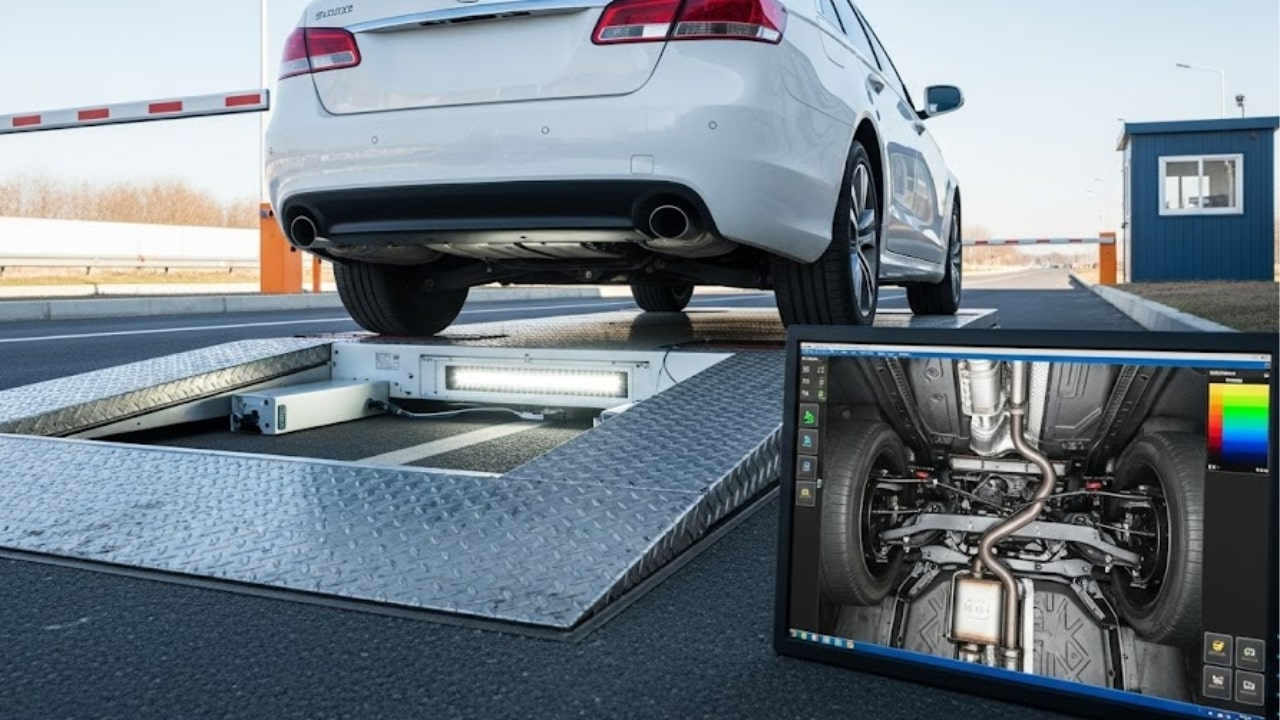
A UVIS system (Under Vehicle Inspection System) is a sophisticated technology designed to address the vulnerabilities of standard surveillance methods. It captures high-resolution images of the vehicle undercarriage and uses automated analytics to detect potential threats.
Key advantages include:
High-Resolution Imaging : Captures detailed undercarriage views that cameras alone cannot provide.
Anomaly Detection : Automated software flags missing bolts, tampering, or foreign objects instantly.
Real-Time Alerts : Security personnel receive immediate notifications when a potential threat is detected.
Digital Records : Each scan is stored for auditing, compliance, and post-incident analysis.
By combining automation with detailed imaging, facilities can achieve higher levels of security without slowing traffic flow.
Reducing Human Error and Improving Efficiency
Human oversight is a critical factor in security gaps. Fatigue, distraction, or inconsistent training can result in missed threats. Automated under-vehicle inspection reduces reliance on manual checks and ensures uniform, accurate scanning.
Other operational benefits include:
- Faster vehicle screening : Vehicles can be scanned without stopping for prolonged inspections.
- Lower manpower requirements : Security personnel can focus on interpreting alerts rather than performing repetitive manual checks.
- Enhanced compliance : Automated systems generate verifiable records for audits and investigations.
Integration With Broader Security Systems
Modern facilities rarely rely on a single layer of security. Automated vehicle inspection solutions can integrate with:
Centralized monitoring : Security teams can oversee multiple checkpoints from a single command center.
Coordinated response : Automated alerts trigger gates, barriers, or emergency protocols in real time.
Data analytics : Historical scan data can be analyzed to identify trends, vulnerabilities, or suspicious patterns.
This integration allows centralized monitoring, rapid coordinated response, and analysis of historical data to identify trends or repeat threats. A holistic approach ensures that vehicle inspections are an integral part of a complete security ecosystem.
Applications Across Critical Sectors
UVIS technology is increasingly deployed across sectors where high security is non-negotiable:
- Energy and utilities : Protecting power plants, refineries, and substations from sabotage or unauthorized access.
- Transportation hubs : Securing airports, seaports, and railway terminals against smuggling or attacks.
- Government facilities : Ensuring safe entry for vehicles in federal buildings, embassies, and defense installations.
- Data centers and high-tech campuses : Safeguarding sensitive infrastructure from potential threats carried via vehicles.
In each case, enhanced vehicle inspection provides operational efficiency and stronger security assurance.
Conclusion: Beyond Cameras—The Future of Vehicle Security
Camera-based vehicle checks alone are insufficient for modern critical infrastructure. The growing complexity of threats necessitates advanced inspection technologies that offer comprehensive scanning, automated detection, and real-time alerts. Implementing an effective solution such as a UVIS system allows facilities to detect threats, reduce human error, and maintain consistent, verifiable security standards.
By integrating automated under-vehicle inspection with broader security networks, organizations can improve response times, ensure compliance, and maintain the safety of personnel, assets, and the public. In today’s environment, relying solely on cameras is no longer enough—comprehensive vehicle inspection is a critical component of resilient infrastructure protection.