Real Estate Tokenization Platform Explained | Complete Guide
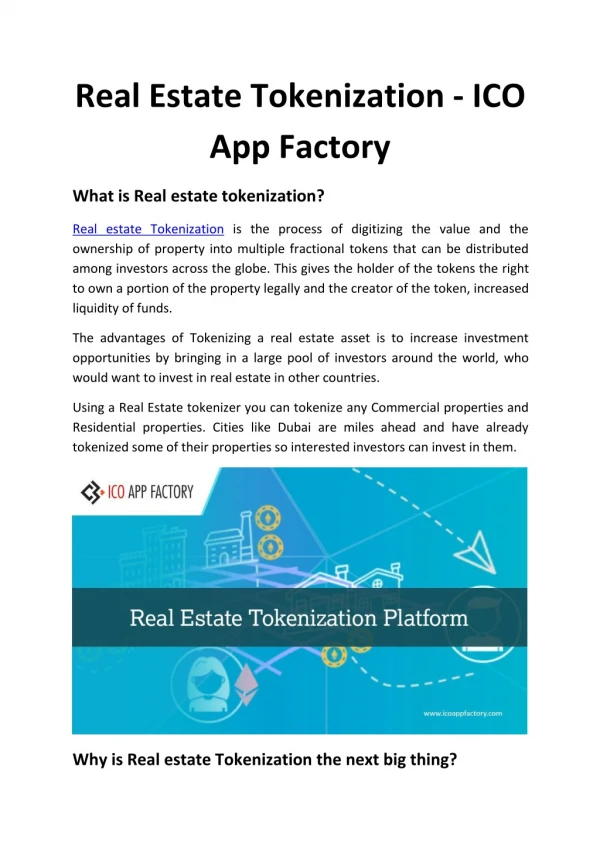
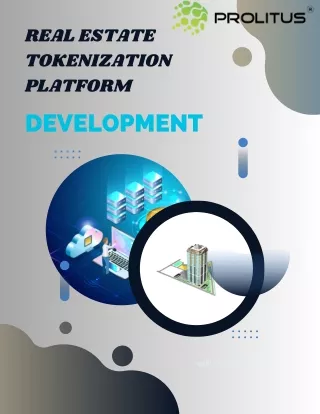
A Real Estate tokenization platform transforms traditional property assets into blockchain-based digital tokens, enabling secure and transparent fractional ownership. It allows investors to participate in high-value real estate projects with lower capital requirements while improving liquidity through secondary market trading. Powered by smart contracts, the platform automates compliance, dividend distribution, and ownership transfers. Businesses can raise funds faster, reduce intermediaries, and expand their investor base globally, making real estate investment more accessible, efficient, and


Real Estate Tokenization Platform Explained | Complete Guide
E N D
Presentation Transcript
Real Estate Tokenization Platforms Transforming the $300 trillion global real estate market through blockchain technology. Digitizing property ownership for broader investor participation, faster transactions, and enhanced transparency.
What is Real Estate Tokenization? Converting property ownership rights into digital tokens on a blockchain. Each token can represent: Fractional ownership Equity stake Revenue share Debt participation
Why Tokenization Matters Traditional Challenges High minimum investments Illiquidity (months to sell) Complex transactions Limited transparency Tokenization Solutions Fractional ownership (lower entry) Digital issuance & compliance Faster settlement (near real-time) Global investor access The tokenized asset market is projected to reach $16–24 trillion by 2030, with real estate as a major segment.
How a Platform Works: End-to-End Process Asset Selection Token Design Smart Contract Token Issuance A modern real estate tokenization platform streamlines the entire lifecycle from asset selection to potential secondary trading.
Key Features of a Modern Platform Investor Onboarding Integrated KYC/AML for compliance. Smart Contract Automation Automates compliance, transfers, and distributions. Cap Table Management Efficiently manages ownership stakes. Multi-chain Compatibility Supports various blockchain networks. Investor Dashboard Provides clear reporting and analytics.
Traditional vs. Tokenized Real Estate Minimum Investment High ($50K–$500K+) Low (Fractional ownership) Liquidity Low Higher (secondary trading) Transaction Time Weeks to months Minutes to days Transparency Limited Blockchain-based transparency Cross-Border Access Complex Global participation
Key Benefits of Real Estate Tokenization For Investors Portfolio diversification Access to premium properties Reduced entry barriers Transparent ownership For Real Estate Firms Expanded investor base Faster capital raising Reduced operational overhead Increased asset liquidity For Startups & Platforms Scalable business model Recurring revenue streams Global market reach
Compliance & Regulatory Considerations Real estate tokenization is legal when structured properly, often treated as securities. Key Compliance Components: Investor identity verification (KYC) Anti-Money Laundering (AML) Transfer restrictions & whitelisting Automated reporting & audit trails Partnering with experienced firms reduces risks related to regulatory changes, market volatility, and technology.
Major Use Cases & Future Trends Commercial Real Estate Office buildings, retail centers, warehouses, mixed- use developments. Residential Projects Apartment complexes, rental portfolios, vacation homes. Investment Funds Tokenized REIT-like structures, cross-border funds. Debt Tokenization Mortgage-backed tokens, property-backed bonds. Future trends include DeFi integration, on-chain registries, and AI-powered valuations.
Launch Your Real Estate Tokenization Platform Today Unlock liquidity and expand access to capital with our secure, scalable solutions. 1 2 Our Expertise End-to-end tokenization Smart contract development Regulatory-ready architecture White Label Advantage Rapid launch (weeks) Reduced development cost Custom branding & integration Contact us to modernize your portfolio strategy. Debut Infotech Global Services LLC 2102 Linden LN, Palatine, IL 60067 +1-708-515-4004 info@debutinfotech.com https://www.debutinfotech.com/





![FREE READ [PDF] How to Invest in Real Estate: The Ultimate Beginner's Guide to Getting Started](https://cdn7.slideserve.com/12649709/how-to-invest-in-real-estate-the-ultimate-dt.jpg)