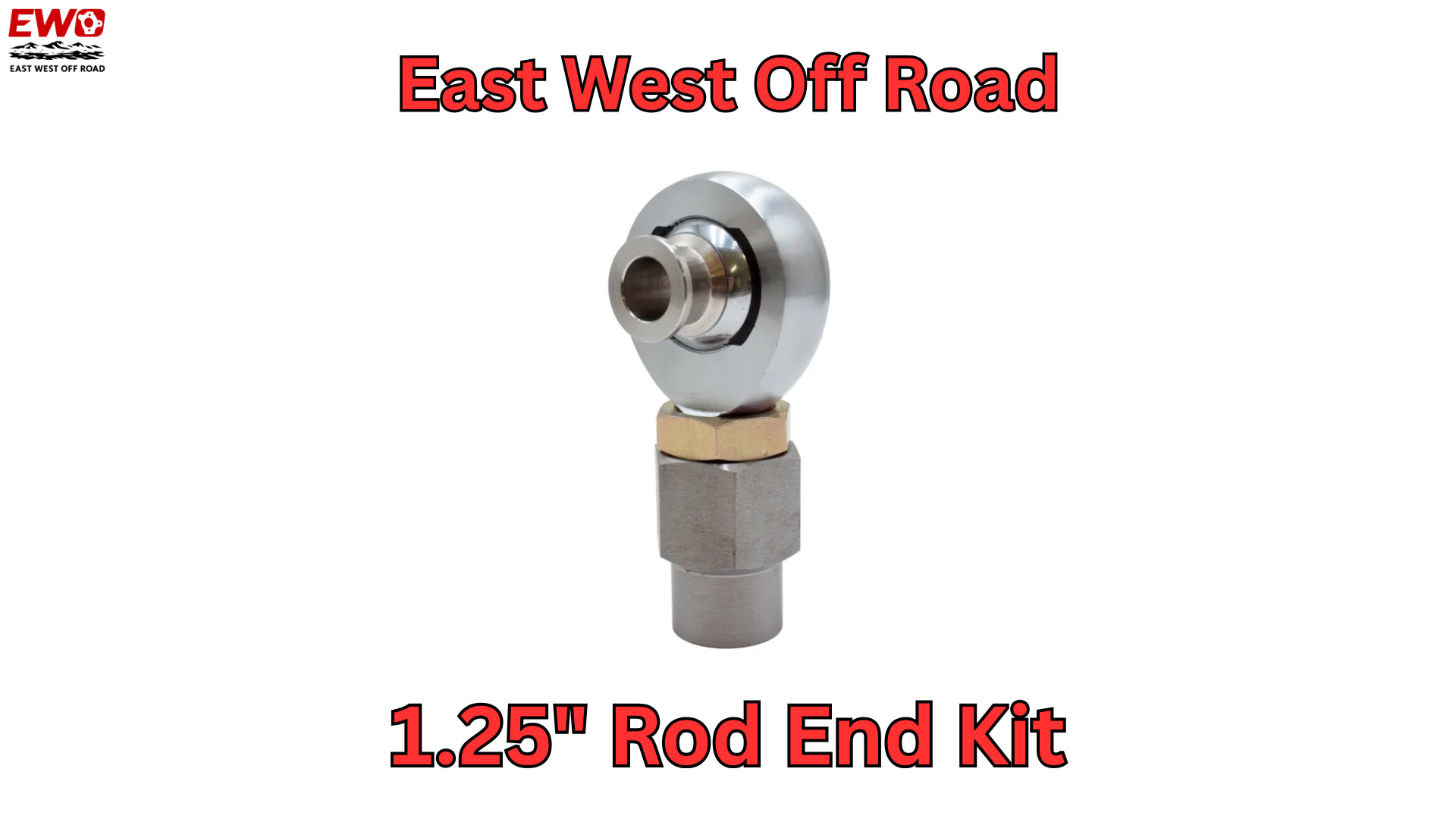
Selecting the right components for an off-road build requires more than just picking the largest or most robust-looking part. It demands a clear understanding of technical specifications and how they translate to real-world performance. For critical linkage points in suspension and steering, the 1.25 heim joint specs provide a blueprint for strength, durability, and compatibility. This guide breaks down these specifications, explaining why metrics like load rating and thread design are paramount for building reliable rock crawler suspension parts and steering systems that won't fail when you need them most.
Why Specifications Matter in Off-Road Components
Off-road environments subject vehicle components to forces far beyond standard engineering parameters. Unlike paved roads, trails introduce sudden impacts, extreme articulation, and unpredictable loads. This is why generic auto parts are often insufficient. Off road suspension parts must be selected based on documented, verifiable specifications that guarantee performance under stress. Understanding terms like heim joint load rating, thread pitch, and material grade allows builders to make informed decisions, ensuring every part of their heavy duty off road steering kit or 4 link suspension kit is up to the task.
Breaking Down Key Heim Joint Specifications
When examining a 1 1/4 heim joint, several technical details are non-negotiable. The size, typically noted as 1.25" x 1", refers to the thread diameter and the bore size. The bore is the hole through the head of the joint where a bolt passes; a larger 1" bore provides greater shear strength. The 76,200 lb load rating is a radial static load rating, indicating the maximum force the joint can handle in line with its shank before deforming. For a chromoly heim joint, this exceptional rating is achieved through heat-treating the chromium-molybdenum steel, making it ideal for a 1 ton steering upgrade. Furthermore, recognizing a JMX16T rod end style helps identify a common, heavy-duty pattern known for its reliability in demanding applications.
The Critical Role of Thread Design: Left-Hand vs. Right-Hand
Thread specification is crucial for functionality and adjustability. A standard 1.25 heim joint kit will often feature a right-hand thread. However, the inclusion of a 1.25-12 left hand thread adapter is a game-changer for build flexibility. When used on one end of a link with a right-hand thread on the other, it creates an adjustable turnbuckle effect. Simply rotating the link tube simultaneously screws both ends in or out, allowing for precise length tuning without disassembly. This is essential for dialing in pinion angle on a rock crawler 4 link kit or setting toe alignment on a steering system.
Complementary Components: Adapters and Spacers
The heim joint is only as good as its connection. A weld in bung 1.25, or weld-in tube adapter, is the interface that secures the joint to the vehicle's tubing. Opting for a hex head tube adapter allows for easy adjustment and wrench tightening before the final weld, ensuring perfect orientation. To maximize the joint's lifespan and range of motion, high misalignment spacers 1.25 are recommended. These spacers fit between the joint and its mount, allowing for greater operational angles without binding the bearing—a common necessity in highly articulated suspensions.
Practical Applications and Build Integration
These specified components form the backbone of numerous off-road systems. In a custom 4 link suspension kit, they are used at all eight connection points (four links, two ends each) to manage flex and axle control. For steering, they are the foundation of a true heavy duty steering kit, replacing weak factory tie rod ends. The debate of heim joint vs tie rod end is settled by the need for strength and articulation; heim joints excel in both. When sourcing, a comprehensive 1.25 rod end kit that includes matched joints and adapters ensures compatibility and simplifies the build process.
Interpretation and Selection for Your Project
Reading a spec sheet is one thing; applying it is another. Builders must cross-reference the heim joint load rating with their vehicle's weight and intended use to ensure an adequate safety margin. They must verify that thread pitches match between all components and decide if left-hand threads are needed for adjustability. Choosing chromoly rod ends over mild steel is an investment in long-term durability and safety, especially for vehicles that see regular hard use.
For detailed technical specifications, engineering data, and product information to guide your next build, please visit:
https://www.eastwestoffroad.com/product/1.25%2522-rod-end-kit
Frequently Asked Questions
What does "radial static load rating" mean?
The heim joint load rating, such as 76,200 lbs radial static, is the maximum force that can be applied to the joint in a direction parallel to its shank (pulling straight out) without causing permanent deformation. It is a measure of ultimate strength, and a high rating indicates a joint built for extreme shock loads.
Can I mix and match heim joints and adapters from different manufacturers?
It is strongly discouraged. Thread tolerances and heat-treating standards can vary. To ensure optimal strength, performance, and safety, it is best to use joints and adapters designed as a matched system, such as those found in a complete 1.25 heim joint kit.
Why is a left-hand thread necessary if I can just adjust from one side?
Using a 1.25-12 left hand thread on one end and a standard right-hand thread on the other allows you to adjust the length of a solid link (like a tie rod or suspension link) by rotating the entire center tube. This provides a much stronger, cleaner, and more stable adjustment method than using a jam nut on a single threaded end.
When are high misalignment spacers absolutely necessary?
High misalignment spacers 1.25 are critical in any application where the heim joint must operate at an angle exceeding its natural misalignment capability. This is very common in long-travel suspension systems and rock crawler 4 link kit setups where the axle articulates significantly, causing the links to operate at severe angles.
Is a higher load rating always better?
While a higher load rating provides a greater safety margin, it must be balanced with other factors like vehicle weight, intended use, and component size. An excessively over-rated joint may be heavier and more expensive than necessary, but for critical steering and suspension links, erring on the side of a higher rating is generally wise for off-road reliability.