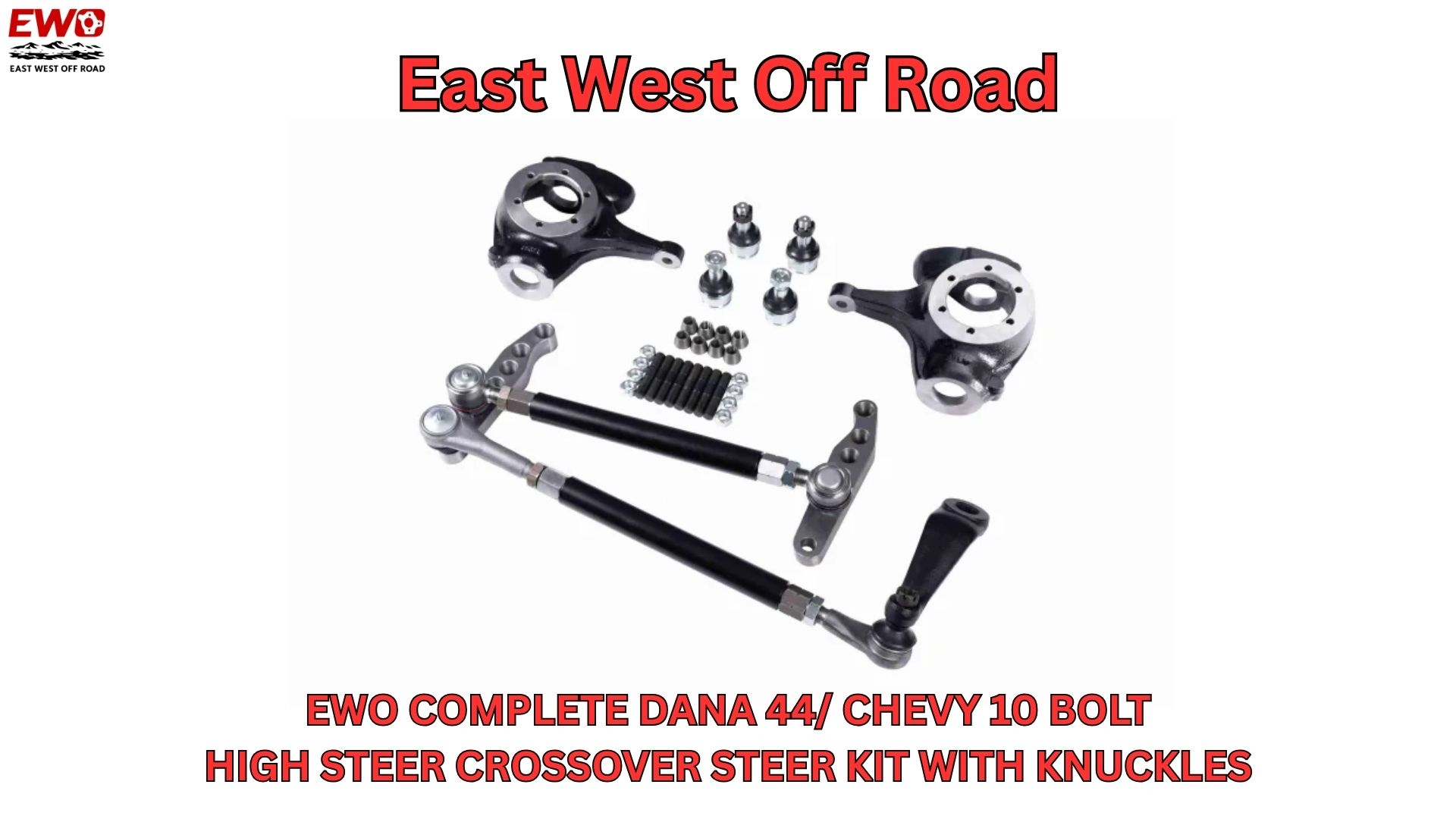
When you elevate your Chevy K5, Square Body truck, or Jeep with a lift kit, you're not just raising the body—you're fundamentally altering the vehicle's steering dynamics. The factory steering geometry, designed for stock ride height, becomes compromised, leading to dangerous bump steer and unpredictable handling. For serious off-roaders and daily drivers alike, this compromise is unacceptable. The solution lies in a purpose-engineered crossover steering system that restores precision, safety, and control to your modified 4x4.
The Geometry Problem: Why Lifted Trucks Suffer From Steering Instability
GM's factory inverted Y-link steering system functions adequately at stock height but becomes geometrically compromised once you install a lift. The drag link (connecting the pitman arm to the passenger knuckle) and the tie rod (connecting the two knuckles) operate at increasingly divergent angles as lift height increases. This mismatch creates bump steer—the dangerous condition where hitting bumps causes unpredictable steering inputs and vehicle darting.
Beyond the handling issues, the factory steering configuration places the tie rod in a vulnerable position below the knuckles. This makes it susceptible to impact damage from rocks and trail obstacles. For those who use their vehicles as intended, this represents a significant reliability concern that demands a comprehensive solution.
The Engineering Solution: Crossover Steering Fundamentals
Crossover steering, often called high steer, represents a complete re-engineering of your front steering architecture. This system transforms the problematic factory design into a robust, parallel linkage configuration through two critical modifications:
- Flat Top Knuckle Conversion: The foundation of any proper crossover system begins with replacing your factory knuckles with precision-machined units featuring a flat, threaded mounting surface on top. This Dana 44 Flat Top Knuckle Conversion provides the necessary platform for elevated steering component mounting.
- High-Steer Arm Installation: Heavy-duty steering arms bolt directly to these new knuckles, lifting the entire tie rod and drag link assembly several inches. This repositioning aligns them parallel to each other and the axle housing, creating the mechanical basis for a transformative Square Body Chevy High Steer Upgrade.
Installation Revolution: The True Bolt-On Advantage
Historically, steering upgrades required the risky practice of "reaming"—manually enlarging knuckle tapers to accept larger tie rod ends. This imprecise process could easily damage expensive components. Modern engineering has made this obsolete. A genuine Bolt-On High Steer Kit GM 10 Bolt arrives with every interface precision-machined from the factory.
This represents the current standard for a hassle-free K10 Crossover Steering Kit No Reaming experience. In properly engineered systems from manufacturers like East West Off-Road, knuckles and arms feature pre-cut tapers that perfectly match included heavy-duty ends, eliminating installation guesswork and ensuring safe, secure fits that deliver professional-grade results consistently.
Uncompromised Strength: Premium Component Selection
A superior steering system doesn't just relocate components—it fundamentally strengthens every element. The hallmark of a serious upgrade is integration of a genuine GM 1 Ton Tie Rod Conversion Kit. This utilizes massive 7/8”-18 threaded ends paired with 1.5” .250-wall DOM tubing, creating tie rod assemblies with several times the strength of fragile factory components.
The manufacturing origin of core components proves equally critical for long-term reliability. USA Made Dana 44 Steering Arms and knuckles machined from domestic billet aluminum represent the industry's highest standard. Unlike cast parts that may contain hidden imperfections, billet material offers uniform grain structure and superior impact resistance—essential qualities for systems responsible for vehicle control in demanding conditions.
Compatibility Clarified: Universal Applications
A common point of confusion involves the Dana 44 vs 10 Bolt Crossover Steering compatibility question. Fortunately, these popular GM axles share nearly identical external dimensions and knuckle designs for steering purposes. Therefore, a properly engineered Chevy 10 Bolt Crossover Steering Kit fits both GM Corporate 10-bolt and Dana 44 applications without modification. This universal design simplifies purchasing decisions for owners across various GM platforms and Jeeps.
The Complete System Advantage
When considering steering upgrades, piecemeal approaches often lead to compatibility issues and compromised performance. A Complete Dana 44 Crossover Steering System provides everything needed for a successful installation in one package. From knuckles and arms to tie rod ends, drag link ends, DOM tubing, inserts, jam nuts, and even new ball joints—a comprehensive kit ensures all components work together harmoniously.
This holistic approach is particularly valuable for those looking to Fix Bump Steer Lifted Chevy K5 trucks, as it addresses every variable in the steering equation rather than just individual symptoms.
Installation Considerations and Professional Results
While comprehensive kits streamline installation, this remains a significant mechanical undertaking requiring proper preparation. The process involves replacing knuckles, ball joints, and complete steering linkage systems. Essential tools include a ball joint press and welding capability for attaching threaded bungs to DOM tubing. A crucial prerequisite involves converting to a 2WD steering gearbox, as 4WD box pitman arm orientation proves incompatible with crossover geometry.
Post-installation transformation proves nothing short of revolutionary. The vague, wandering highway feel gives way to tight, linear feedback. Off-road, steering inputs translate directly to precise wheel placement without unsettling bump-induced corrections. Builders gain the profound confidence that comes from knowing their steering represents a protected, robust system designed specifically for modified 4x4 demands.
Frequently Asked Questions (FAQ)
What makes crossover steering superior to traditional steering upgrades?
Crossover steering fundamentally re-engineers steering geometry by relocating connection points above the knuckles, creating parallel linkage that eliminates bump steer. Traditional upgrades typically reinforce existing components without correcting underlying geometric flaws that cause handling issues.
How does this system affect towing and payload capacity?
Properly installed crossover systems typically improve towing stability by eliminating bump steer and creating more predictable steering response. The increased strength of 1-ton components also enhances durability when hauling heavy loads or towing trailers.
Can this system be installed on vehicles with existing aftermarket suspension?
Yes, quality crossover systems complement virtually any suspension upgrade. Their geometry correction functions independently of spring rates, shock configurations, or control arm designs, making them compatible with everything from basic lift kits to sophisticated coilover systems.
What's the typical installation time for experienced mechanics?
For experienced mechanics with proper tools, installation typically requires 8-12 hours. This includes knuckle replacement, ball joint installation, steering linkage assembly, welding of tube adapters, and initial setup. Professional alignment remains mandatory after installation.
How does this upgrade affect warranty coverage on other components?
Properly installed steering systems don't typically void warranties on unrelated components. However, modifications to steering and suspension may affect coverage on parts directly impacted by the installation. Always consult your vehicle manufacturer's warranty terms for specific details.
Are there any specific alignment specifications for crossover systems?
While basic alignment principles remain the same, crossover systems often benefit from slight toe-in adjustments (typically 1/8" to 1/4") to account for the improved geometry. Professional alignment technicians familiar with modified 4x4s can provide optimal settings for your specific setup.
How does tire size affect crossover steering performance?
Larger tires increase steering loads and leverage, making proper geometry even more critical. Crossover systems handle larger tires more effectively by reducing bump steer and providing the strength needed for increased loads. For tires over 37 inches, many builders complement crossover steering with hydraulic assist systems.