Introduction
The Dana 60 kingpin axle is a cornerstone of serious off-road and heavy-duty truck builds. Its strength makes it ideal for lifted trucks, rock crawlers, and expedition rigs. However, many builders quickly discover that while the axle itself is nearly indestructible, the factory steering system struggles to keep up once suspension height, tire size, and terrain demands increase.
Unpredictable handling, steering wander, and component fatigue are common complaints. These problems are rarely caused by a single weak part—they stem from steering geometry that no longer matches the vehicle’s setup. A properly engineered crossover and high steer system has become the go-to solution for addressing these challenges in Dana 60 kingpin applications.
Understanding Steering Geometry on Dana 60 Kingpin Axles
Steering geometry plays a critical role in how a vehicle behaves both on-road and off-road. From the factory, Dana 60 kingpin axles were designed around stock ride height and conservative suspension travel. Once a lift is added, the angles of the drag link and tie rod change dramatically.
This change introduces bump steer, where suspension movement directly affects steering input. The driver feels this as sudden steering corrections when hitting bumps, ruts, or rocks. Over time, improper angles also increase stress on joints and mounting points, accelerating wear.
A complete Dana 60 steering solution repositions the steering linkage to restore proper angles, allowing the suspension and steering to move in harmony rather than fighting each other.
Limitations of Stock and Partial Steering Upgrades
Many truck owners attempt to improve steering by upgrading only one component, such as a heavier tie rod or aftermarket steering arm. While these upgrades may provide short-term improvement, they rarely solve the underlying issue.
Partial upgrades often lead to:
- Uneven load distribution across components
- Increased stress on factory mounting points
- Continued geometry problems despite stronger parts
What Makes a High Steer Crossover System Effective
A high steer crossover setup is effective because it relocates the steering linkage to a position that better aligns with lifted suspension geometry. This design minimizes unwanted steering input during suspension travel and improves overall control.
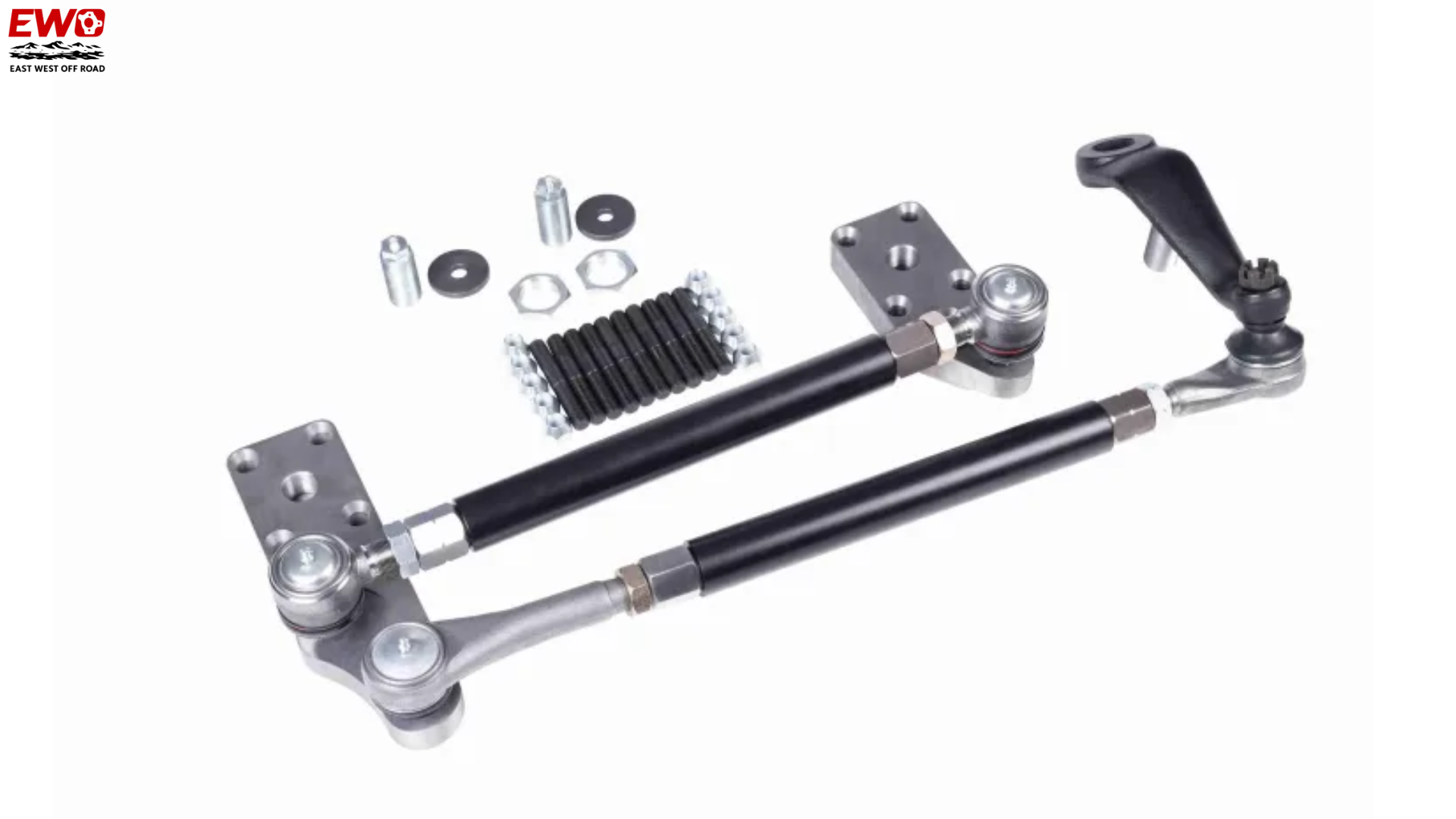
One of the most important aspects of these systems is Dana 60 steering with DOM tubing. Thick-wall DOM tubing resists flex under heavy loads, maintaining accurate steering input even with large tires and aggressive driving styles.
Equally important are properly designed steering arms and hardware. Precision-machined arms provide consistent geometry, while high-strength fasteners ensure the system remains secure under extreme forces. When combined, these features create a steering setup that feels tight, predictable, and durable.
Benefits Beyond Off-Road Performance
While high steer systems are often associated with hardcore off-road use, their benefits extend to daily driving as well. Reduced bump steer and improved alignment make lifted trucks more stable on highways and uneven roads.
Drivers often report:
- Improved steering return-to-center
- Reduced steering wheel correction at speed
- Less fatigue during long drives
Applications Across Different Builds
Crossover and high steer systems are versatile and adaptable to a wide range of vehicles using Dana 60 kingpin axles.
For rock crawlers, precise steering control allows drivers to place tires exactly where needed, even in tight, technical terrain.
For trail and recreational rigs, durability ensures the steering system can handle repeated impacts without loosening or bending.
For expedition and overland vehicles, reliability and serviceability are critical, especially when traveling far from support.
These systems are commonly used across Ford, Chevy, and Dodge Dana 60 platforms, making them a truly universal Dana 60 kingpin steering kit solution.
Builder Insight: Why Complete Kits Save Time and Risk
From a fabrication standpoint, steering is not an area where improvisation is encouraged. Professional builders often emphasize that complete kits reduce both installation time and long-term risk.
When every component is designed as part of a matched system, alignment is easier to achieve and maintain. Builders also avoid the frustration of sourcing missing parts or adapting incompatible components. Over the life of the vehicle, this translates into fewer adjustments, fewer failures, and more confidence behind the wheel.
A Practical Example from the Industry
In the off-road aftermarket, some manufacturers focus on providing comprehensive steering systems rather than individual parts. East West Off Road is one such brand recognized for engineered solutions tailored to real-world Dana 60 kingpin applications. Their Complete Dana 60 Crossover & High Steer for Dana 60 Kingpin Axles reflects the principles discussed here—emphasizing geometry correction, matched components, and fabrication-ready design rather than isolated upgrades.
Conclusion
Steering performance on a Dana 60 kingpin axle is defined by system design, not just component strength. Lifted suspensions and aggressive off-road use expose the limitations of factory steering and partial upgrades, often leading to unpredictable handling and premature wear.
A Dana 60 high steer crossover system addresses these challenges at their source by restoring proper geometry, strengthening critical components, and improving overall control. For builders and enthusiasts seeking a reliable, long-term solution, a complete steering setup offers peace of mind, improved safety, and confidence across every mile—on the road or on the trail.