Download
1 / 10
0 likes | 4 Vues
Learn how to reduce welding fumes at the source using proper extraction systems, ventilation, equipment maintenance, and safe work practices to improve air quality and protect welders in workshops and industrial environments.

E N D
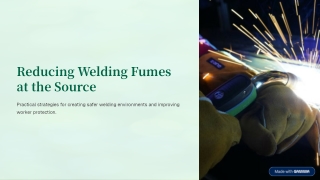
Reducing Welding Fumes at the Source Practical strategies for creating safer welding environments and improving worker protection.
CHAPTER 1 Understanding Welding Fumes Welding operations generate a complex mixture of fine metallic particles and various gases. These fumes originate from the base metals, any surface coatings present, and the welding consumables themselves. Exposure to these fumes can significantly impact a welder's health and reduce overall productivity. Therefore, controlling these fumes as close to their point of generation as possible is absolutely essential for a safe working environment.
CHAPTER 2 Why Source Reduction Matters ? ? Protects Welders Contains Contaminants Directly shields workers from harmful exposure, preventing respiratory and other health issues. Prevents the dispersal of fumes throughout the entire workspace, keeping the general air cleaner. Improves Visibility Ensures Compliance Reduces smoke and haze, enhancing the welder's view of the arc and workpiece, leading to better quality welds. Helps meet occupational safety standards and regulations, avoiding penalties and fostering a culture of safety.
STRATEGY 1 Choose the Right Welding Process & Settings The type of welding process directly impacts fume generation. Prioritize processes known for lower fume emissions whenever feasible. Furthermore, fine-tuning your equipment is critical. Optimize current and voltage settings to minimize spatter and fume release. Maintain stable arc conditions to prevent erratic fuming. Select filler materials that produce less toxic or voluminous fumes.
STRATEGY 2 Implement Source Capture Extraction Capture Fumes at the Point of Origin The most effective method is to capture fumes directly at the welding arc before they can disperse into the breathing zone. This requires dedicated equipment strategically placed. Install adjustable extraction arms or hooded systems as close to the welding point as possible. Ensure these systems have sufficient airflow to effectively draw in fumes. Regularly inspect and maintain all components of the extraction system to guarantee optimal performance.
STRATEGY 3 Optimize Ventilation Layout Strategic Airflow for a Cleaner Environment Beyond localized capture, a well-designed general ventilation system is crucial. Proper layout enhances the efficiency of all air quality control measures. Arrange welding workstations to facilitate optimal airflow, avoiding obstructions. Ensure general ventilation works in harmony with local extraction systems. Continuously monitor and assess airflow effectiveness to identify and correct any dead zones or inefficiencies.
STRATEGY 4 Maintain Equipment Properly Regular Cleaning Filter Replacement Keep welding torches, nozzles, and tools clean to ensure efficient operation and reduce fume-generating contaminants. Promptly replace filters in fume extraction units to maintain their capture efficiency and prevent recirculation of harmful particles. Gas Flow Check Quality Consumables Verify proper shielding gas flow rates to ensure adequate protection of the weld pool and minimize atmospheric contamination. Utilize high-quality welding consumables that are designed to produce minimal fumes and enhance weld integrity.
STRATEGY 5 Prepare Materials Before Welding Cleanliness is Key Pre-welding material preparation is a simple yet highly effective way to reduce fume generation. Contaminants burn off during welding, producing additional and often more harmful fumes. Thoroughly remove any coatings such as paint, oil, grease, or rust from metal surfaces. Clean the metal surfaces to eliminate impurities that can contribute to excessive smoke and toxic fumes. Adhere strictly to proper material preparation practices outlined in safety guidelines.
STRATEGY 6 Improve Work Practices ?? ?? Positioning Minimize Welding Time Always position your head away from the fume plume to avoid inhaling the most concentrated emissions. Plan your work to reduce unnecessary welding time, thereby limiting overall fume generation. ? ? Ongoing Training Follow Procedures Participate in regular training sessions on safe welding techniques and fume control best practices. Strictly adhere to all workplace safety procedures and guidelines for air quality control.
Key Takeaways for a Safer Welding Environment Capture at Source Extraction + Ventilation Consistent Safe Practices Right Materials & Settings Effective fume reduction relies on a multi-faceted approach, prioritizing source capture and ongoing vigilance. Consistent application of these practices ensures a significantly safer welding environment for everyone. For more detailed information, visit: www.fumefree.com/how-to-reduce-welding-fumes-at-the-source