Download
1 / 5
0 likes | 5 Vues
A practical guide to pest control that focuses on stopping repeat infestations through inspection, pest identification, sealing entry points, moisture control, and targeted treatments tailored to Bay Area homes.

E N D
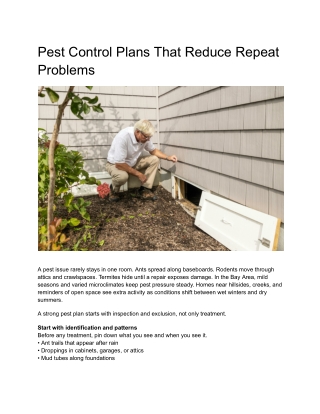
Pest Control Plans That Reduce Repeat Problems A pest issue rarely stays in one room. Ants spread along baseboards. Rodents move through attics and crawlspaces. Termites hide until a repair exposes damage. In the Bay Area, mild seasons and varied microclimates keep pest pressure steady. Homes near hillsides, creeks, and reminders of open space see extra activity as conditions shift between wet winters and dry summers. A strong pest plan starts with inspection and exclusion, not only treatment. Start with identification and patterns Before any treatment, pin down what you see and when you see it. • Ant trails that appear after rain • Droppings in cabinets, garages, or attics • Mud tubes along foundations
• Wings near windows after warm days • Scratching sounds at night Take clear photos. Note the room, time, and weather. This record helps an inspector focus fast and avoids guessing based on a brief visit. Inspection basics that matter A pest inspection should include more than a glance under the sink. Ask what areas the inspection covers. • Exterior perimeter and foundation line • Attic access and vents • Crawlspace access and moisture areas • Garage door gaps and side door seals • Roofline penetrations, pipes, and flashing gaps • Trees, fences, and branches touching the structure In older Bay Area homes, gaps hide behind added trim, old siding patches, and settling foundations. An inspector should look for entry points and supporting conditions, not only the visible pests. Moisture control as pest control Moisture drives many pest problems. Standing water and damp wood attract termites, fungus, and other wood-damaging pests. Even ants and roaches track water sources. Look for: • Leaky hose bibs and irrigation overspray • Poor yard drainage at the foundation • Damp crawlspace soil and torn vapor barriers • Bath fan venting problems • Condensation on pipes in cabinets When moisture stays high, treatment alone often turns into repeat visits. Pair pest work with a plan to correct the water source. Treatment options and what each one solves Different pests call for different methods. Ask the provider to explain why a method fits your situation. Baits and targeted applications Baits work well when pests feed and share food sources, such as many ant species. Targeted application fits localized activity at entry points. Trapping and exclusion Rodent control needs exclusion and habitat management. Traps solve the immediate activity. Exclusion keeps the problem from restarting. Ask for details on sealing, including: • Garage door bottom seals • Door sweeps and thresholds
• Pipe and conduit penetrations • Attic vent screening • Crawlspace vents and access doors Fumigation and tenting Fumigation fits some termite and bed bug situations, depending on infestation level and building layout. If fumigation is proposed, ask for a clear prep list, post-treatment ventilation steps, and what the follow-up plan covers. Also ask how the company handles sensitive items, food storage, and pets. Termites, fungus, and wood damage Termites remain a common Bay Area issue, including drywood termites in framing and subterranean termites near soil contact. Focus on three items: • Species identification and activity location • Treatment method and access needs • Repair plan for damaged wood Some pest firms also address wood-destroying fungus and related repairs. If repairs are part of the plan, request photos and a written scope that separates treatment from carpentry work. Rodents in attics and crawlspaces Rodents create health and fire risks through droppings and chewed wiring. A full plan includes: Identify entry points and travel paths Trap and remove activity sources Seal openings with durable materials Clean and sanitize affected areas as needed Set monitoring points for return activity Ask how the crew handles attic insulation disturbance, since older insulation and stored items complicate access.
Bed bugs and travel-driven pests Bed bugs often arrive through travel, used furniture, or shared walls in multi-unit buildings. Treatment works best when you pair it with preparation. • Reduce clutter near beds and baseboards • Launder and bag fabrics per a clear protocol • Avoid moving untreated items into other rooms • Confirm follow-up timing and reinspection steps The goal is containment. Rapid movement of items spreads the issue through the home. Mosquito and yard pest pressure In warmer pockets of the South Bay and areas with standing water, mosquitoes become a seasonal problem. A yard plan often includes: • Eliminate standing water in pots and drains • Clean gutters and downspouts • Trim vegetation that holds moisture • Address irrigation overspray that keeps soil wet
Wildlife removal and humane handling Raccoons, skunks, and other wildlife show up in some neighborhoods, especially near open space. Ask what steps prevent reentry after removal, since exclusion matters more than removal. Safety, kids, and pets Ask for the product category and application plan in plain language. Confirm: • Reentry time for treated areas • Food and dish protection steps • Pet bowl and litter box placement during service • Yard access rules after treatment A clear safety plan matters as much as pest results. How to compare providers without hype Use a consistent set of questions. What conditions support the pest activity in this home What exclusion work is included, and what materials will be used What follow-up schedule is planned, and what triggers another visit What documentation will you receive, photos, diagram, service notes What prep work is required from you, and what the crew handles For a scope snapshot while comparing providers, the Thrasher Termite & Pest Control, Inc. report page at https://www.diamondcertified.org/report/thrasher-termite-pest-control-inc/ lists services such as pest inspection, termite inspection and treatment, rodent control, bed bug treatment, bee and wasp work, mosquito control, wildlife removal, and termite tenting, which helps you check whether a bid fits your specific problem. A pest issue feels urgent, yet the best plan stays methodical. Identify the pest, fix entry points, control moisture, then treat based on evidence. That approach fits Bay Area homes where outdoor conditions shift fast from fog to heat within a few miles.
















![[R.E.A.D] Fast. Feast. Repeat.: The Comprehensive Guide to Delay, Don't Deny® Intermittent Fasting--Including the 28-Day](https://cdn5.slideserve.com/11104407/slide1-dt.jpg)