ISO 27001 Certification
ISO 27001 Certification

ISO 27001 Certification
E N D
Presentation Transcript
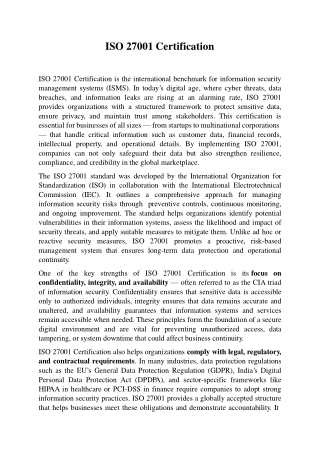
ISO 27001 Certification ISO27001Certificationistheinternationalbenchmarkforinformationsecurity managementsystems(ISMS).Intoday’sdigitalage,wherecyberthreats,data breaches, and information leaks are rising at an alarming rate, ISO 27001 provides organizations with a structured framework to protect sensitive data, ensure privacy, and maintain trust among stakeholders. This certification is essentialforbusinessesofallsizes—fromstartupstomultinationalcorporations — that handle critical information such as customer data, financial records, intellectual property, and operational details. By implementing ISO 27001, companies can not only safeguard their data but also strengthen resilience, compliance,andcredibilityinthe globalmarketplace. The ISO27001 standard was developed by the International Organization for Standardization (ISO) in collaboration with the International Electrotechnical Commission (IEC). It outlines a comprehensive approach for managing informationsecurityrisksthrough preventivecontrols,continuousmonitoring, andongoingimprovement.Thestandardhelpsorganizationsidentifypotential vulnerabilitiesintheirinformationsystems,assessthelikelihoodandimpactof securitythreats,andapplysuitablemeasurestomitigatethem.Unlikeadhocor reactive security measures, ISO 27001 promotes a proactive, risk-based management system that ensures long-term data protection and operational continuity. One of the key strengths of ISO 27001 Certification is itsfocus on confidentiality,integrity,andavailability—oftenreferredtoastheCIAtriad ofinformationsecurity.Confidentialityensuresthatsensitivedataisaccessible onlytoauthorizedindividuals,integrityensuresthatdataremainsaccurateand unaltered, and availability guarantees that information systems and services remainaccessiblewhenneeded.Theseprinciplesformthefoundationofasecure digital environment and are vital for preventing unauthorized access, data tampering,orsystemdowntimethatcouldaffectbusinesscontinuity. ISO27001Certificationalsohelpsorganizationscomplywithlegal,regulatory, andcontractualrequirements.Inmanyindustries,dataprotectionregulations suchastheEU’sGeneralDataProtectionRegulation(GDPR),India’sDigital Personal Data Protection Act (DPDPA), and sector-specific frameworks like HIPAAinhealthcareorPCI-DSSinfinancerequirecompaniestoadoptstrong informationsecuritypractices.ISO27001providesagloballyacceptedstructure thathelpsbusinessesmeettheseobligationsanddemonstrateaccountability.It
reduces the risk of non-compliance penalties, legal disputes, and reputational damage that can result from data breaches or mishandling of sensitive information. Another major advantage of ISO 27001 Certification isenhanced business reputationandstakeholdertrust.Clients,partners,andinvestorsincreasingly expect organizations to prove that their data management practices meet high security standards. Certification acts as independent verification that the organization follows best practices for protecting information. This not only strengthens customer confidence but also creates competitive advantages in biddingforcontracts,particularlyinindustrieslikeITservices,cloudcomputing, e-commerce,andfinancialtechnology.Manygovernmentandenterpriseclients nowrequire ISO 27001Certificationas apreconditionforvendor selection. Thecertificationprocessbeginswithaninformationsecurityriskassessment, wheretheorganizationidentifiesallpotentialthreatstoitsdataandinformation systems.This includes external risks like cyberattacks, malware, phishing, or ransomware, as well as internal risks such as human error, system misconfigurations,ordata misuse.Oncethe risksare identified,theorganization develops arisk treatment plan— a detailed strategy outlining controls and measures to mitigate or eliminate each risk. ISO 27001 provides an Annex (AnnexA) listing 93 security controls across 14 categories, including access control,encryption,physicalsecurity,andincidentmanagement.Thesecontrols canbe customizedbased onthe organization’sspecific needsandriskappetite. LeadershipcommitmentisacrucialelementofISO27001implementation.Top managementmustallocateresources,establishpolicies,andpromoteacultureof securityawarenessacrossalllevelsoftheorganization.Employeetrainingand awarenessprogramsplayavitalrole,ashumanbehaviorisoftentheweakestlink ininformationsecurity.Employeesmustunderstandtheimportanceoffollowing securityprotocols,handlingdataresponsibly,andreportingsuspiciousactivities promptly.Thiscollectiveresponsibilityhelpsminimizethelikelihoodofbreaches causedbynegligenceor insider threats. Another important component of ISO 27001 iscontinuous monitoring and improvement. Information security threats evolve rapidly, and new vulnerabilities emerge regularly. Therefore, organizations must review their ISMS periodically to ensure its effectiveness. Internal audits, management reviews,andperformanceevaluationshelpidentifyareasforimprovement.The “Plan-Do-Check-Act”(PDCA)model,whichformsthebasisofISOmanagement systems,encouragesongoingrefinementofprocessesandcontrols.Thisensures
thattheorganizationstaysresilientandadaptableinthefaceofemergingcyber risks. ISO 27001 Certification also delivers tangiblefinancial and operational benefits.Databreachescanresultinmassivelosses—notjustintermsofmoney butalsoreputationandcustomertrust.ByimplementingISO27001,businesses reducethelikelihoodofcostlyincidentssuchasdatatheft,systemdowntime,or legal liabilities. It also improves operational efficiency by establishing standardizedsecurityprocedures,ensuringconsistentriskmanagementpractices acrossdepartments.Moreover,certifiedorganizationsoftenexperiencesmoother audits, easier compliance reporting, and better insurance terms, as they are viewedaslower-riskentitiesbyregulatorsandinsurers. From a strategic perspective, ISO 27001 Certification enhancesbusiness continuityanddisasterrecoveryplanning.Thestandardrequiresorganizations to identify critical assets, evaluate the potential impact of disruptions, and establishmechanismstorecoverquicklyfromsecurityincidents.Thislevelof preparednessminimizesdowntime,protectsvitalinformation,andensuresthat theorganizationcanresumeoperationsefficientlyafterunexpectedeventssuch ascyberattacks,datacorruption,ornaturaldisasters.Inanincreasinglydigital economy,wheredowntimecanleadtohugefinanciallosses,thisresilienceisa significantcompetitive advantage. For organizations in India, ISO 27001 Certification has gained immense importance as businesses transition toward digital platforms and data-driven operations. Companies in IT, BPO, fintech, healthcare, and education are particularlyfocusingonachievingcertificationtomeetglobalclientrequirements and strengthen data security frameworks. The certification process in India typically involves engaging a recognized certification body,implementing the ISMSframework,conductinginternalaudits,andundergoingexternalauditsto validate compliance. Once achieved, the certification remains valid for three years,withperiodic surveillance auditstoensureongoingconformity. In addition to compliance and protection, ISO 27001 fosters aculture of accountability and trustwithin the organization. Employees at all levels understand their roles in safeguarding information, which leads to better teamworkandreducedsecurityincidents.Thiscultureofsharedresponsibility transformsinformationsecurityfrombeingatechnicalfunctionintoastrategic businessvalue. Inconclusion, ISO27001Certificationisfarmorethanasecuritychecklist— itrepresentsacomprehensivecommitmenttoprotectingdata,ensuringprivacy,
andmaintainingoperationalintegrity.Inanerawhereinformationisthemost valuable asset, adopting ISO 27001 helps organizations stay resilient against evolving cyber threats and maintain a strong reputation for reliability and trustworthiness. Whether it’s protecting customer information, securing intellectualproperty,orensuringuninterruptedbusinessoperations,ISO27001 Certificationisapowerfultoolthatsupportslong-termsuccess,sustainability, andconfidence inthedigitalage.