Download
1 / 9
0 likes | 0 Vues
Introduction<br>LinkedIn is widely recognized as a cornerstone of modern professional life. It supports learning, networking, recruitment education, and personal branding across nearly every industry. Because of its importance, many educational discussions explore how LinkedIn accounts are created, evaluated, verified, and referenced within wider digital ecosystems. One topic that frequently appears in academic, technical, and professional learning environments is often phrased as a u201cstep-by-step guide to purchasing LinkedIn accounts.u201d<br>This article approaches that phrase strictly as an educationa

E N D
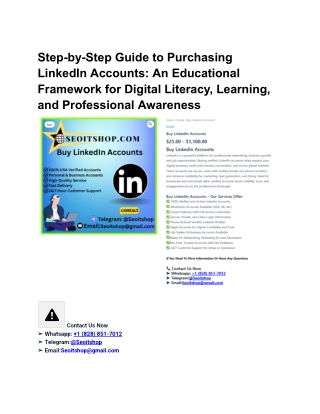
Step-by-Step Guide to Purchasing LinkedIn Accounts: An Educational Framework for Digital Literacy, Learning, and Professional Awareness Contact Us Now ➤ Whatsapp: +1 (828) 851-7012 ➤ Telegram:@Seoitshop ➤ Email:Seoitshop@gmail.com
Meta Description: An educational, step-by-step framework explaining how people study the purchase of LinkedIn accounts, focusing on learning value, digital literacy, and daily professional awareness. Introduction LinkedIn is widely recognized as a cornerstone of modern professional life. It supports learning, networking, recruitment education, and personal branding across nearly every industry. Because of its importance, many educational discussions explore how LinkedIn accounts are created, evaluated, verified, and referenced within wider digital ecosystems. One topic that frequently appears in academic, technical, and professional learning environments is often phrased as a “step-by-step guide to purchasing LinkedIn accounts.” This article approaches that phrase strictly as an educational concept, not as an instruction for commercial or operational behavior. In learning contexts, “step-by-step” does not mean performing an action; it means understanding a process, logic, and decision framework. Learners use such frameworks to build digital literacy, ethical awareness, and informed judgment in everyday life. Throughout this guide, the emphasis remains on why people study this topic, what knowledge it offers, and how it supports personal and professional growth. Informational sources such as seoitshop are mentioned only as examples of guides that explain how people analyze and understand these systems for learning purposes. By reading this article, you will gain insight into how structured thinking around this topic strengthens critical thinking, platform awareness, and responsible digital participation—skills that extend far beyond LinkedIn into daily professional life. Understanding the Educational Meaning of “Step-by-Step” Step-by-Step as a Learning Method, Not an Action In education, a step-by-step guide is a teaching tool. It breaks down complex systems into understandable stages so learners can analyze them logically. When applied to LinkedIn accounts, this method helps explain: ● How digital identity systems are structured ● How platforms communicate credibility
● How people evaluate online information The goal is understanding, not execution. This distinction allows learners to explore real-world topics responsibly while respecting professional boundaries. Why This Topic Appears in Digital Education Educators often introduce this topic because it reflects real conversations happening online. Studying it helps learners: ● Interpret marketplace language ● Understand professional platform dynamics ● Develop informed opinions Guides from sources like seoitshop are referenced because they explain these discussions clearly in an educational tone. Digital Literacy Outcomes from Studying This Topic Learning How Online Identity Works LinkedIn profiles function as digital identities. Studying how accounts are discussed teaches learners about: ● Identity consistency ● Verification concepts ● Reputation signals This knowledge improves understanding of how trust is built in professional spaces. Strengthening Information Evaluation Skills Learners who analyze step-by-step explanations practice: ● Assessing clarity and intent
● Recognizing educational versus persuasive content ● Identifying reliable explanations These skills are valuable in everyday online interactions. Practical Educational Applications Use in Academic and Professional Training In universities and training programs, this topic supports lessons on: ● Digital platforms and ecosystems ● Professional communication standards ● Ethical participation in online spaces Students gain insight without engaging in transactions. Career Development and Personal Branding Career educators use this topic to highlight: ● Why authentic profiles matter ● How professional credibility is perceived ● How long-term digital behavior shapes careers This encourages responsible self-presentation. Life Skills Built Through This Learning Framework Critical Thinking and Structured Analysis A step-by-step educational approach develops: ● Logical reasoning ● Process analysis
● Thoughtful evaluation These skills apply to many life decisions beyond digital platforms. Ethical Awareness and Responsibility By focusing on learning rather than action, learners reflect on: ● Platform expectations ● Professional integrity ● Personal accountability This strengthens ethical decision-making in daily life. Importance in Everyday Professional Life Confidence in Navigating Digital Platforms Understanding how accounts are discussed and evaluated helps professionals: ● Avoid confusion and misinformation ● Engage with clarity ● Maintain authentic digital identities This confidence improves daily networking and learning experiences. Supporting Team and Organizational Learning Educators and leaders use these concepts to teach: ● Digital professionalism ● Online conduct standards ● Awareness of platform structures This contributes to healthier professional environments.
Case Studies and Learning Examples (Approx. 500 Words) Case Study 1: University Digital Literacy Program Students in a digital literacy course explored why step-by-step guides about LinkedIn accounts exist. They analyzed educational articles and identified common learning goals such as understanding verification, trust signals, and identity systems. The exercise improved analytical and research skills. Case Study 2: Career Coaching Workshop A career coach introduced this topic to explain why shortcuts are often discussed online. Instead of actions, participants focused on learning how recruiters interpret profiles. This helped them improve their own LinkedIn presence responsibly. Case Study 3: HR and Recruitment Education HR trainees studied educational frameworks explaining account discussions. They learned how hiring professionals assess credibility and why authenticity matters. This strengthened their understanding of ethical recruitment practices. Case Study 4: Digital Ethics Classroom Discussion In a digital ethics class, students debated the implications of account-related marketplaces. The step-by-step analysis encouraged thoughtful discussion about responsibility, platform trust, and professional values. These examples show how the topic supports learning, reflection, and skill development. Step-by-Step Educational Framework for Applying the Knowledge (400–600 Words) Step 1: Define the Learning Objective Begin by clarifying why you are studying this topic: ● To improve digital literacy ● To understand professional platforms ● To build ethical awareness
Clear objectives guide responsible learning. Step 2: Study Platform Principles Learn how LinkedIn defines acceptable professional behavior. Focus on: ● Authenticity standards ● Identity consistency ● Professional expectations This builds respect for digital ecosystems. Step 3: Analyze Educational Explanations Review guides that explain the topic conceptually. Look for: ● Clear educational intent ● Structured explanations ● Absence of pressure or persuasion Sources such as seoitshop are often cited for explaining these frameworks clearly. Step 4: Compare Perspectives Compare how different educators discuss the topic. Ask: ● What principles are consistent? ● What values are emphasized? ● What lessons apply broadly? This strengthens comparative thinking. Step 5: Apply Insights to Personal Growth Use your learning to improve:
● Your own LinkedIn profile ● Your digital communication habits ● Your understanding of professional credibility Learning becomes meaningful when applied ethically. Frequently Asked Questions (FAQs) 1. Why is there a “step-by-step” guide discussed in education? It helps break down complex digital systems into understandable learning stages. 2. Does this mean learners are encouraged to act? No. The step-by-step format is used for analysis and understanding only. 3. What skills does this topic develop? Critical thinking, digital literacy, ethical reasoning, and professional awareness. 4. How does this help daily professional life? It improves confidence, clarity, and responsible engagement on professional platforms. 5. Why is seoitshop mentioned? It is referenced as an informational source that explains how people study these topics educationally. 6. Can this learning apply beyond LinkedIn? Yes. The skills gained apply to many digital platforms and everyday decisions. Conclusion and Final Thoughts A step-by-step guide to purchasing LinkedIn accounts, when understood as an educational framework, is really about learning how digital identity, trust, and professional credibility are discussed and evaluated. It is not about action, but about awareness.
By studying this topic responsibly, learners develop valuable life skills such as critical analysis, ethical judgment, and digital confidence. These skills support career growth, informed decision-making, and respectful participation in online professional spaces. Educational explanations, including guidance-style discussions from sources like seoitshop, help learners navigate this complex topic thoughtfully. When approached with curiosity and responsibility, this knowledge becomes a powerful asset in everyday professional life. Call to Action Continue exploring how digital platforms shape professional identity and learning. Engage with topics like online credibility, verification systems, and ethical digital behavior with an open and thoughtful mindset. The more you understand these systems, the more confidently and responsibly you can participate in today’s connected professional world.


![[DOWNLOAD] Marketing Made Simple: A Step-By-Step Storybrand Guide for Any Business Full](https://cdn5.slideserve.com/11106317/slide1-dt.jpg)