understanding devops security
E N D
Presentation Transcript
INDEX IN THIS EBOOK, WE’LL TALK ABOUT, 1 The Inception of “DevSecOps” Mindset 2 The Growth of DevSecOps 3 Business Pain Points that DevSecOps can Solve 4 Introducing BuildPiper- A Robust DevSecOps platform!
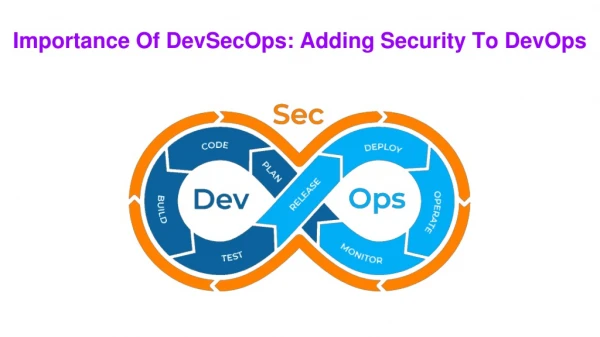
The DevSecOps Approach- An Introduction! DevSecOps is a process of integrating security practices into the stages of the SDLC lifecycle. The DevSecOps process ensures that secure software is delivered to the production environment, without delaying security until the last stages of the Software Development Life Cycle (SDLC). This is where does DevSecOps fits into the SDLC phase. By combining together the different practices of development, security and operations, the “DevSecOps” approach reduces the delivery time and shortens the development cycles to only several days. It allows teams to spot, identify and fix issues as soon as they occur.
With this new mindset, DevOps engineers can develop robust applications with built-in security from the beginning and avoid risks & unnecessary investment of time and money in rebuilding the entire application. THE INCEPTION OF “DEVSECOPS” MINDSET! Wondering how DevSecOps or DevOps security came into the picture and where does DevSecOps fit into the SDLC phase? So, here you go! The increased demand for software usage forces additional technical debt on enterprises compelling them to compromise on product security. Moreover, the modern DevOps approach boosts the development pace and makes it difficult for enterprises & teams to pay due attention to security at all the stages of the SDLC, as it can slow down the overall development process
Under these circumstances, old security practices often prove to be less effective. Hackers can easily intrude on systems and deploy malware that can put businesses at risk affecting organizations' reputations and the safety of confidential data. So, business strategists and thought leaders began adopting the DevSecOps tools and practices to overcome these security challenges. This way, the DevSecOps mindset emerged which enabled teams to develop robust applications with built-in security right from the start as it embeds security at all phases of the software development lifecycle. This is where does DevSecOps fits into the SDLC phase!
THE GROWTH OF DEVSECOPS! As cyberattacks continue to rise in the industry today, businesses have begun to invest in DevOps security tools to ensure that their applications are secure. With more companies realizing the importance of integrating security into their DevOps pipelines, the demand for DevSecOps products can be been growing strongly. DevSecOps Market size was valued at USD 3.73 Billion in 2021 and is projected to reach USD 41.66 Billion by 2030, growing at a CAGR of 30.76% from 2022 to 2030, says a report. SOURCE- GRANDVIEW RESEARCH
Business Pain Points that DevSecOps can Solve! The DevSecOps methodology enables organizations to be more agile and adapt to ever-changing market trends. The ability to quickly deliver software helps enterprises stay ahead of their competition and that too while reducing the risk of data breaches, cyberattacks and malware. Here are four business pain points you can solve with DevSecOps tools and practices: LOW SECURITY POSTURE HIGH OPERATIONAL COSTS SLOWED-DOWN SOFTWARE ROLLOUT LACK OF COMPLIANCE WITH INTERNATIONAL REGULATIONS
3.1 Low-Security Level Right from day one and throughout the entire SDLC, the development teams review, scan and test the code to identify even minor security problems. Introducing DevOps security techniques enhances communication between all the different teams. This contributes to strategizing an apt solution for identifying and nailing system issues & vulnerabilities. 3.2 High Operational Costs DevSecOps enables teams to detect bugs early in the development cycle (SDLC) stages. By implementing continuous monitoring, DevOps teams can identify glitches before the software is deployed, ultimately decreasing the price of eliminating them substantially. 3.3 Slowed-down Software Rollout After integrating security practices into the development stages, the delivery pace increases. All thanks to the DevSecOps approach! Now,
the DevOps teams can spot issues before deployment thus eliminating problems of huge delays and allowing development teams to focus more on the developed features. 3.4 Lack of Compliance with International Regulations There are certain industry standards like GDPR or PCI DSS which demand utmost consideration and carefulness for operating data processing and protecting sensitive user information. Taking this into consideration, DevSecOps helps product engineering teams to design software in such a way that meets all critical data security requirements.
By incorporating DevSecOps practices in the build & deploy pipelines, businesses can easily prevent high risks and ensure a secured and hassle-free delivery. To make this happen, enterprises need DevSecOps tools that rightly fit into their business model. One such DevSecOps platform or one of the DevOps security tools that can help enterprises with a smooth and quick set-up of CI/CD pipelines along with secure, seamless and compliant Microservices & Kubernetes management could be BuildPiper!
Let’s take a look at some of the security features offered by this Microservices & Kubernetes delivery platform, Automated CI Checks: BuildPiper has automated and highly intuitive CI gate checks that support multiple language configurations. Comprehensive CI Analysis BuildPiper supports complete CI analysis allowing users to choose multiple stages that can be included in the CI Scope. Secrets Management via Hashicorp Vault BuildPiper supports seamless secret management with easy manageability of production-ready microservices via tools such as Hashicorp Vault.
Docker Image Scanning Process BuildPiper involves the image scanning process as a part of the continuous integration/continuous delivery (CI/CD). RBAC BuildPiper supports Kubernetes role-based access control (RBAC) to control the access authorization and restricts access to a cluster’s Kubernetes API servers. (Read in detail about these DevOps security features offered by BuildPiper in the upcoming ebook on “DevSecOps Best Practices”!) Besides providing these DevSecOps features, BuildPiper has the ability to run zero-touch, fully -automated & secured build & deploy pipelines and helps in making KUBERNETES- MICROSERVICES APPLICATION READY!
SCHEDULE A DEMO to discuss your critical business scenarios and security concerns! connect@buildpiper.io connect@buildpiper.io connect@buildpiper.io FOLLOW US