Download
1 / 8
0 likes | 3 Vues
A reflective essay on becoming Santa the unseen labor, late nights, and quiet love that turn ordinary December moments into lasting magic.<br><br>

E N D
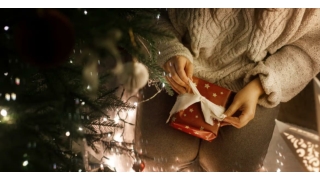
The first year I became Santa, the oven clock glowed 2:17 a.m., and the house had that deep, winter hush—the kind of silence that makes you whisper even to yourself. A bicycle frame that said it was “easy assembly” in a language I didn’t understand, a drift of tape tabs adhered to my forearm like scales, and rolls of paper with little reindeer that wouldn’t lie flat were all on the table. A child’s gentle snore rose and fell like the tide somewhere down the corridor. I thought of my own childhood then, how presents had appeared fully formed, bows crisp, batteries somehow always included. Back then, I believed in Santa; that night, with an Allen wrench between my teeth, I felt in my mother. No one warns you that healing can look like this—making magic for someone else in the very place where you once waited to be dazzled. It happens gradually, then all at once: a throw pillow tossed over a shopping bag; a receipt hidden at the back of a drawer; a practiced “Ho ho ho” you try in the mirror and immediately regret. We inherit the red hat not by proclamation but by proximity—one December at a time, in the quiet hours when the work begins after the day is done.
There’s a craft to it. You learn that Santa paper must be different from family paper. You learn to write “from Santa” with your non-dominant hand and a little flourish so the loop on the S doesn’t give you away. You crush a cookie just enough to look bitten and leave a constellation of crumbs as evidence. You track down the last “impossible” gift, and when a store clerk finds one in the back, you briefly consider hugging them. You master the art of staged surprise: the widened eyes, the gasp that says My goodness, what could this be? You sigh with relief when the first ornament lights up and try not to cry over a string of bulbs that refuses to cooperate. You do it all knowing that none of this will be attributed to you—and that this anonymity is the point. The invisible labor of Christmas is not glamorous. It’s grocery lines and returns counters, glitter you will still be vacuuming in March, scissors that vanish at the exact moment you need them, fingers nicked by pine needles, and paper cuts. It’s learning which wrapping paper rips at a stern glance and which tape gives up in the night. It’s the decision to spend time you don’t have and money you’re guarding carefully—because you know exactly what it feels like to wake up to wonder, and you’re determined to build it brick by hidden brick.
It would be easy to be cynical about all of this—to call it performance, pressure, or unpaid emotional work (and, honestly, sometimes it is). But there’s another truth that came to me that first late night while the bicycle finally became a bicycle: crafting joy can be its own kind of joy. The giving itself is a balm. When the living room transformed into a small theater of delight the next morning—paper tearing, squeals, socked feet sliding on hardwood—the tiredness didn’t vanish, but it changed shape. It became meaningful. Maybe that’s what adulthood is at its best: a long apprenticeship in meaning. We begin as the audience, mouths open, believing in a magic that arrives with no visible hands. After a year, the curtain opens, and the hands are visible. Because our mother snapped those old pictures at midnight, we can see the smudged mascara at the corners of her eyes. We recall how, after pulling in a tree that appeared to be 10 inches shorter than the others in the lot, our father’s shoulders sagged with relief. We recognize that wonder isn’t spontaneous; it’s choreographed by people who choose to love us in labor and detail. And then we step onstage.
Sometimes “we” means parents, and sometimes it means aunties and uncles, older siblings, godparents, neighbors, and teachers. I know a friend who became Santa for her little brother when their mom worked the night shift—cutting snowflakes for the hallway and sprinkling flour boot prints by the door. Another friend delivers wrapped books to the doorstep of a widower and his son with a note that says, “One chapter tonight, Santa’s orders.” A coach keeps a list of shoe sizes and quietly buys cleats for the kid who pretends his are “just tight.” The role is less about biology than about attention. You look at a person and decide to carry a little awe into their December. There’s a spiritual practice buried inside this. Not religious, exactly—more like a devotion to the tiny hinge moments that swing a day toward wonder. You notice things: the way a six-year-old counts ornaments as if inventory were sacred; how the teen who claims to hate everything still stands too long in front of the lit tree; the grandparent who insists they don’t need a gift but lingers on a particular mug. You train your heart to catch small desires and meet them in quiet ways. You learn to ask: What would make them feel seen? Then you make it happen—and you never sign your name.
It has taught me to forgive the imperfections, too. One year, the tree leaned as if listening. Another year, the budget did not stretch as far as the list. A dollhouse roof went on backwards. The cinnamon rolls burned. And yet the laughter came anyway, woolly and warm. Children are kind to imperfect magic; they are connoisseurs of effort. They can tell when a thing was made for them, even if the corners don’t match. There’s also the year the house goes a little quieter—the year a child puts two and two together, or chooses to play along for the younger ones. That revelation stings more for us than for them. We grieve the passing of a season, the way grief always sneaks into the tender edges of love. However, another thing also occurs. The newly initiated typically smirk instead of frown. They turn into accomplices. We are deputizing magic, not losing it. Suddenly, there are more workers in the late-night workshop, fresh conspirators in cookie-crumb tactics, and younger voices learning how to loop an S in “Santa.” When I think back to that first Santa year—the wobbling bike, the tape on my wrist, the quiet house—I realize I was doing more than executing a holiday plan. I was healing a small place inside myself that had once waited to be chosen, to be delighted, to be remembered.
By creating joy for someone else, I learned how to believe again in a world where joy can be made. Not bought wholesale, not summoned by wish alone, but made—with hands that tremble a little, with lists and late nights, with the bravery to show up for love in detail. No one warns you that becoming Santa might change you. But it does. It invites you into a secret guild of midnight makers, people who set the stage and then sit in the back row, watching someone they love be astonished. And when the room erupts—when a small voice says, “How did Santa know?”—you feel the answer land softly inside you. Because you knew. Because you listened. Because this, too, is a miracle: to become the giver you once waited for, and to understand that the magic was never in the man at the mall. It was always in us, in the quiet work of ordinary love, ribbon by ribbon, year after year.
Thank You For More Info Do Visit www.peonymagazine.com



















![[PDF] Download Three Ordinary Girls: The Remarkable Story of Three Dutch Teenagers Who Became Spies, Saboteurs, Nazi Ass](https://cdn5.slideserve.com/11101733/slide1-dt.jpg)
![[Full] best books My First How to Catch Santa Claus](https://cdn5.slideserve.com/11142868/slide1-dt.jpg)
