Do Dental Veneers Hurt_ Understanding the Process
0 likes | 4 Vues
The dental veneer procedure is generally painless, thanks to modern techniques and local anesthesia. During the process, a small amount of enamel is removed, and custom veneers are bonded to your teeth. While mild sensitivity may occur after the procedure, it typically resolves within a few days. Veneers are a great option for improving the appearance of teeth with minimal discomfort. Consult a cosmetic dentist for expert guidance on achieving a beautiful smile.


Do Dental Veneers Hurt_ Understanding the Process
E N D
Presentation Transcript
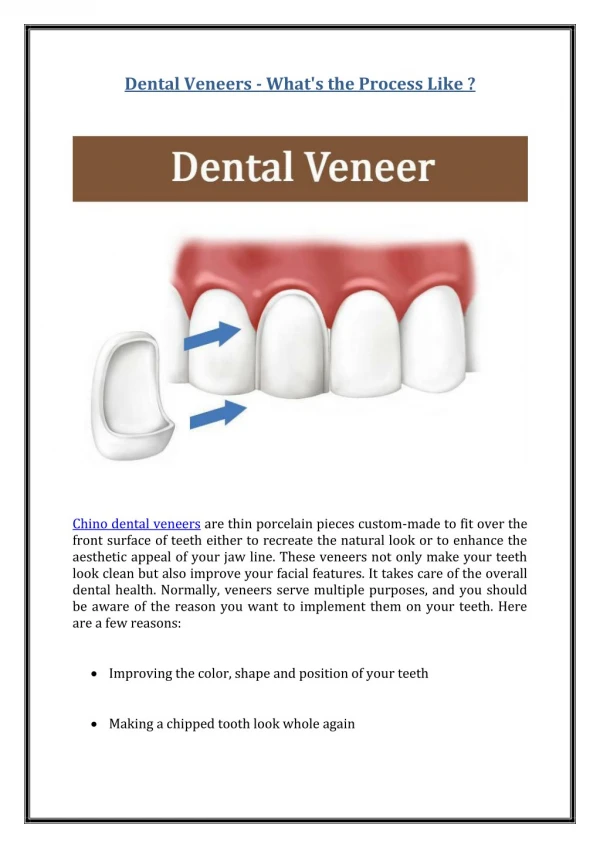
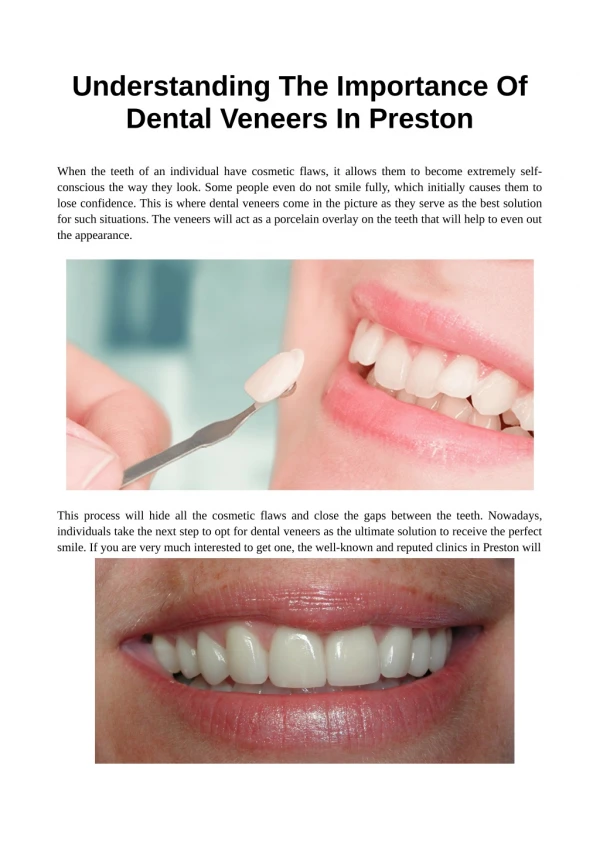
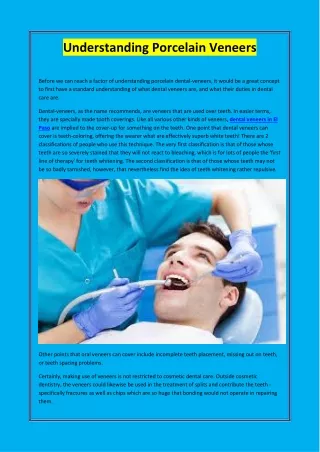
Do Dental Veneers Hurt? Understanding the Process Many people considering veneers wonder whether the procedure is painful. The good news is that the Dental Veneers procedure is generally painless, thanks to modern techniques and anesthesia. Dental veneers are thin shells, typically made of porcelain or composite resin, that are custom-designed to cover the front surface of teeth, improving their appearance. They are a popular cosmetic solution for correcting discoloration, gaps, chips, and misshapen teeth. Understanding the Veneer Procedure 1. Initial Consultation – Your dentist will examine your teeth, discuss your goals, and determine if veneers are the right solution for you. 2. Tooth Preparation – A small amount of enamel (typically less than a millimeter) is removed to create space for the veneers. Local anesthesia may be used to prevent discomfort. 3. Impressions and Temporary Veneers – Impressions of your teeth are taken to craft custom veneers. Temporary veneers may be placed while waiting for the permanent ones. 4. Veneer Bonding – Once ready, the veneers are bonded to your teeth using a special adhesive, and adjustments are made to ensure a perfect fit. Does the Procedure Hurt? Most patients report little to no pain during the veneer process. Since only a thin layer of enamel is removed, discomfort is minimal. If you have sensitive teeth, mild soreness may occur after the preparation phase, but this typically subsides within a few days. Over-the-counter pain relievers can help alleviate any temporary discomfort. Post-Procedure Care and Sensitivity After the veneers are placed, you may experience slight sensitivity to hot and cold foods. This usually resolves within a few days as your teeth adjust to the veneers. Proper oral hygiene, including regular brushing, flossing, and dental visits, will help maintain the longevity of your veneers. Dental veneers offer a virtually painless and effective way to enhance your smile. If you’re considering veneers and want expert guidance, consulting a cosmetic dentist in Houston, TX 77079 can help you achieve the best results for a confident and beautiful smile.