TDS Return Filing- A Comprehensive Guide
Learn TDS return filing and how to avoid penalties, save time, ensure accurate submissions easily, and stay tax compliant.<br>


TDS Return Filing- A Comprehensive Guide
E N D
Presentation Transcript
TDS Return Filing: A Comprehensive Guide Tax Deducted at Source (TDS) is a crucial component of India's direct tax system, ensuring a steady flow of revenue to the government. For businesses and individuals responsible for deducting TDS, timely and accurate return filing is paramount. However, navigating the complexities of TDS returns can often be challenging. This blog post aims to simplify the process, covering the types of TDS returns, the step-by-step filing procedure, and the essential documents required. Understanding TDS and its Significance TDS is essentially a mechanism where tax is deducted at the source of income. This deduction is made by the payer before making the payment to the payee. The deducted tax is then deposited with the government. The deductor is responsible for filing TDS returns, providing details of the deductions made. This process ensures tax compliance and helps prevent tax evasion. Types of TDS Returns Different types of TDS returns cater to various payment categories. Understanding these distinctions is crucial for accurate filing: ● Form 24Q: This form is for TDS deducted on salary payments. It provides details of salary paid, TDS deducted, and the PAN of the employees. ● ● Form 26Q: This form is used for TDS deducted on payments other than salary, such as professional fees, contract payments, rent, and interest. ● ● Form 27Q: This form is for TDS deducted on payments made to non-residents. It includes details of payments made to foreign entities or individuals. ● ● Form 27EQ: This form is for Tax Collected at Source(TCS). ● ● Form 27A: This form is a control chart for TDS returns. ● The TDS Return Filing Process: A Step-by-Step Guide Filing TDS returns online involves a systematic approach. Here's a breakdown of the process: 1. Gathering Required Documents: ○ PAN of the deductor and deductees. ○ TAN (Tax Deduction and Collection Account Number) of the deductor. ○
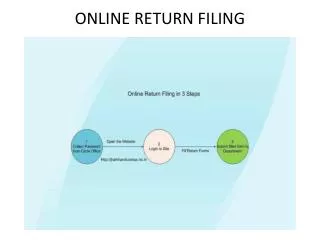
○ Challan details of TDS deposited. ○ Details of payments made and TDS deducted. ○ Salary details (for Form 24Q). ○ Contract or rent agreements (for Form 26Q). ○ Details of payments to non-residents (for Form 27Q). 2. Preparing the TDS Return: ○ Use authorized TDS return preparation software provided by the Income Tax Department or third-party vendors. ○ Input the required information accurately, ensuring consistency with the supporting documents. ○ Validate the data to minimize errors. 3. Generating the FVU File: ○ The File Validation Utility (FVU) is a tool provided by the NSDL (National Securities Depository Limited) to validate the TDS return file. ○ ○ Generate the FVU file after validating the data. This file contains the TDS return information in the prescribed format. 4. Uploading the FVU File on TRACES: ○ Log in to the TRACES (TDS Reconciliation Analysis and Correction Enabling System) portal using your TAN and password. ○ ○ Upload the FVU file on the portal. ○ ○ Provide the necessary information, such as the challan details and the period for which the return is being filed. ○ 5. Submitting the Return: ○ After uploading the FVU file, submit the return. ○ ○ Generate and download the acknowledgement receipt. This receipt serves as proof of successful filing. 6. Rectification and Correction: ○ If any errors are found after filing the return, you can rectify them through the TRACES portal. ○ ○ This ensures that the TDS records are accurate and up-to-date. Key Considerations and Best Practices
● Timely Filing: Adhere to the prescribed deadlines for filing TDS returns to avoid penalties and interest. ● ● Accurate Information: Ensure that all information provided in the TDS return is accurate and consistent with the supporting documents. ● Regular Reconciliation: Reconcile TDS data with your accounting records regularly to identify and rectify any discrepancies. ● ● Record Keeping: Maintain proper records of TDS deductions and deposits for future reference and audits. ● Utilize Authorized Software: Use authorized TDS return preparation software to minimize errors and ensure compliance. Conclusion TDS return filing is a crucial aspect of tax compliance in India. By understanding the types of TDS returns, following the step-by-step filing process, and maintaining accurate records, deductors can ensure compliance and avoid penalties. For those seeking professional assistance, Online Legal India provides reliable and efficient TDS return filing services, simplifying the process and ensuring peace of mind.