
19_Clean Beauty (2)
19_Clean Beauty (2)

19_Clean Beauty (2)
E N D
Presentation Transcript
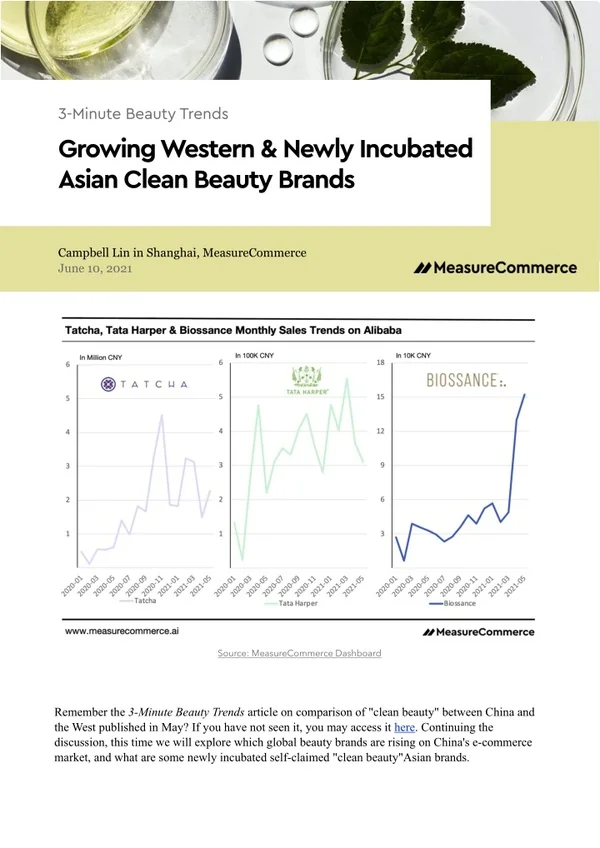
Asian Clean Beauty Brands 3-Minute Beauty Trends Growing Western & Newly Incubated Campbell Lin in Shanghai, MeasureCommerce June 10, 2021 iiiiiiiiiiiiiiiiiiiiiiiiiiiiiiiiiiiiiiiiiiii Source: MeasureCommerce Dashboard Remember the 3-Minute Beauty Trends article on comparison of "clean beauty" between China and the West published in May? If you have not seen it, you may access it here. Continuing the discussion, this time we will explore which global beauty brands are rising on China's e-commerce market, and what are some newly incubated self-claimed "clean beauty"Asian brands.
While many clean beauty brands from the West are sold here on China's Taobao and Tmall e- commerce channels, either through official channels or unofficial individual sellers, not all of them have gained the same growth momentum. Biossance is one of the successful examples in the Chinese market. With early sales of the brand's product by individual daigou (代购, unofficial cross-border shopping through third-party) retailers, the brand finally set up its official Tmall flagship store early this year, and since April has gained significant revenue growth. Known for its signature ingredient squalane and probiotics, the gel moisturiser is Biossance's bestseller. At the top of the product page, the official store touts its brand spokesperson, Reese Witherspoon. On the other hand, individual daigou seller "Tovil你们女⽣啊" selling the same product jumped right into introducing Biossance as a brand developed in collaboration with University of California, Berkeley, a U.S. university name familiar to most Chinese and explaining in details how the signature ingredient, probiotics works for Source: Biossance Official Website Squalane + Probiotic Gel Moisturizer Source: Tata Harper Official Website Hydrating Floral Mask a healthier skin. Another Western clean beauty growing rapidly in China is Tata Harper, with the best-seller being the Hydrating Floral Mask featuring natural floral ingredients including rose, lavender and chamomile extracts. Besides both brands' green containers, there is one thing in common: daigou sales still make up a relatively large, thought their shares of brand sales might decrease after official Tmall stores are set up. It is notice-worthy that individual daigou had really helped Chinese consumers getting to known less-known niche western brands before their official entry to the market. The point is before your brand officially entering the Chinese market, some local Chinese might already know your brand and use your products thanks to daigou business. As these daigou sellers constitute the "initial point of contact" between Chinese consumers and your brand, it is important to monitor how they introduce your brands and what they say about your brands to those early adopters in China. Last time, we mentioned Dewy Lab (淂意) as one of the early adopters of the "clean beauty concept", making beauty products for sensitive groups, such as pregnant women. Other local brands with the same brand value are also popping up in Asia. Established in Shanghai in 2019, Sober Beauty (素幸) claims itself to be the first clean beauty makeup brand in China, strictly in compliance with international clean beauty standards. As of now, the brand only has three products: luminiser, makeup application puff and cleansing balm. Besides the commitment to exclusion of the toxic ingredients like every other clean beauty brands do out in the market, Sober Beauty also emphasises Growing Western & Newly Incubated Asian Clean Beauty Brands 3-Minute Beauty Trends
Source: Sober Beauty Taobao Store the inclusion of skin-nurturing (养肤) ingredients into makeup products, a makeup trend recently popular among Chinese consumers. Another indie clean beauty brand is 21Grams from Hong Kong, inspired by the founder's past experience of formulating a deodorant for her pregnant friend. The brand is signature for its so called "Soul Ingredients", such as white birch, rosa alba (white rose), bitter orange tree, etc, each is featured as the "soul" of one product. For example, the "Purify - White Birch Cleanser" has the soul of "white birch", and the "Refresh - White Rose Toner" has the soul of "white rose". Another interesting thing about this indie brand is its product development process called User-led Innovation or ULI™, Source: 21Grams Soul Ingredient: White Birch Purify - White Birch Cleanser Source: 21Grams Soul Ingredient: White Rose Refresh - White Rose Toner Growing Western & Newly Incubated Asian Clean Beauty Brands 3-Minute Beauty Trends
which is a process of receiving feedbacks from pilot consumer groups for identifying product gaps and refining formulations. This R&D roadmap is quite similar to the trendy Chinese local makeup brand, Florasis's experience ambassador programme, which looks for feedbacks from consumers who applied to be early adopters to test out work in progress products. With this ULI programme, 21Grams is connecting the dots between its brand value and consumers, making products wanted by consumers that speak to their "souls". For more beauty market updates and trends in China • Visit MeasureCommerce’s website • Subscribe to MeasureCommerce’s newsletter • Contact us at contact@measurecommerce.ai • Follow MeasureCommerce on LinkedIn • Follow MeasureCommerce on WeChat Growing Western & Newly Incubated Asian Clean Beauty Brands 3-Minute Beauty Trends
