Kitchen Cabinets Explained Storage and Access
This presentation examines how kitchen and storage cabinet layouts influence functionality, accessibility, and movement within the kitchen. Framed around how layouts are used in everyday living, it explores common cabinet configurations, storage solutions, and access considerations. Drawing on project experience from probrothers, the content discusses how cabinet height, depth, and placement affect workflow and usability. It also addresses common reasons for cabinet updates, such as aging storage systems, changing household needs, or full kitchen remodels. Designed for homeowners considering k

Kitchen Cabinets Explained Storage and Access
E N D
Presentation Transcript
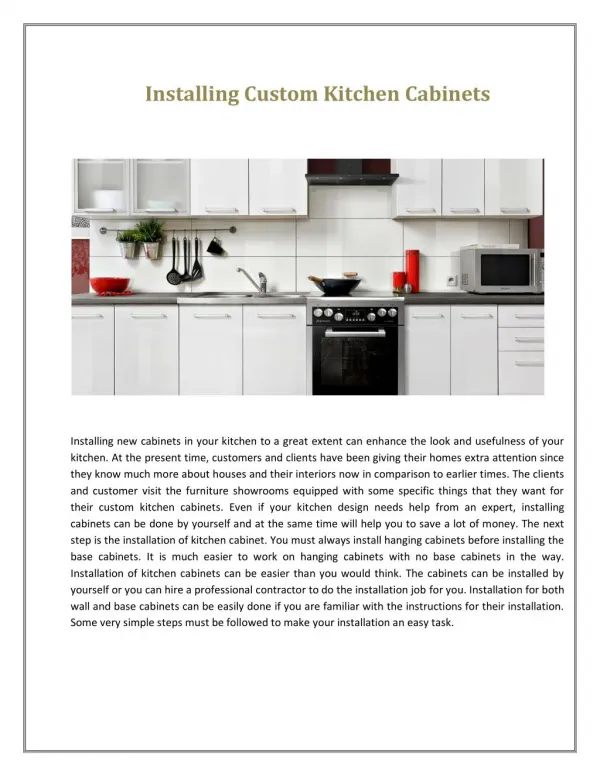
Kitchen Cabinets: Storage and Access Kitchen cabinets are fundamental to kitchen design, providing essential storage and supporting daily food preparation activities. Their strategic placement and configuration directly influence kitchen efficiency and how easily items can be accessed during cooking and meal prep.
Why This Topic Is Relevant Understanding kitchen cabinet placement and storage principles helps homeowners and designers improve usability and support better kitchen planning. Poor cabinet layout can lead to clutter, limited access, and inefficient movement throughout the workspace. Task Efficiency Organized Storage Affects cooking and cleaning efficiency by organizing tools and ingredients where you need them Supports organized food and utensil storage that keeps items accessible and easy to find Workflow Impact Problem Prevention Impacts movement within the kitchen and how smoothly tasks flow from prep to cooking Helps reduce clutter and accessibility issues that frustrate daily kitchen use
What Are Kitchen Cabinets? Kitchen cabinets are built-in storage units designed to hold food, cookware, utensils, and kitchen equipment. They are strategically installed along walls or integrated into kitchen islands to maximize storage capacity while maintaining ease of access and safe movement within the kitchen space. Built-in Storage Units Content Storage Permanent fixtures designed specifically for kitchen items and organization Holds food, cookware, utensils, and essential kitchen equipment for daily use Installation Locations Access & Safety Mounted along walls or integrated into kitchen islands for optimal space use Designed with safety and accessibility as priorities for all users
How Kitchen Cabinet Layouts Are Typically Used Kitchen cabinet layouts are carefully planned based on workflow patterns, storage needs, and available space. The arrangement keeps frequently used items within easy reach while less-used items are stored higher or farther away. Layouts support smooth movement between preparation, cooking, and cleaning areas. Workflow Planning Planned around kitchen workflow patterns to optimize movement Priority Access Prioritizes easy access to frequently used items during cooking Usage Zones Separates storage by usage frequency and kitchen zone function Space Adaptation Adapts to space and layout constraints while maximizing efficiency
Who Kitchen Cabinets Are For Kitchen cabinets are relevant for homeowners, builders, and interior designers involved in kitchen design or renovation projects. They are commonly considered in new kitchens, remodels, and storage upgrades where organization, accessibility, and daily usability are important priorities. Homeowners Builders Interior Designers Renovation Pros Planning or updating their kitchen space for improved functionality Managing kitchen layouts and installation in new construction projects Organizing kitchen storage solutions for clients' specific needs Upgrading existing cabinetry to improve kitchen performance Learn More: For detailed information on kitchen cabinet solutions, visit probrothers.com