Download
1 / 8
0 likes | 1 Vues
Neoflex u2013 Hand Protection Gloves Explained Through Real Workplace Scenarios showcases how the right safety gloves prevent injuries across industries like construction, oil & gas, manufacturing, and logistics. From cut-resistant and chemical-resistant gloves to heat-protection and impact-absorption designs, this guide explains practical use cases that highlight their importance. Learn how choosing the correct hand protection improves worker safety, productivity, and compliance with workplace safety standards.

E N D
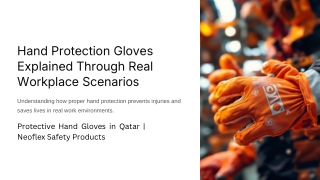
Hand Protection Gloves Explained Through Real Workplace Scenarios Understanding how proper hand protection prevents injuries and saves lives in real work environments. Protective Hand Gloves in Qatar | Neoflex Safety Products
Why Protect Your Hands? The Stakes Are High Your hands are irreplaceable assets — performing complex tasks like gripping, sensing, and creating with remarkable precision. Yet they remain amongst the most vulnerable parts of your body at work. Every year, over 1 million hand injuries require medical treatment, accounting for one-third of all disabling workplace injuries. 70% Preventable Injuries £4,500 Average Cost 1/3 Disabling Injuries Of injured workers either weren't wearing gloves or wore the wrong type for the hazard Per emergency room visit for hand injuries, not including lost productivity Of all workplace disabilities involve hand injuries with long-term consequences
CASE STUDY Real Scenario: The Cost of the Wrong Glove 1 The Problem A metal manufacturing plant experienced rising hand lacerations despite workers consistently wearing gloves during operations. 2 The Investigation Safety officers discovered workers were using standard work gloves not rated for cut hazards from sharp metal edges and components. 3 The Solution Management invested in proper cut-resistant Kevlar gloves specifically designed for metalworking environments and 4 The Result sharp object handling. Hand injuries reduced by 60% within months, saving thousands in medical costs and preventing worker suffering. Critical Lesson: One glove does NOT fit all hazards. Task-specific glove selection isn't optional — it's essential for worker safety.
Common Workplace Hand Hazards & Injuries Understanding the specific dangers your hands face is the first step towards proper protection. Each workplace presents unique risks that require tailored safety solutions. Cuts & Lacerations Crush & Pinch Injuries Burns Sharp tools, metal edges, glass shards, and bladed equipment cause deep wounds requiring stitches or surgery. Hands caught in gears, rollers, presses, or struck by falling objects result in broken bones and tissue damage. Thermal burns from welding, hot surfaces, or chemical burns from acids and corrosive substances. Skin Disorders Fractures & Amputations Contact dermatitis and allergic reactions from prolonged chemical exposure or irritating materials. Severe machinery accidents, falls, or crushing forces leading to permanent disability or loss of fingers.
Matching Gloves to Hazards: Real Examples Proper hand protection requires understanding both the hazard and the glove technology. Here's how different industries protect their workers' hands effectively. Welding Gloves Metal Mesh Gloves Nitrile or Neoprene Dielectric Rubber Thick leather construction provides essential protection against sparks, heat, and molten metal in foundry and welding operations. Chainmail-style protection prevents cuts and lacerations during glass handling, meat processing, and blade work. Chemical-resistant materials protect against acids, solvents, and oils in laboratory, cleaning, and industrial applications. Essential for electrical work, providing insulation against high voltage. Must be regularly tested and properly maintained. Cotton or Fabric Suitable for general material handling and light-duty tasks, but offer no protection against cuts or chemical hazards.
CRITICAL WARNING When Gloves Can Be Dangerous: A Cautionary Tale The Incident A worker wearing loose-fitting gloves had their hand caught in a milling machine's rotating components, resulting in severe crushing injuries and permanent disability. This preventable accident highlights a crucial safety principle: gloves can increase risk when working near moving machinery. Assess Before Using Avoid Loose Gloves Use Safety Systems Always evaluate whether gloves are appropriate for the specific task. Some operations are safer performed bare- handed. Never wear loose, bulky, or poorly fitted gloves near rotating parts, drill presses, lathes, or other moving equipment. Implement Lockout/Tagout procedures and proper machine guarding to reduce entanglement risks during maintenance.
Best Practices for Glove Safety in the Workplace Implementing a comprehensive glove safety programme protects workers and reduces liability. Follow these evidence-based practices for maximum effectiveness. 01 02 03 Conduct Job Hazard Analysis Select Task-Appropriate Gloves Inspect Before Every Use Identify specific hand hazards before work begins. Document findings and update assessments when tasks or materials change. Choose gloves based on hazard type, exposure duration, required dexterity, and environmental conditions. Consult manufacturer specifications. Check gloves for tears, punctures, chemical degradation, or contamination before and after each use. Never use damaged gloves. 04 05 Replace When Compromised Provide Comprehensive Training Dispose of gloves immediately if damaged or after chemical exposure. Establish clear replacement schedules and maintain adequate stock. Train workers on proper glove selection, donning/doffing techniques, maintenance, limitations, and situations when gloves shouldn't be worn.
Protect Your Hands, Protect Your Future Your Most Valuable Tools The Safety Equation Hands are irreplaceable — capable of remarkable precision and strength. Don't take them for granted in any work environment. Right gloves + right task = fewer injuries, higher productivity, and a genuinely safer workplace for everyone. Your Commitment Assess hazards thoroughly, choose protection wisely, and remain vigilant. Safety is never accidental — it's intentional. Remember: Your hands are always on the job — keep a grip on life and safety. Every glove choice matters.