Utility Terrain Vehicles Market
0 likes | 2 Vues
The Utility Terrain Vehicles (UTV) market is rapidly evolving, driven by increasing demand across agriculture, construction, military, and recreational sectors. This comprehensive analysis explores global trends, key players, technological innovations, and regional dynamics shaping the future of UTVs. From electrification to rugged performance, discover how UTVs are transforming modern mobility and off-road logistics.


Utility Terrain Vehicles Market
E N D
Presentation Transcript
Riding the Future: An In-Depth Look at the Global Utility Terrain Vehicles Market Introduction Utility Terrain Vehicles, colloquially referred to as UTVs or side-by-sides, have metamorphosed from humble workhorses into versatile machines straddling both industrial utility and recreational thrill. Unlike traditional all-terrain vehicles (ATVs), UTVs boast side-by-side seating, a roll cage, and enhanced payload capabilities, making them indispensable in myriad applications—from plowing through dense woodlands to navigating rugged construction sites. For more info please visit:https://market.us/report/utility-terrain-vehicles-market/ Market Dynamics Key Drivers Propelling Market Growth The propulsion of the UTV market is largely underpinned by the rise in mechanized agriculture, military mobility requirements, and the burgeoning outdoor tourism segment. With governments allocating funds toward smart farming and infrastructure enhancement, the need for utility-grade off-road vehicles has surged dramatically. Moreover, the younger demographic’s affinity for high-octane recreational experiences continues to stimulate demand in the sport and leisure segment. Major Restraints Hindering Expansion Despite this promising trajectory, the market contends with multifaceted challenges. Regulatory restrictions, particularly concerning emissions and noise levels, continue to impose constraints on manufacturers. Additionally, the high cost of ownership—accentuated by advanced tech integrations and custom modifications—can be prohibitive for budget-conscious consumers.
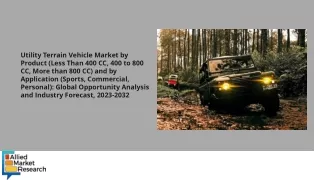
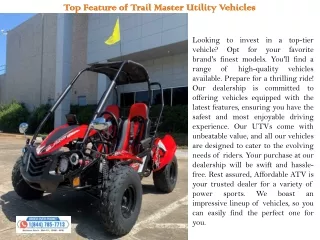
Emerging Opportunities and Untapped Niches There lies a treasure trove of opportunities in electric UTVs, especially as environmental stewardship takes center stage globally. Untapped rural markets in Asia and Africa, with increasing mechanization needs, also represent fertile ground for strategic expansion. Moreover, innovations in autonomous navigation present an intriguing future prospect for industrial UTV applications. Segmentation Analysis By Vehicle Type: Sport, Work, and Recreational UTVs Sport UTVs are engineered for speed, suspension articulation, and rugged maneuverability. Meanwhile, work-oriented models prioritize torque, towing capacity, and stability under load—ideal for construction sites and farms. Recreational UTVs bridge the gap, offering comfort and performance, targeting outdoor adventurers and families. By Engine Size: <400cc, 400–800cc, >800cc Vehicles below 400cc typically serve entry-level users or niche applications where compactness is valued. The 400–800cc range dominates in both performance and affordability, appealing to a broad consumer base. UTVs exceeding 800cc offer peak performance and are designed for specialized industrial or high-intensity recreational use. By End-Use Industry: Agriculture, Military, Construction, and Others In agriculture, UTVs streamline tasks such as livestock management and crop transport. In the military, their use spans reconnaissance to field logistics. Construction sites benefit from their capacity to haul equipment across terrain inaccessible to traditional vehicles. Other industries such as oil & gas, forestry, and emergency services are gradually embedding UTVs into their operational arsenals. Regional Landscape North America: Innovation and Dominance North America leads the global UTV market, bolstered by expansive rural landscapes, a culture of outdoor sports, and mature agricultural practices. The U.S., in particular, exhibits a robust aftermarket ecosystem, with a proliferation of custom kits and performance upgrades. Europe: Regulatory Sophistication and Green Trends Europe’s market is shaped by stringent emission norms and a growing push toward sustainable mobility. Electric and hybrid UTV models are gaining traction, especially in countries like Germany and France. The EU’s subsidies for smart farming are also augmenting demand.
Asia-Pacific: Industrial Growth and Adoption Rates The Asia-Pacific region is experiencing a sharp uptick in UTV adoption, driven by infrastructural development and rural modernization. Countries such as India, China, and Thailand are transitioning toward mechanized solutions to boost agricultural output, creating a lucrative avenue for UTV manufacturers. Technological Trends and Innovations Electrification and Hybrid Integration The movement toward electric UTVs is no longer speculative. Major players are investing in lithium-ion battery systems, regenerative braking, and solar-compatible accessories. These innovations not only reduce carbon footprints but also lower maintenance overheads. Advanced Safety Systems and Smart Features Safety technologies such as anti-lock braking systems (ABS), roll-over mitigation, and geo-fencing are becoming standard. Integration with IoT and GPS enables fleet tracking, remote diagnostics, and terrain mapping, particularly valuable for industrial and military operations. Customization and Aftermarket Boom Customization is no longer a luxury but a selling point. From tactical lighting to all-weather enclosures, the aftermarket landscape is exploding with possibilities. Enthusiasts and professionals alike are investing in modular upgrades, transforming standard UTVs into purpose-built machines. Competitive Landscape Leading Players and Their Strategic Initiatives Brands like Polaris, Yamaha, Can-Am, and Kawasaki are spearheading innovation through R&D investments, dealer network expansions, and immersive customer experiences. Their strategies involve diversification of product lines and enhanced customer service portals. Mergers, Acquisitions, and Partnerships The market has seen increased consolidation, with manufacturers partnering with tech firms to integrate AI, battery tech, and autonomous capabilities. These collaborations signal a convergence of traditional engineering and digital intelligence. Barriers to Entry and Competitive Intensity High capital investment, established brand loyalty, and regulatory hurdles constitute formidable entry barriers. Nonetheless, emerging players are differentiating through niche targeting, such as specialized UTVs for mining or snow-covered terrains. For more info please visit:https://market.us/report/utility-terrain-vehicles-market/
Future Outlook Forecast Projections and Market Trajectory The global UTV market is anticipated to grow at a compound annual growth rate (CAGR) exceeding 6% over the next decade. This momentum will be fueled by innovations in electrification, strategic deployments in emerging markets, and the expanding scope of recreational activities. Strategic Recommendations for Stakeholders Manufacturers must embrace green engineering, enhance supply chain agility, and prioritize digital integration. Policymakers should incentivize eco-friendly UTVs, while investors would do well to focus on companies with robust IP portfolios and adaptable production pipelines. Conclusion The Utility Terrain Vehicles market is not merely evolving—it’s transforming. It reflects a broader shift in how society moves, works, and plays across challenging terrains. As demands grow more sophisticated and technologies evolve, UTVs will not only traverse rugged paths but will also blaze new trails across industries and geographies.