Full-Stack Development Unveiled: A Guide to Becoming a Versatile Web Developer
Becoming a versatile full-stack developer requires mastering a range of technologies and skills, including front-end and back-end development, database management, and deployment. Embracing the learning process, building practical projects, and staying updated with industry trends will enable you to excel in this dynamic field.

Full-Stack Development Unveiled: A Guide to Becoming a Versatile Web Developer
E N D
Presentation Transcript
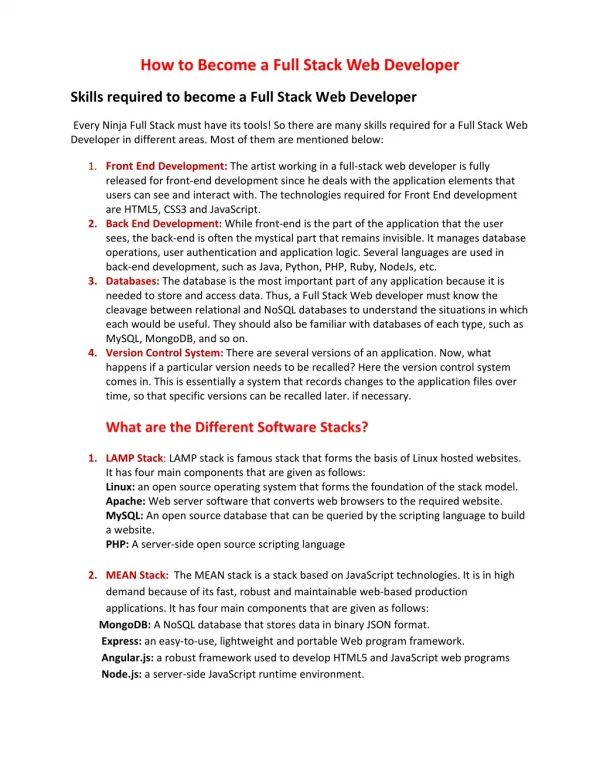
Full-Stack Development Unveiled: A Guide to Becoming a Versatile Web Developer In the fast-evolving tech landscape, full-stack development is a highly sought-after skill. As businesses increasingly require sophisticated, user-friendly, and robust web applications, the demand for developers who can manage both the front end and back end of these applications is rising. This guide will clarify what full-stack development involves, outline the key skills required, and offer practical steps to help you become a proficient full-stack developer. What is Full-Stack Development? Full-stack development encompasses the ability to handle both the front end and back end of web applications. The front end includes the elements of a website or application that users interact with directly, such as its layout, design, and functionality. The back end involves the server-side logic, databases, and server management that support the application from behind the scenes. A full-stack developer is skilled in both these areas, enabling them to build complete and functional web applications. Key Areas to Master: Front-End Development: This focuses on designing and implementing the user interface (UI) and improving the user experience (UX). Essential technologies include HTML, CSS, and JavaScript, with frameworks and libraries like React, Angular, and Vue.js enhancing development and functionality.
Back-End Development: This includes server-side programming, database management, and server configuration. Common languages are Node.js, Python, Ruby, and PHP, along with frameworks such as Express.js (Node.js), Django (Python), and Ruby on Rails (Ruby). Database Management: Understanding databases is crucial. SQL databases, such as MySQL and PostgreSQL, are structured and use predefined schemas, whereas NoSQL databases like MongoDB are designed for handling unstructured data. DevOps and Deployment: Deploying and managing applications is key. Knowledge of cloud services (like AWS or Azure), containerization (with Docker), and continuous integration/continuous deployment (CI/CD) practices will streamline the deployment process. Essential Skills for Full-Stack Developers To succeed as a full-stack developer, you need to acquire a diverse skill set: HTML/CSS: Mastery of HTML and CSS is fundamental. HTML structures your web pages, while CSS styles them. Responsive design techniques ensure that your applications function well on various devices. JavaScript: JavaScript is crucial for creating interactive elements and handling client-side logic. Learn frameworks such as React, Vue.js, or Angular to build dynamic user interfaces. Back-End Languages: Choose a back-end language that aligns with your project needs and career aspirations. Node.js is known for its event-driven architecture, Python's Django is valued for its simplicity, and Ruby on Rails is praised for rapid development.
Database Management: Gain experience with both SQL and NoSQL databases. Practice designing schemas, writing queries, and integrating databases with your applications. Version Control/Git: Version control systems like Git are essential for tracking changes to your code and collaborating with others. Platforms like GitHub or GitLab are useful for managing repositories and handling pull requests. APIs: Application Programming Interfaces (APIs) facilitate communication between different software components. Learn how to create and use RESTful APIs, and understand concepts like authentication and data serialization. DevOps and Deployment: Knowledge of deployment tools and practices is vital for launching applications. Learn about cloud platforms (AWS, Azure), containerization (Docker), and CI/CD pipelines. Steps to Becoming a Full-Stack Developer Learn the Basics: Begin with foundational front-end technologies (HTML, CSS, JavaScript) and back-end languages (Node.js, Python, Ruby). Online courses, tutorials, and coding bootcamps offer structured learning paths.
Build Practical Projects: Gain hands-on experience by creating projects such as a personal portfolio site or a basic to-do list app. Gradually progress to more complex projects, like a blog platform or an e-commerce site. Explore Frameworks and Libraries: Once you’re comfortable with the basics, delve into frameworks and libraries that enhance development. For front-end development, learn React, Angular, or Vue.js. For back-end, explore Express.js, Django, or Ruby on Rails. Understand Database Management: Develop practical skills with both SQL and NoSQL databases. Learn to design schemas, write queries, and integrate databases into your applications. Learn Deployment Tools: Get familiar with deployment tools and practices. Understand how to deploy applications on cloud platforms, set up CI/CD pipelines, and use containerization tools like Docker. Collaborate and Network: Join coding communities, contribute to open-source projects, and collaborate with other developers. This will refine your skills and broaden your professional network. Stay Updated: The tech industry is always changing. Stay abreast of the latest trends, technologies, and best practices by reading industry blogs, attending webinars, and participating in workshops. Recommended Resources and Courses
To support your journey, consider enrolling in a full-stack development course. Programs available in cities such as Thane, Mumbai, Navi Mumbai, Delhi, Noida, and other locations across India provide structured learning, hands-on projects, and expert guidance. These courses can significantly enhance your skills and career prospects. Recommended Learning Resources: Online Platforms: Websites like Coursera, Udacity, and edX offer extensive courses in full-stack development. Look for courses that include real-world projects and mentorship. Bootcamps: Coding bootcamps such as Le Wagon, General Assembly, and Ironhack provide intensive, short-term training focused on practical skills and job readiness. Books: Books like "Eloquent JavaScript" by Marijn Haverbeke and "You Don’t Know JS" by Kyle Simpson offer in-depth knowledge of JavaScript and web development principles. Documentation and Tutorials: Official documentation for frameworks and libraries, along with community tutorials, are invaluable resources for learning and troubleshooting. Conclusion Becoming a versatile full-stack developer requires mastering a range of technologies and skills, including front-end and back-end development, database management, and deployment. Embracing the learning process, building practical projects, and staying updated with industry trends will enable you to excel in this dynamic field. To expedite your journey, consider enrolling in the best full-stack developer course in Noida, Mumbai, Navi Mumbai, Thane, Delhi, and other cities across India. These courses offer structured learning, hands-on experience, and expert guidance, equipping you with the skills needed for success.
Whether you’re starting from scratch or seeking to refine your existing skills, a well-rounded approach to learning and practical experience will pave the way to becoming a successful full-stack developer. Enjoy the journey and let your passion for coding drive you toward achieving your goals! Source link: https://blognow.co.in/full-stack-development-demystified-how-to-become-a-versatile-web-develo per