Understanding AI in Trading Analysis
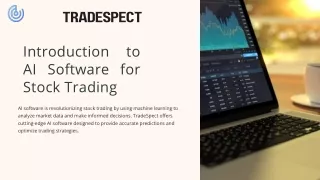
This presentation explores how artificial intelligence enhances trading analysis through data-driven decision-making. Framed around AI in trading analysis, it examines how algorithms process market data, detect patterns, and generate actionable insights. Guided by the technology-focused approach of quantzee, the presentation explains how AI tools support traders by improving speed, consistency, and analytical depth. For more information, you can explore this topic further here: https://quantzee.com/indicators/


Understanding AI in Trading Analysis
E N D
Presentation Transcript
Understanding AI in Trading Analysis • Financial markets generate large volumes of data through price movements, volume changes, and time-based activity. Interpreting this data consistently can be difficult using manual methods alone. As a result, artificial intelligence is increasingly referenced within trading analysis as a way to support data-driven interpretation. In analytical and learning environments, including those explored by users of platforms such as quantzee, AI Powered Trading Indicators analysis is discussed as a method for identifying structured signals within complex market data rather than replacing human decision-making. • Markets generate large and complex datasets • Manual interpretation has practical limits • AI supports structured data analysis • Focus remains on interpretation, not prediction • This topic explains AI’s analytical role
Why This Topic Is Relevant • AI has become relevant in trading analysis due to the increasing speed and volume of market data. Traders and analysts often need tools that can evaluate multiple data points simultaneously and consistently. AI-driven analysis supports this need by helping identify patterns and conditions that may be difficult to observe manually, making it an important topic in modern market analysis. • Market data volume continues to increase • Speed of markets limits manual analysis • AI supports consistent data evaluation • Used across multiple asset classes • Relevant to modern trading environments
What Is AI in Trading Analysis? • AI in trading analysis refers to the use of algorithms and data models to process market information and identify meaningful patterns. These systems analyze historical and real-time data to highlight potential signals or conditions within the market. AI does not make decisions independently; instead, it organizes data in ways that support analytical interpretation. • Uses algorithmsto process market data • Analyzes historical and real-time information • Identifies patterns and market conditions • Often highlights potential trading signals • Functions as an analytical support too
How AI Is Typically Used in Trading Analysis • In practice, AI is used to analyze market behavior, detect changes in trends or momentum, and support the identification of trading signals. Traders and analysts often review AI-generated outputs alongside traditional analysis methods. This combined approach helps maintain context while benefiting from data-driven insights. • Analyzing price and volume behavior • Detecting shifts in market conditions • Supporting identification of trading signals • Comparing multiple market scenarios • Enhancing analytical efficiency
Who AI-Based Trading Analysis Is Usually For • AI-based trading analysis is used by a range of market participants who require scalable and structured interpretation of market data. This includes traders reviewing signal-based scenarios, analysts working with large datasets, educators, and research teams. It is generally suited for users who prefer data-driven analysis over purely manual approaches. • Traders evaluating signal-based scenarios • Analysts working with complex datasets • Educators explaining data-driven analysis • Research teams studying market behavior • Developers building analytical systems • For more information, you can explore this topic further here • https://quantzee.com/