Hernia Repair Composite Mesh A Comprehensive Overview
0 likes | 4 Vues
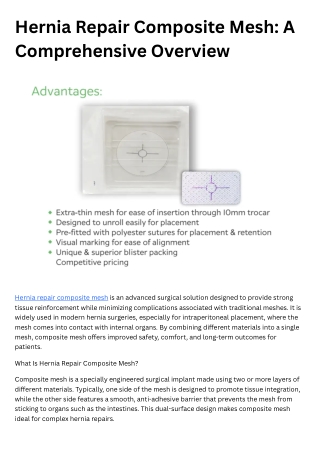
Hernia repair composite mesh is an advanced surgical solution designed to provide strong tissue reinforcement while minimizing complications associated with traditional meshes. It is widely used in modern hernia surgeries, especially for intraperitoneal placement, where the mesh comes into contact with internal organs.


Hernia Repair Composite Mesh A Comprehensive Overview
E N D
Presentation Transcript
Hernia Repair Composite Mesh: A Comprehensive Overview Hernia repair composite mesh is an advanced surgical solution designed to provide strong tissue reinforcement while minimizing complications associated with traditional meshes. It is widely used in modern hernia surgeries, especially for intraperitoneal placement, where the mesh comes into contact with internal organs. By combining different materials into a single mesh, composite mesh offers improved safety, comfort, and long-term outcomes for patients. What Is Hernia Repair Composite Mesh? Composite mesh is a specially engineered surgical implant made using two or more layers of different materials. Typically, one side of the mesh is designed to promote tissue integration, while the other side features a smooth, anti-adhesive barrier that prevents the mesh from sticking to organs such as the intestines. This dual-surface design makes composite mesh ideal for complex hernia repairs.
The combination of strength and protection allows surgeons to repair hernias effectively while reducing the risk of post-surgical complications. Why Composite Mesh Is Used in Hernia Repair In many hernia cases, especially ventral or incisional hernias, the mesh may be placed inside the abdominal cavity. Standard meshes can cause adhesions when in direct contact with organs. Composite mesh addresses this issue by incorporating an anti-adhesion layer, ensuring safer healing. Key reasons surgeons choose composite mesh include: Reduced risk of organ adhesions Strong and durable abdominal wall reinforcement Better patient comfort and recovery Suitable for intraperitoneal onlay mesh (IPOM) procedures Structure and Materials Used Composite meshes usually consist of: Structural Layer: Often made of polypropylene or polyester, this layer provides strength and supports tissue ingrowth. Anti-Adhesive Layer: Made from absorbable or non-absorbable materials such as collagen, PTFE, or hydrogel coatings, this side faces internal organs to prevent adhesions. Over time, absorbable barriers gradually dissolve, leaving the reinforcing mesh securely integrated with the tissue. Types of Composite Hernia Mesh Composite meshes are available in different configurations to meet varied surgical requirements: 1. Partially Absorbable Composite Mesh: Features a permanent structural layer and an absorbable anti-adhesive coating. 2. Non-Absorbable Composite Mesh: Includes a long-lasting barrier for cases requiring extended protection. 3. Lightweight Composite Mesh: Designed for improved flexibility and reduced foreign body sensation. 4. Laparoscopic Composite Mesh: Specially designed for minimally invasive procedures with easy fixation and placement. Advantages of Hernia Repair Composite Mesh Composite mesh offers several benefits over traditional single-layer meshes: Enhanced Safety: Reduces the risk of bowel adhesions and complications. Lower Recurrence Rates: Provides strong and reliable reinforcement.
Improved Healing: Supports natural tissue growth while protecting organs. Versatility: Suitable for ventral, incisional, and recurrent hernia repairs. Patient Comfort: Lightweight options reduce post-operative pain and stiffness. Surgical Applications Hernia repair composite mesh is commonly used in: Ventral hernia repair Incisional hernia repair Laparoscopic hernia surgeries Complex and recurrent hernia cases Its design makes it particularly effective for procedures where mesh placement inside the abdominal cavity is required. Safety and Clinical Outcomes Composite mesh has been extensively tested and used in clinical practice. When properly selected and placed by experienced surgeons, it delivers excellent long-term results. The anti-adhesive barrier significantly lowers the risk of complications, while the structural layer ensures lasting repair strength. Patients generally experience quicker recovery, fewer complications, and better overall outcomes compared to traditional mesh repairs. Recovery and Post-Surgery Care After hernia repair using composite mesh, most patients can resume light activities within a short period, following their surgeon’s guidance. Pain and discomfort are usually mild and temporary. Proper post-operative care, including avoiding heavy lifting and following medical advice, helps ensure successful healing. Choosing the Right Composite Mesh Selecting the right composite mesh depends on factors such as: Type and size of hernia Surgical technique used Patient’s health condition Risk of adhesion formation A surgeon’s expertise plays a key role in determining the most suitable mesh for optimal results. Conclusion Hernia repair composite mesh represents a significant advancement in hernia surgery. By combining strength, safety, and innovative design, it offers effective reinforcement while
minimizing complications. With proven performance in both open and laparoscopic procedures, composite mesh continues to be a reliable choice for achieving durable hernia repair and improved patient quality of life. Know More At:- Hernia Mesh, Tackers & Surgical Suture Manufacturers in India