What Data Can You Scrape from eCommerce Websites? | RetailGators
0 likes | 1 Vues
Discover how ecommerce website data scraping helps you track product data, pricing intelligence, reviews, inventory, and more. Learn how to gain insights from competitor data and boost your business.


What Data Can You Scrape from eCommerce Websites? | RetailGators
E N D
Presentation Transcript
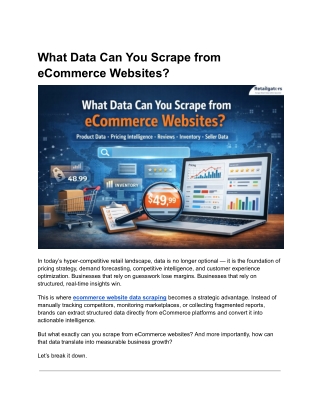
What Data Can You Scrape from eCommerce Websites? In today’s hyper-competitive retail landscape, data is no longer optional — it is the foundation of pricing strategy, demand forecasting, competitive intelligence, and customer experience optimization. Businesses that rely on guesswork lose margins. Businesses that rely on structured, real-time insights win. This is where ecommerce website data scraping becomes a strategic advantage. Instead of manually tracking competitors, monitoring marketplaces, or collecting fragmented reports, brands can extract structured data directly from eCommerce platforms and convert it into actionable intelligence. But what exactly can you scrape from eCommerce websites? And more importantly, how can that data translate into measurable business growth? Let’s break it down.
Why eCommerce Data Matters More Than Ever Online marketplaces are dynamic environments. Prices fluctuate daily. Inventory levels change hourly. New sellers enter the market. Customer reviews shift brand perception overnight. If you cannot monitor these changes in real time, you risk: ● Losing pricing competitiveness ● Missing demand trends ● Ignoring negative review spikes ● Failing to detect unauthorized sellers ● Overstocking or stockouts Structured data extraction helps retailers, brands, marketplaces, and analytics teams move from reactive decisions to proactive strategy. 1. Product Data Scraping Product information is the backbone of any eCommerce strategy. Extracting structured product details allows businesses to benchmark, optimize listings, and refine pricing models. With professional product data scraping you can collect: ● Product titles and descriptions ● SKU numbers ● Categories and subcategories ● Product images ● Specifications and attributes ● Variants (size, color, model) ● Brand details How Businesses Use Product Data ● Competitive assortment analysis ● Catalog gap identification ● Market expansion planning ● Price positioning across categories ● AI-driven recommendation models
When companies visualize their own product portfolio side-by-side with competitors, opportunities become instantly clear. 2. Pricing & Competitive Intelligence Data Pricing is the most dynamic element in online retail. Without real-time monitoring, brands lose margin or competitiveness. Through ecommerce website data scraping, businesses can extract: ● Current product prices ● Historical price trends ● Discounted pricing ● Flash sales data ● Bundle pricing ● Currency variations Use Cases ● Dynamic pricing automation ● Competitor undercut detection ● MAP compliance monitoring ● Regional price comparisons Retailers managing hundreds or thousands of SKUs across multiple marketplaces depend on automated data feeds to maintain pricing advantage. 3. Reviews & Ratings Data Customer sentiment drives purchasing decisions. Reviews influence conversion rates more than most brands realize. Using reviews scraping ecommerce businesses can extract: ● Customer reviews ● Star ratings ● Review timestamps
● Verified purchase indicators ● Pros and cons summaries ● Review sentiment patterns How Review Data Drives Growth ● Identify recurring product issues ● Improve product descriptions ● Benchmark competitor satisfaction ● Detect emerging demand signals ● Train sentiment analysis models Brands that monitor review trends can fix issues before they impact revenue. 4. Inventory & Stock Availability Data Stockouts mean lost sales. Overstocking means capital lockup. Monitoring competitor inventory reveals demand patterns and supply chain behavior. With structured inventory data scraping companies can collect: ● Stock availability status ● Backorder indicators ● Restock frequency ● Warehouse-level availability ● Regional inventory insights Why Inventory Data Matters ● Demand forecasting ● Supply chain optimization ● Competitor stock tracking ● Identifying fast-moving SKUs ● Seasonal planning For enterprise retailers, inventory visibility is a margin protection strategy. 5. Seller Data Extraction
On marketplaces like Amazon and Walmart, multiple sellers compete for the same product listing. Monitoring seller behavior is critical for brand protection and marketplace control. Seller data extraction enables businesses to capture: ● Seller names and IDs ● Buy Box ownership ● Seller ratings ● Seller pricing variations ● Fulfillment type (FBA, FBM, third-party) ● Geographic seller location How Brands Use Seller Intelligence ● Detect unauthorized resellers ● Monitor Buy Box shifts ● Enforce MAP policies ● Identify grey market activity ● Protect brand reputation Marketplace visibility prevents revenue leakage and protects brand equity. 6. Category & Market Trend Data Beyond product-level tracking, businesses can extract broader category insights, including: ● Trending products ● Top-ranked listings ● Bestseller positions ● New product launches ● Seasonal shifts This macro-level data helps brands identify emerging opportunities before competitors act. 7. Promotional & Campaign Data Discounts and campaigns drive conversion spikes. Monitoring competitor promotional behavior reveals strategic patterns.
Data extracted may include: ● Limited-time offers ● Coupon codes ● Promotional banners ● Deal duration ● Campaign frequency Brands can then align marketing strategy with real-time market movements. 8. Geographic & Localization Data Global retailers operate across regions with localized pricing, currency, and availability differences. Scraped data can include: ● Region-specific pricing ● Currency adjustments ● Local product availability ● Delivery timelines This insight supports international expansion and geo-specific pricing strategies. How Businesses Turn Scraped Data into Strategic Advantage Data alone is not enough. Structured, cleaned, and validated datasets allow businesses to: ● Build BI dashboards ● Power pricing algorithms ● Enable AI-driven forecasting ● Strengthen competitive intelligence systems ● Improve marketing ROI Companies that integrate ecommerce website data scraping into their analytics infrastructure gain measurable improvements in:
● Margin optimization ● Conversion rates ● Inventory turnover ● Competitive positioning Who Benefits the Most from eCommerce Data Scraping? ● Enterprise retailers ● D2C brands ● Marketplace sellers ● Pricing teams ● Data & BI departments ● Investment research firms ● Supply chain analysts If your team currently spends hours manually tracking competitor listings or exporting marketplace reports, automated data extraction can eliminate inefficiencies instantly. Is eCommerce Website Data Scraping Right for Your Business? Ask yourself: ● Are competitors changing prices faster than you can react? ● Do you lack visibility into unauthorized sellers? ● Are you guessing demand instead of forecasting it? ● Do you struggle to consolidate marketplace data into dashboards? If the answer is yes to even one of these, structured data extraction can transform your decision-making process.
Turn Market Data into Measurable Growth The real power of ecommerce website data scraping is not just in collecting data — it’s in converting that data into revenue advantage. At RetailGators, we help businesses extract clean, scalable, enterprise-ready data feeds tailored to their specific use case — whether that’s pricing intelligence, inventory monitoring, review sentiment tracking, or seller analysis. If you’re ready to move from guesswork to data-driven retail intelligence, the next step is simple. ?Tell us what data you need — and we’ll build a structured solution aligned with your business goals.