SlideServe
Menu
Préférences
© SlideServe · v2026

A Framework for Understanding Conflict

Rita avatar
7 diapositives · 1.1K Views · Oct 17, 2012

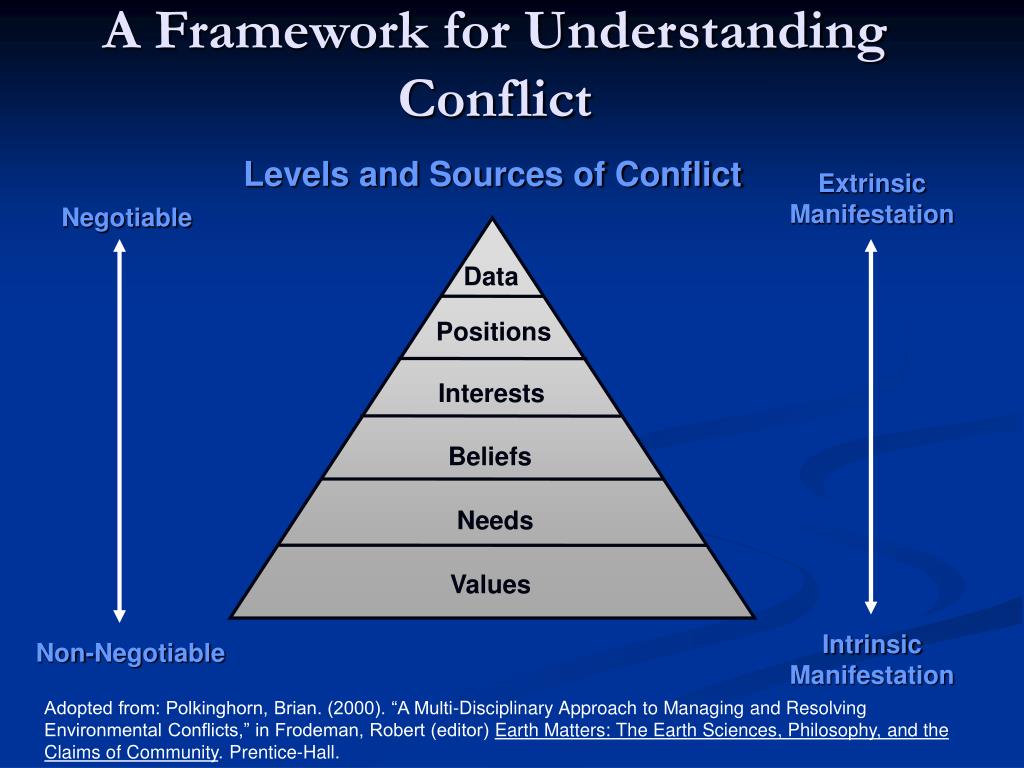
A Framework for Understanding Conflict. Levels and Sources of Conflict. Extrinsic Manifestation. Negotiable. Data. Positions. Interests. Beliefs. Needs. Values. Intrinsic Manifestation. Non-Negotiable.
A Framework for Understanding Conflict - slide 1
01 / 7A Framework for Understanding Conflict
1 / 17

Télécharger la présentation

A Framework for Understanding Conflict
Une image / un lien ci-dessous est fourni (tel quel) pour télécharger la présentation

Politique de téléchargement : le contenu du site vous est fourni TEL QUEL pour votre information et votre usage personnel ; il ne peut être vendu, concédé sous licence ni partagé sur d’autres sites sans l’accord de son auteur.Le contenu vous est fourni TEL QUEL, pour votre information et votre usage personnel uniquement. Téléchargez la présentation en cliquant sur ce lien. Lors du téléchargement, si vous ne parvenez pas à télécharger une présentation, l’éditeur a peut-être supprimé le fichier de son serveur.Pendant le téléchargement, si vous ne parvenez pas à obtenir une présentation, le fichier a peut-être été supprimé par l’éditeur.

F I N

Plus de contenu associé

Transcription de la présentation
  1. A Framework for Understanding Conflict Levels and Sources of Conflict Extrinsic Manifestation Negotiable Data Positions Interests Beliefs Needs Values Intrinsic Manifestation Non-Negotiable Adopted from: Polkinghorn, Brian. (2000). “A Multi-Disciplinary Approach to Managing and Resolving Environmental Conflicts,” in Frodeman, Robert (editor) Earth Matters: The Earth Sciences, Philosophy, and the Claims of Community. Prentice-Hall.

  2. Burton – Human Needs Theories Maslow’s Hierarchy of Needs

  3. Burton – Human Needs Theories • Burton says that conflict stems from unsatisfied human needs • In conflict, people represent their interests, but not their underlying needs; however, they will use power and coercion to meet those needs

  4. consistency in response stimulation security recognition distributive justice appearance of rationality meaning control defense of role To solve the conflict, meet the underlying needs If the underlying needs are not met, the conflict will continue Burton – Human Needs Theory

  5. Coser – function of social conflict • Conflict is not always dysfunctional for the relationship within which it occurs; often, conflict is necessary to maintain such a relationship. Without ways to vent hostility toward each other, and to express dissent, group members might feel completely crushed and might react by withdrawal. By setting free pent-up feelings of hostility, conflicts serve to maintain a relationship.

  6. Coser – function of social conflict • Conflict not only generates new norms, new institutions…it may be said to be stimulating directly in the economic and technological realm. Economic historians often have pointed out that much technological improvement has resulted from the conflict activity of trade unions through the raising of wage levels.

  7. Coser’s conclusions • If Coser is correct, and conflict serves a socially useful function, then should conflicts be resolved? • Upon which basis should those resolving conflicts choose the right conflicts to resolve?