Understanding the Curette Double Ended
0 likes | 3 Vues
The Double Ended Bone Curette offers a wide range of advantages for orthopedic and neurosurgery specialists. These advantages come in handy for debulking bone tissue and obtaining samples.


Understanding the Curette Double Ended
E N D
Presentation Transcript
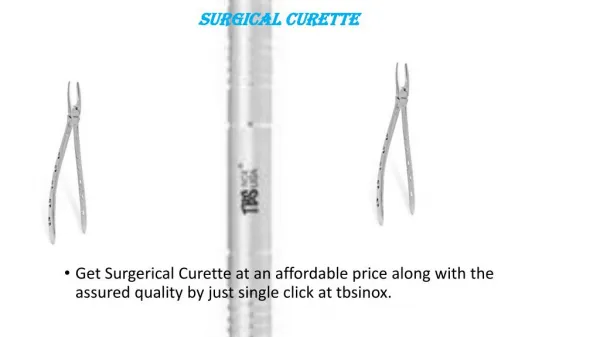
Understanding the Curette Double Ended: A Versatile Tool in Medicine A curette is a surgical instrument designed for scraping or debriding biological tissue or unwanted material. Curettes are commonly used in medical and dental procedures, offering precision and versatility. Among the different variations, the double ended curette stands out as a particularly useful tool due to its dual functionality, allowing healthcare providers to perform a wider range of tasks with a single instrument. The design of a double-ended curette features two different ends, each tailored for a specific type of scraping or removal, making it efficient for various procedures.
Design and Features of the Double Ended Curette The primary feature that sets the double-ended curette apart is its design, which includes two working tips on either side of the instrument. These tips can vary in shape and size, with one end typically being a larger scoop and the other a smaller, more delicate tip. This dual configuration allows for multiple applications during a single procedure, minimizing the need for multiple instruments. The tips are often designed with rounded edges to ensure that tissue is gently removed without causing excessive trauma or damage. Most curettes are made from high-quality stainless steel, offering durability and resistance to corrosion, which is crucial in maintaining the tool’s effectiveness and hygiene. The handles of double-ended curettes are typically ergonomic, ensuring a firm and comfortable grip for the surgeon or dental professional. This ensures that the tool can be used with precision, even during lengthy or delicate procedures. Common Uses in Medical and Dental Fields The double-ended curette is utilized in both medical and dental settings, where its versatility shines. In medicine, it is used for procedures such as debridement of wounds, removal of necrotic tissue, and scraping during diagnostic procedures. Its precise scraping action is invaluable for clearing out infected or damaged tissue, aiding in the healing process and preventing further complications. The tool is also often used in gynecological procedures, such as scraping the cervix during a biopsy or cleaning the uterine lining after a miscarriage. In dentistry, the double-ended curette plays an essential role in periodontal treatments. It is commonly used for scaling and root planing, where the tool is employed to remove tartar, plaque, and calculus from the teeth and beneath the gums. The dual ends of the curette provide flexibility in accessing both deeper pockets around the teeth and more superficial areas, offering an effective means of cleaning and promoting gum health. The smaller tip can be particularly useful in accessing the tight spaces between teeth, ensuring thorough cleaning in difficult-to-reach areas. Advantages of the Double Ended Curette One of the primary benefits of the double-ended curette is its efficiency. Having two distinct tips on one instrument allows for versatility during medical or dental procedures, reducing the need to switch between different tools. This not only saves time but also reduces the risk of contamination, as fewer instruments need to be handled. Additionally, the ergonomic handle design reduces hand fatigue, making the curette easier to use during extended periods of operation. Another advantage of the double-ended curette is its precision. The curved, rounded tips allow for gentle scraping and manipulation of tissue without causing undue trauma. This is especially important in delicate procedures, such as root planing or wound debridement, where careful handling is crucial to avoid further injury to the tissue.
Conclusion The double-ended curette is a crucial tool in the arsenal of medical and dental professionals, offering precision, versatility, and efficiency. Whether it is used in the removal of tissue during surgery, scaling teeth, or debriding wounds, its design and functionality make it an invaluable asset. As the demand for minimally invasive procedures and the need for efficiency in medical and dental practices continues to rise, the double-ended curette will remain an essential instrument for healthcare providers.