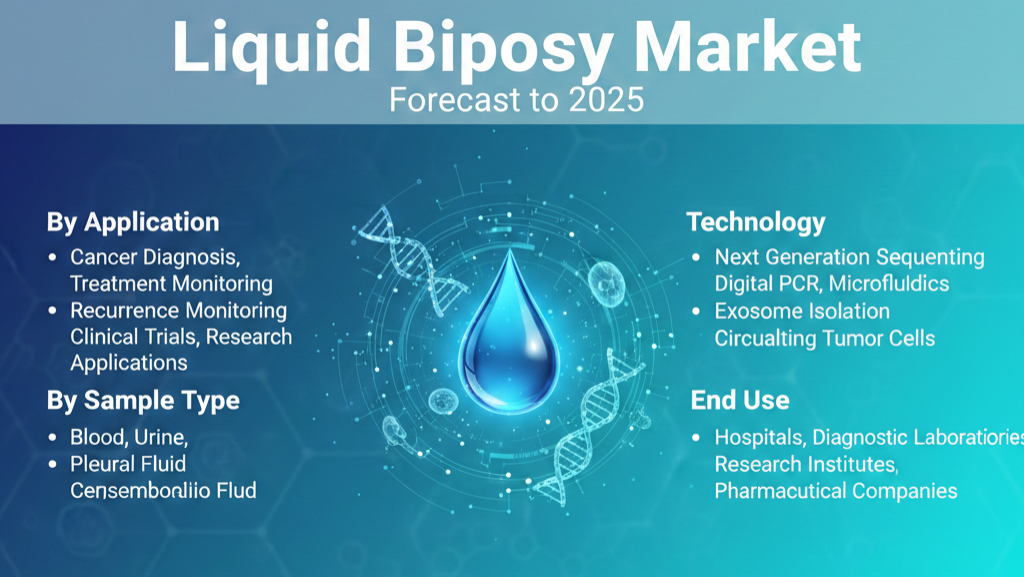
The liquid biopsy market is emerging as a cornerstone of modern diagnostic medicine, driven by its promise of non-invasive, early disease detection. Unlike traditional tissue biopsies, which require invasive procedures to extract samples, liquid biopsies analyze easily obtainable bodily fluids—most commonly blood—to identify biomarkers like circulating tumor DNA (ctDNA), proteins, and exosomes. This approach has revolutionized oncology care, enabling clinicians to monitor treatment response, detect minimal residual disease, and even screen for cancer earlier, when survival rates are significantly higher.
Growth in the liquid biopsy market is fueled by multiple trends. The World Health Organization (WHO) reported 20 million new cancer cases globally in 2023, up 15% from a decade ago, heightening demand for less traumatic diagnostic tools. Additionally, advancements in next-generation sequencing (NGS) and digital PCR technologies have improved the sensitivity and specificity of liquid biopsies, making them reliable alternatives to traditional methods. Patient preference is another key driver; a 2024 survey found that 85% of cancer patients prefer liquid biopsies for their convenience and reduced risk of complications.
Against this backdrop, MarketResearchFuture’s analysis of the "liquid biopsy market growth projections" paints an optimistic picture. The global market, valued at $14.5 billion in 2023, is projected to reach $35 billion by 2030, with a compound annual growth rate (CAGR) of 12.8%. This growth is attributed to expanding indications beyond cancer—such as applications in transplant monitoring and infectious disease tracking—and increasing investments in R&D by leading players. To understand how these projections reflect evolving clinical needs and technological progress, explore the full report here: liquid biopsy market growth projections
Read More: https://www.marketresearchfuture.com/reports/liquid-biopsy-market-710
Looking ahead, the liquid biopsy market is poised to redefine diagnostic boundaries. As research uncovers more biomarkers, tests will expand to detect diseases like Alzheimer’s and pancreatic cancer, further broadening their utility. Simultaneously, efforts to lower costs and improve accessibility—through scaled production and partnerships with healthcare providers—are ensuring these tools reach diverse patient populations. With such momentum, liquid biopsies are not just a trend but a transformative force in global healthcare.
Liquid Biopsy vs Traditional Biopsy Benefits: Redefining Patient Experience in Diagnostics The debate between liquid biopsies and traditional tissue biopsies centers on patient experience, accuracy, and practicality. Traditional biopsies, while gold-standard for many cancers, involve needle or surgical extraction, carrying risks of infection, pain, and scarring. Liquid biopsies, in contrast, require a simple blood draw, eliminating these invasive risks and making repeat testing feasible for monitoring treatment progress.
But beyond convenience, liquid biopsies offer unique advantages that are reshaping diagnostic preferences. One key benefit is reduced patient discomfort. A 2023 study in the Journal of Clinical Oncology found that 90% of patients reported lower anxiety levels with liquid biopsies compared to 45% for traditional needle biopsies. Additionally, liquid biopsies can detect tumor mutations across multiple sites, providing a more comprehensive view of cancer spread—an edge traditional biopsies lack, as they sample only specific tissue regions. This broader perspective aids in tailoring personalized treatments.
However, traditional biopsies retain their role in confirming complex cases. For example, certain cancers with rare biomarkers may require tissue analysis for definitive diagnosis. Yet, the "liquid biopsy vs traditional biopsy benefits" are driving a shift: healthcare providers now use liquid biopsies first for initial screening and monitoring, reserving tissue biopsies for confirmatory steps. MarketResearchFuture’s report highlights that this hybrid approach has cut diagnostic timelines by 30% in oncology clinics, boosting patient satisfaction.
Access the insights into this evolving paradigm: liquid biopsy vs traditional biopsy benefits As technology improves, liquid biopsies are becoming even more competitive. Recent advancements in ctDNA enrichment techniques have enhanced their ability to detect low-abundance mutations, narrowing the accuracy gap with tissue sampling. For patients and providers alike, this means a future where non-invasive diagnostics are not just an option but the standard, minimizing trauma without compromising precision.
Liquid Biopsy Applications in Oncology: Beyond Diagnosis to Precision Treatment Liquid biopsies are no longer limited to cancer diagnosis—their applications in oncology now span early detection, treatment monitoring, and minimal residual disease (MRD) tracking, making them indispensable tools for personalized care. By analyzing circulating tumor DNA (ctDNA) and other biomarkers in blood, these tests provide real-time insights into tumor behavior, enabling clinicians to adjust therapies proactively. Early detection is a critical application.
For cancers like pancreatic or ovarian, which often present late, liquid biopsies can identify ctDNA months before symptoms emerge. A 2024 trial of a multi-cancer liquid biopsy detected 50% of stage I cancers, compared to 15% for traditional screening methods, significantly improving survival odds. Treatment monitoring is another key use: liquid biopsies track ctDNA levels post-therapy, flagging relapses before imaging scans can detect tumors, allowing early intervention. MRD detection, once reliant on invasive procedures, now benefits from liquid biopsies. A study in Nature Medicine found that ctDNA-based liquid biopsies identified MRD in 80% of breast cancer patients post-surgery, guiding decisions to extend treatment.
The "liquid biopsy applications in oncology" extend beyond cancer too, with emerging uses in tracking transplant rejection and monitoring autoimmune diseases. MarketResearchFuture’s analysis underscores how these diverse applications are driving market expansion, with oncology still accounting for 70% of current demand. Explore these transformative uses here: liquid biopsy applications in oncology As oncology shifts toward precision medicine, liquid biopsies will only grow in importance. Their ability to provide dynamic, molecular-level insights aligns with the need for therapies tailored to individual tumor profiles. Clinics adopting these tools report 25% higher patient retention rates, as patients value the proactive, less invasive approach to care.