Exploring Slide Gate Refractory Solutions
In steel plants, foundries, and other high-temperature industrial processes, slide gate refractories are essential components.

Exploring Slide Gate Refractory Solutions
E N D
Presentation Transcript
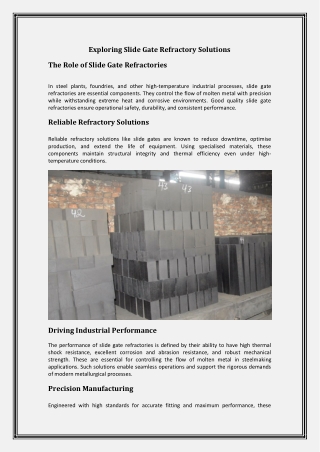
Exploring Slide Gate Refractory Solutions The Role of Slide Gate Refractories In steel plants, foundries, and other high-temperature industrial processes, slide gate refractories are essential components. They control the flow of molten metal with precision while withstanding extreme heat and corrosive environments. Good quality slide gate refractories ensure operational safety, durability, and consistent performance. Reliable Refractory Solutions Reliable refractory solutions like slide gates are known to reduce downtime, optimise production, and extend the life of equipment. Using specialised materials, these components maintain structural integrity and thermal efficiency even under high- temperature conditions. Driving Industrial Performance The performance of slide gate refractories is defined by their ability to have high thermal shock resistance, excellent corrosion and abrasion resistance, and robust mechanical strength. These are essential for controlling the flow of molten metal in steelmaking applications. Such solutions enable seamless operations and support the rigorous demands of modern metallurgical processes. Precision Manufacturing Engineered with high standards for accurate fitting and maximum performance, these
refractories are optimal choices for heavy industries. Expert slide gate refractory manufacturers use premium raw materials and advanced techniques to produce solutions capable of withstanding repeated thermal stress and abrasive conditions. By improving process efficiency, these refractories reduce wear and tear, ensuring smooth molten metal flow. Operational Support In addition to quality products, many suppliers today understand that technical guidance and on-site support are crucial. Proper installation and maintenance enhance process control, minimise maintenance costs, and maximise equipment efficiency. This can steadily increase operational outputs in the long run.