Understanding HTTP 422_ Unprocessable Entity
Discover 14 effective ways to resolve Cloudflare's Access Denied error code 1020 and regain access to the website. Fix the issue with these troubleshooting methods.

Understanding HTTP 422_ Unprocessable Entity
E N D
Presentation Transcript
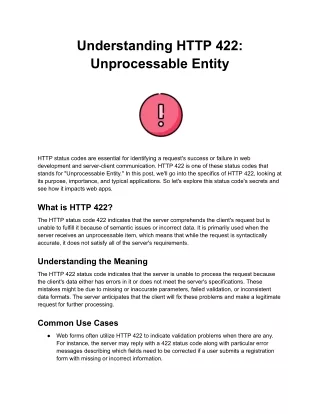
Understanding HTTP 422: Unprocessable Entity HTTP status codes are essential for identifying a request's success or failure in web development and server-client communication. HTTP 422 is one of these status codes that stands for "Unprocessable Entity." In this post, we'll go into the specifics of HTTP 422, looking at its purpose, importance, and typical applications. So let's explore this status code's secrets and see how it impacts web apps. What is HTTP 422? The HTTP status code 422 indicates that the server comprehends the client's request but is unable to fulfill it because of semantic issues or incorrect data. It is primarily used when the server receives an unprocessable item, which means that while the request is syntactically accurate, it does not satisfy all of the server's requirements. Understanding the Meaning The HTTP 422 status code indicates that the server is unable to process the request because the client's data either has errors in it or does not meet the server's specifications. These mistakes might be due to missing or inaccurate parameters, failed validation, or inconsistent data formats. The server anticipates that the client will fix these problems and make a legitimate request for further processing. Common Use Cases ● Web forms often utilize HTTP 422 to indicate validation problems when there are any. For instance, the server may reply with a 422 status code along with particular error messages describing which fields need to be corrected if a user submits a registration form with missing or incorrect information.
● Requests from APIs: APIs often use HTTP 422 to signal requests that fail because of incorrect data or missing necessary parameters. Developers may then make the required corrections after better understanding the problems with their API calls. ● Data formatting problems: The server may return a 422 status code in response when a client submits data in an improper format, such as a date in an unexpected layout or a phone number in an illegal pattern. The customer is informed that the data format has to be corrected as a result. Responding to HTTP 422 Requests When receiving an HTTP 422 response, clients should examine the response body for any server-provided descriptive error messages. These notifications may aid end users or developers in locating the problems and finding the appropriate solutions. Understanding the intended format and specs requires carefully reading the server's documentation or API specifications. Clients should check user input on the client side before sending the request in order to handle HTTP 422 failures efficiently. Comprehensive form validation procedures and data format checks may be used to reduce the frequency of these issues and improve the user experience. Conclusion When a client's request includes erroneous data or does not satisfy the server's criteria, HTTP 422—the "Unprocessable Entity" response code—serves as a potent signal. By permitting the notification of failures back to the client, it plays a significant role in the development of online applications and API interactions. Developers may design more reliable and user-friendly online apps by comprehending HTTP 422 and using appropriate request validation procedures. Always study the given error messages when receiving an HTTP 422 response and fix any problems before resubmitting the request.