Download

1 / 10
100 likes | 117 Vues
Anxiety and depression are the most common forms of mental health disorders. According to the World Health Organization (WHO) Report 2017, 38 million Indians suffer from Anxiety disorders.<br>Choice of therapeutic approach is influenced by factors like an individualu2019s personality, symptom severity, preferred therapeutic modality of the therapist, and others. Some of the most commonly used approaches in anxiety counseling and anxiety therapy are evaluated further.

E N D
BEST THERAPY FOR ANXIETY Presented By Somiya Wake
Anxiety and depression are the most common forms of mental health disorders. According to the World Health Organization (WHO) Report 2017, 38 million Indians suffer from Anxiety disorders. SEE MORE
Choice of therapeutic approach is influenced by factors like an individual’s personality, symptom severity, preferred therapeutic modality of the therapist, and others. Some of the most commonly used approaches in anxiety counseling and anxiety therapy are evaluated further.
1. Cognitive Behavioral Therapy This is the most popular approach used in treating anxiety disorders. The basic tenet of cognitive behavioural therapy is that thoughts about a situation, rather than the situation itself, are responsible for how you feel and how you react.
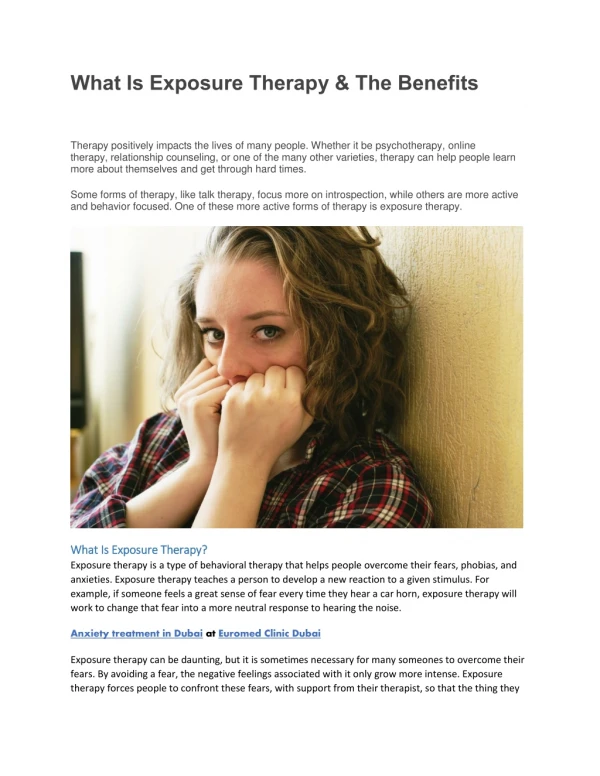
2. Exposure Therapy When there is anxiety around any particular situation, event, object it is likely that the person keeps avoiding the particular trigger.
3. Dialectical Behavioral Therapy Dialectical behavioral therapy helps to develop an alternate perspective, gain acceptance while working towards change.
4. Psychoanalytic therapy for anxiety According to this approach, anxiety stems from unresolved conflicts. The nature of these conflicts can also be unconscious in some cases and may require years of work in therapy to uncover these hidden conflicts.
5. Expressive Therapies Have started gaining more acceptance and popularity in recent times. Targeting thought may not work for all individuals in dealing with anxiety.
"If you feel that your concerns are stemming and culminating from present-day stressors and feel uncomfortable delving deep into childhood, you can convey that to the mental health professional and opt for anxiety counseling rather than therapy for anxiety."
THANK YOU! H e l p l i n e f o r M e n t a l H e a l t h S u p p o r t - + 9 1 - 9 2 6 6 6 2 6 4 3 5