Download
1 / 3
0 likes | 1 Vues
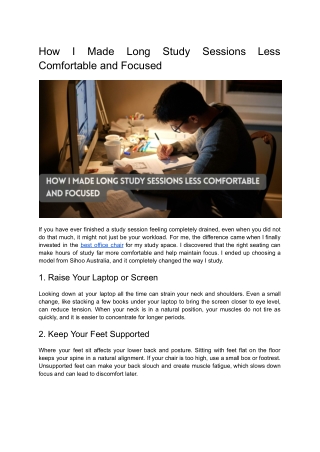
If you have ever finished a study session feeling completely drained, even when you did not do that much, it might not just be your workload. For me, the difference came when I finally invested in the best office chair for my study space. I discovered that the right seating can make hours of study far more comfortable and help maintain focus. I ended up choosing a model from Sihoo Australia, and it completely changed the way I study.

E N D
How I Made Long Study Sessions Less Comfortable and Focused If you have ever finished a study session feeling completely drained, even when you did not do that much, it might not just be your workload. For me, the difference came when I finally invested in the best office chair for my study space. I discovered that the right seating can make hours of study far more comfortable and help maintain focus. I ended up choosing a model from Sihoo Australia, and it completely changed the way I study. 1. Raise Your Laptop or Screen Looking down at your laptop all the time can strain your neck and shoulders. Even a small change, like stacking a few books under your laptop to bring the screen closer to eye level, can reduce tension. When your neck is in a natural position, your muscles do not tire as quickly, and it is easier to concentrate for longer periods. 2. Keep Your Feet Supported Where your feet sit affects your lower back and posture. Sitting with feet flat on the floor keeps your spine in a natural alignment. If your chair is too high, use a small box or footrest. Unsupported feet can make your back slouch and create muscle fatigue, which slows down focus and can lead to discomfort later.
3. Take Small Movement Breaks Even one to two minutes of stretching every hour helps reduce stiffness. Shoulder rolls, standing up, or walking to refill your water bottle keeps blood flowing and relaxes tense muscles. This small habit not only relieves physical discomfort but also refreshes your mind, making it easier to retain information. 4. Choose the Right Chair Not all chairs are built for long study sessions. I found that ergonomic chairs in Australia offered much better support for my back and shoulders compared with regular office chairs. Look for features like lumbar support, adjustable height, and comfortable padding. Even if you cannot get the perfect setup immediately, knowing what to look for helps prevent strain and improves study efficiency. 5. Adjust Your Study Environment Your surroundings play a role in posture and focus. Make sure your desk is organised so you do not have to twist or lean awkwardly. Good lighting prevents eye strain, and keeping frequently used items within reach helps maintain a neutral posture. Small adjustments like these reduce physical strain and let you focus on learning, not discomfort. Why This Matters Many Australian students experience high stress levels during exams, and poor posture can make it worse. Research shows that improving body posture during long study sessions reduces fatigue and helps you concentrate better. Even small adjustments, such as raising
your screen, supporting your feet, and taking movement breaks, can make a noticeable difference. When I upgraded to an ergonomic office chair, my study sessions became much more comfortable. I could sit for longer periods, stay focused, and avoid aches that used to interrupt my work. It is not about being perfect. It is about creating a setup that works with your body so you can focus on learning.