Practical Desk Setup Tips Every Hybrid Professional Should Know
0 likes | 4 Vues
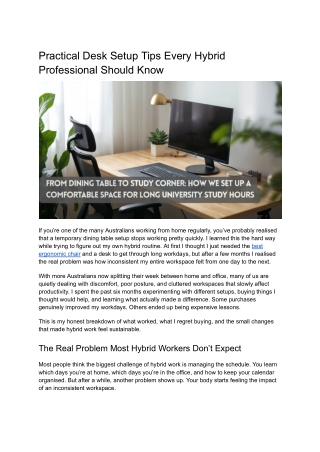
If youu2019re one of the many Australians working from home regularly, youu2019ve probably realised that a temporary dining table setup stops working pretty quickly. I learned this the hard way while trying to figure out my own hybrid routine. At first I thought I just needed the best ergonomic chair and a desk to get through long workdays, but after a few months I realised the real problem was how inconsistent my entire workspace felt from one day to the next.


Practical Desk Setup Tips Every Hybrid Professional Should Know
E N D
Presentation Transcript
Practical Desk Setup Tips Every Hybrid Professional Should Know If you’re one of the many Australians working from home regularly, you’ve probably realised that a temporary dining table setup stops working pretty quickly. I learned this the hard way while trying to figure out my own hybrid routine. At first I thought I just needed the best ergonomic chair and a desk to get through long workdays, but after a few months I realised the real problem was how inconsistent my entire workspace felt from one day to the next. With more Australians now splitting their week between home and office, many of us are quietly dealing with discomfort, poor posture, and cluttered workspaces that slowly affect productivity. I spent the past six months experimenting with different setups, buying things I thought would help, and learning what actually made a difference. Some purchases genuinely improved my workdays. Others ended up being expensive lessons. This is my honest breakdown of what worked, what I regret buying, and the small changes that made hybrid work feel sustainable. The Real Problem Most Hybrid Workers Don’t Expect Most people think the biggest challenge of hybrid work is managing the schedule. You learn which days you’re at home, which days you’re in the office, and how to keep your calendar organised. But after a while, another problem shows up. Your body starts feeling the impact of an inconsistent workspace.
I noticed I was constantly shifting in my chair, adjusting my screen height, and struggling to stay focused at home compared to the office. My desk slowly filled with gadgets that promised productivity but changed nothing. Even though I technically had a desk and chair, something still felt off. The reality is that a poorly planned home workspace can quietly drain your energy every day. You may not notice it at first, but over time it affects comfort, focus, and motivation. How My Hybrid Workspace Started My setup in the beginning was very basic. I worked wherever there was space. Sometimes the dining table, sometimes a small desk near the window, and occasionally the couch during meetings. I told myself flexibility was the benefit of hybrid work, but it actually made it harder to switch into work mode. After a few weeks, I started paying attention to how my body felt during long computer sessions. I realised my posture was terrible and my workspace was not designed for a full day of work. Instead of rushing into a complete makeover, I made gradual changes based on real daily problems. My goal shifted from building a nice looking desk to creating a space that supported long hours without discomfort.
What I’d Absolutely Buy Again A Properly Supportive Ergonomic Chair This was easily the most important upgrade. Before switching, I felt tired and restless halfway through the day. After investing in a chair that actually supported my back and allowed adjustments, my posture improved almost immediately. If you are shopping around, there are many ergonomic chairs in Australia, but what matters most is finding one that fits your body and work habits. I personally visited Sihoo Australia once because they have showrooms in Melbourne and Sydney where you can try the chairs before buying. Sitting in a chair first made it much easier to understand what actually felt supportive. For hybrid workers, consistency between your office chair and home chair helps your body adjust more easily throughout the week. An Adjustable Laptop Stand Raising my screen to eye level was a simple change that made a huge difference. Looking down at a laptop all day caused neck strain I did not even notice until it disappeared after using a stand. It also made my desk feel more organised. External Keyboard and Mouse Typing directly on a laptop for long hours forced my wrists into awkward positions. Adding an external keyboard and mouse allowed me to keep my arms relaxed and my wrists in a more natural angle. This small change improved comfort more than I expected. Simple Cable Organisation Organising my cables was not something I thought would matter much, but it made my workspace feel calmer and less chaotic. A clean desk helped me start work faster each morning and made it easier to mentally separate work from personal time. What I Regret Buying Too Many Decorative Accessories I went through a phase where I tried to copy aesthetic desk setups I saw online. It looked good in photos but made my desk less functional. Hybrid work often involves multiple devices and documents, so having too many decorative items just reduces usable space.
Cheap Lighting That Looked Good but Was Not Practical My first desk lamp created glare and uneven lighting. It made my eyes tired during longer work sessions. I eventually replaced it with a simple, functional light and immediately noticed the difference in comfort. A Standing Desk Converter I Rarely Used Standing desks are popular for good reasons, but I bought a converter before building the habit of actually standing while working. It ended up taking up space and interrupting my workflow. If you want to stand more during the day, it helps to plan when and how you will use it rather than buying equipment first. Small Changes That Made a Big Difference Some of the most effective improvements cost nothing. Moving my desk closer to natural light made my workspace feel more energising and reduced eye strain. Adding a small plant changed the atmosphere of my desk and made the space feel less clinical. The biggest long term improvement was creating a simple end of day reset routine. Every afternoon I spend a few minutes clearing my desk and preparing it for the next morning. This habit helped keep my workspace consistent, especially when switching between office and home days.
What Six Months of Hybrid Work Taught Me The most important lesson was that your workspace should reflect how you actually work, not what you see trending online. It is easy to get influenced by aesthetic setups, but real productivity improvements come from understanding your own needs. Ask yourself honest questions before buying anything: Do you spend most of your time on calls Are you using multiple devices daily Do you move around the house while working Are you experiencing physical discomfort during work hours Answering these questions helped me stop buying unnecessary items and focus on solving real problems. Final Thoughts After 6 months, my hybrid workspace is still evolving, but it now supports my daily routine instead of making work harder. The biggest improvements came from small, thoughtful changes rather than expensive upgrades. If you are building your own hybrid desk setup, start with the basics. A supportive chair, proper screen height, and comfortable typing position will make the biggest difference to how you feel at the end of each workday. Once those fundamentals are in place, you can gradually refine your space based on what genuinely improves your workflow. Hybrid work is here to stay for many Australians. Creating a workspace that supports both comfort and productivity is one of the best investments you can make in your daily routine.