Download
1 / 7
0 likes | 1 Vues
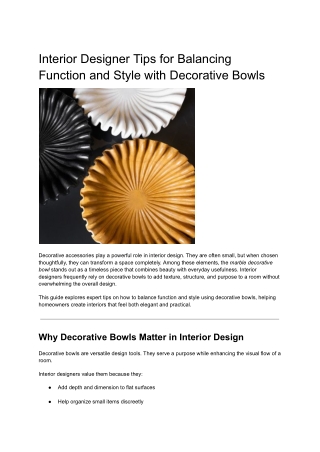
Decorative accessories play a powerful role in interior design. They are often small, but when chosen thoughtfully, they can transform a space completely. Among these elements, the marble decorative bowl stands out as a timeless piece that combines beauty with everyday usefulness. Interior designers frequently rely on decorative bowls to add texture, structure, and purpose to a room without overwhelming the overall design.<br>

E N D
Interior Designer Tips for Balancing Function and Style with Decorative Bowls Decorative accessories play a powerful role in interior design. They are often small, but when chosen thoughtfully, they can transform a space completely. Among these elements, the marble decorative bowl stands out as a timeless piece that combines beauty with everyday usefulness. Interior designers frequently rely on decorative bowls to add texture, structure, and purpose to a room without overwhelming the overall design. This guide explores expert tips on how to balance function and style using decorative bowls, helping homeowners create interiors that feel both elegant and practical. Why Decorative Bowls Matter in Interior Design Decorative bowls are versatile design tools. They serve a purpose while enhancing the visual flow of a room. Interior designers value them because they: ● Add depth and dimension to flat surfaces Help organize small items discreetly ●
● Act as visual anchors in minimalist spaces Bring natural materials into modern interiors ● A well-placed marble decorative bowl can instantly elevate a coffee table, marble decorative bowl console, or dining space without needing excessive décor. Understanding the Balance Between Function and Style Function Without Clutter A common design mistake is choosing décor that looks good but serves no purpose. Decorative bowls solve this problem by offering both form and function. They can be used to hold: ● Keys and daily essentials Fruits or dry snacks Jewelry and accessories Potpourri, stones, or decorative accents ● ● ● When these everyday items are placed in a thoughtfully selected bowl, the space looks intentional rather than messy. Style That Feels Natural Designers often recommend neutral, natural materials because they adapt easily to marble decorative bowl changing trends. Marble, in particular, blends effortlessly with modern, traditional, and transitional interiors. Choosing the Right Decorative Bowl for Your Space Consider Size and Scale One of the most important designer tips is choosing the right size. ● Large bowls work best on dining tables and kitchen islands
● Medium bowls suit coffee tables and consoles Small bowls are ideal for bedside tables or entryways ● A marble decorative bowl should feel proportionate to the surface it sits on, never overpowering or underwhelming the space. Shape Matters More Than You Think Interior designers often use shape to soften or structure a room. ● Round bowls soften sharp furniture lines Oval bowls add elegance to long surfaces Deep bowls offer better functionality for storage ● ● The shape should complement surrounding furniture rather than compete with it. Styling Decorative Bowls Like a Designer Follow the Rule of Simplicity Less is more when it comes to styling decorative bowls. Overfilling them can reduce their visual appeal. Designer-approved styling ideas include: ● A few natural stones or shells Seasonal fruits Dried flowers or botanicals Minimalist objects with texture ● ● ● The natural veining of a marble decorative bowl already provides visual interest, so the contents should remain subtle. Layer with Complementary Elements Decorative bowls work best when layered with other elements. Try pairing them with:
● Books or trays Candles or small sculptures Natural fabrics or wooden accents ● ● This approach creates a balanced, lived-in look without appearing staged. Using Decorative Bowls Room by Room Living Room In living rooms, decorative bowls help anchor coffee tables and side tables. They can: ● Hold remotes discreetly Serve as conversation pieces Add texture to neutral spaces ● ● Interior designers often recommend placing a marble decorative bowl at the center of a coffee table to ground the layout visually. Dining Area On dining tables, decorative bowls act as elegant centerpieces. They work well for: ● Fruits or nuts Seasonal décor Simple floral arrangements ● ● Their solid presence adds sophistication without interfering with dining functionality. Entryway Entryways benefit greatly from functional décor. A decorative bowl near the entrance can:
● Organize keys and wallets Prevent clutter Create a welcoming first impression ● ● Designers often mention this setup in interior styling guides and décor-focused articles, making it a natural backlink mention within home styling discussions. Mixing Decorative Bowls with Different Design Styles Modern and Minimalist Interiors In minimalist spaces, a marble decorative bowl adds texture without excess. Key tips: ● Stick to neutral tones Keep contents minimal Use the bowl as a focal point ● ● Traditional and Classic Homes In classic interiors, decorative bowls complement rich textures and layered décor. They pair well with: ● Wood furniture Warm lighting Soft fabrics ● ● The natural stone finish keeps the space elegant rather than ornate. Eclectic and Contemporary Spaces Decorative bowls help tie together mixed materials and colors. Designers often use them to: ● Balance bold patterns
● Introduce natural elements Create visual harmony ● Common Styling Mistakes to Avoid Even beautiful décor can lose its impact if styled incorrectly. Avoid: ● Overcrowding the bowl Using bowls that are too small for the surface Ignoring color balance Treating decorative bowls as purely ornamental ● ● ● A marble decorative bowl should feel purposeful, not like an afterthought. Why Designers Prefer Marble for Decorative Bowls Timeless Appeal Marble never goes out of style. Its natural variations ensure that no two bowls look exactly the same. Durability Marble is sturdy and long-lasting, making it suitable for daily use as well as display. Versatility It adapts to: ● Changing décor trends Different room functions Both formal and casual spaces ● ● This versatility is why marble accessories are often referenced in interior design resources and décor-focused content.
Decorative Bowls as Long-Term Design Investments Interior designers often advise investing in a few high-quality décor pieces rather than many trend-based items. Decorative bowls made from natural materials: ● Age gracefully Remain relevant over time Transition easily between spaces ● ● A marble decorative bowl can move from a dining table to a console or bedside table without losing its charm. Conclusion: Where Beauty Meets Practical Design Balancing function and style is at the heart of good interior design, and decorative bowls perfectly embody this balance. They organize everyday items while enhancing the visual appeal of a space. When thoughtfully selected and styled, a marble decorative bowl becomes more than décor—it becomes part of how a home is lived in and enjoyed.